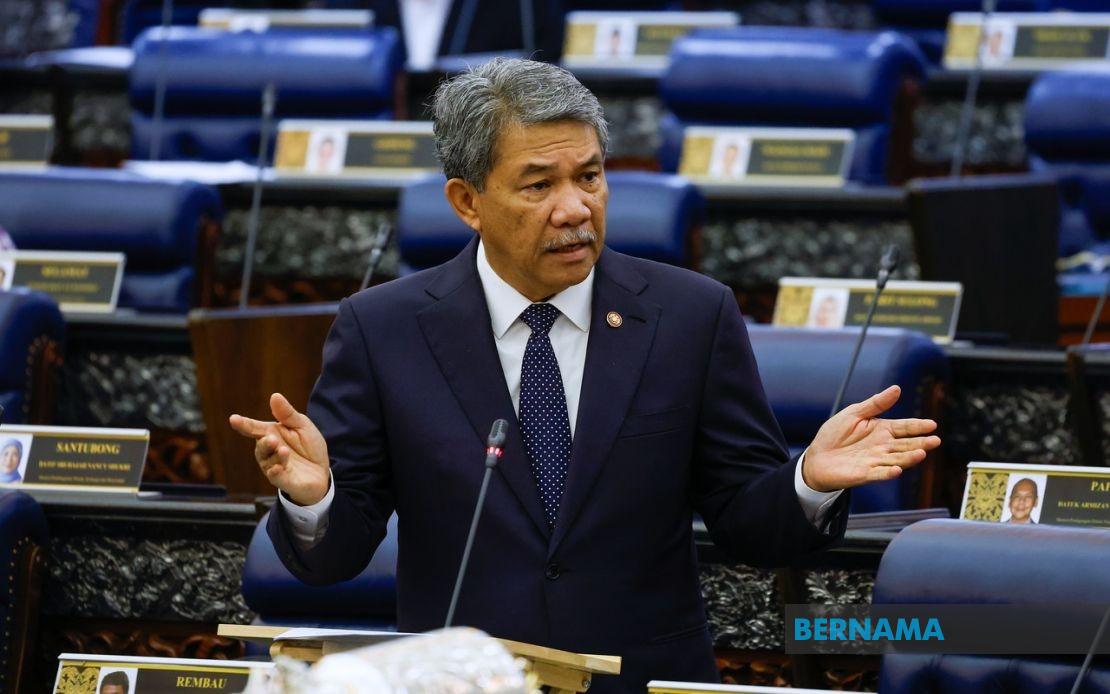
ASEAN is charting a fresh course in its efforts to resolve Myanmar's political crisis, with Foreign Minister Datuk Seri Mohamad Hasan confirming that the regional bloc is examining alternative strategies to salvage the Five-Point Consensus framework that has struggled to gain traction since its adoption two years ago. Speaking in Parliament on June 25, Mohamad acknowledged that despite some positive indicators in Myanmar's trajectory, the country has fallen short of the benchmarks established by ASEAN leaders, underscoring the limitations of the current diplomatic approach and the need for recalibration.
The Five-Point Consensus, adopted at the ASEAN Summit in Jakarta in 2021, represented the bloc's attempt to forge a unified position on Myanmar's military coup and subsequent civil conflict. The framework calls for an immediate cessation of violence, dialogue between all stakeholders, humanitarian assistance, and the appointment of an ASEAN envoy to facilitate negotiations. However, implementation has proven elusive, with the Myanmar junta showing limited willingness to cede ground and armed resistance movements continuing to contest military authority, leaving the consensus functioning more as a statement of principles than a binding roadmap for conflict resolution.
At the 48th ASEAN Summit held in Cebu, Philippines on May 8, regional leaders made a significant decision to empower foreign ministers to undertake informal consultations with Myanmar's authorities. These conversations are designed to evaluate the current state of affairs and determine viable next steps, reflecting a shift toward more flexible diplomacy rather than imposing rigid conditions. This delegation of responsibility to the foreign minister level suggests recognition that high-level summitry alone has been insufficient, and that sustained, technical-level engagement may yield better results in persuading Myanmar's military government to cooperate with regional peace initiatives.
Crucially, Mohamad emphasised that any modifications to the Five-Point Consensus framework would require approval from ASEAN heads of state, preserving the mechanism's legitimacy within the regional structure. This caveat indicates that while ASEAN is willing to innovate tactically—adjusting timelines, engagement modalities, and perhaps specific demands—the fundamental consensus remains inviolable. This balancing act reflects the delicate politics within ASEAN itself, where member states hold divergent views on how forcefully to pressure Myanmar's military regime without fracturing the bloc's cherished principle of non-interference.
Malaysia has taken a leading role in proposing concrete measures to reinvigorate peace efforts. Most notably, Kuala Lumpur has advocated for extending Myanmar's six-month ceasefire, originally scheduled to conclude at the end of July, into a second phase aimed at comprehensive reconciliation. This proposal addresses a critical vulnerability in the current peace process: the absence of a long-term framework for sustained negotiations. By converting the temporary ceasefire into a stepping stone toward broader peacebuilding, Malaysia seeks to create momentum and demonstrate tangible progress that might encourage other parties to remain engaged.
Beyond the ceasefire extension, Malaysia has insisted that Myanmar provide an explicit roadmap detailing how the peace process will unfold, including mechanisms for inclusive dialogue encompassing all relevant actors. This demand for transparency and planning reflects frustration with the junta's opaque decision-making and its historical reluctance to genuinely bargain with opposition groups. The absence of a clear pathway forward has left Myanmar's ethnic armed organisations, the exiled National Unity Government, and the People's Defence Force—the armed wing of the democracy movement—uncertain about whether negotiating with the military regime represents a viable path to influence or merely a delaying tactic.
Underlying ASEAN's strategic reassessment is concern about the Myanmar crisis creating opportunities for external powers to gain leverage in Southeast Asia. Mohamad articulated this worry with unusual directness, stating that allowing Myanmar to drift into marginalisation would invite intervention by third parties with geopolitical interests in the region. This framing transforms the Myanmar question from a humanitarian concern or a matter of regional stability into an issue of competitive great-power influence—a perspective that resonates particularly in Malaysia and other ASEAN capitals increasingly anxious about Chinese and American strategic competition. The fear is that a prolonged vacuum in Myanmar could be filled by actors whose objectives diverge sharply from ASEAN's preference for regional autonomy and consensus-based decision-making.
Malaysia has signalled its commitment to maintaining dialogue with the full spectrum of Myanmar actors, encompassing the military government, the National Unity Government in exile, the People's Defence Force, and various ethnic armed organisations. This inclusive approach differs markedly from some ASEAN members' preference for dealing exclusively with the junta, reflecting Malaysia's belief that durable peace requires incorporating all significant power holders. However, such engagement also complicates messaging and risks appearing to legitimise armed non-state actors or opposition governments, a tension that Malaysian officials navigate carefully within ASEAN's consensus framework.
The challenges facing ASEAN's Myanmar strategy are substantial and multifaceted. The military junta has shown limited interest in substantive power-sharing arrangements, viewing the Five-Point Consensus as an intrusive imposition on Myanmar's sovereignty. Simultaneously, armed resistance movements have grown increasingly confident in their military capabilities, reducing incentives to negotiate from weakness. The humanitarian situation has deteriorated dramatically, with millions displaced and facing food insecurity, yet this urgency has not translated into breakthrough negotiations. ASEAN's norm of non-interference, while protecting member states from external pressure, has also prevented the bloc from deploying meaningful leverage against Myanmar.
Regional dynamics further complicate the picture. Laos, Myanmar's closest neighbour and fellow military-ruled state, has shown reluctance to support aggressive ASEAN positions, while Cambodia and Vietnam have pursued relatively independent Myanmar policies. Thailand, despite its historical ties to Myanmar, faces domestic political constraints limiting its ability to lead peace efforts. Indonesia, as ASEAN's largest economy and chair of the regional bloc, has delegated primary responsibility to Malaysia, effectively outsourcing a critical strategic challenge. This fragmentation explains why ASEAN has struggled to move beyond declaratory statements toward concrete pressure or incentive mechanisms.
The proposed recalibration represents an acknowledgment that ASEAN's approach requires evolution, even if the underlying principles remain constant. By encouraging foreign ministers to engage more actively, proposing ceasefire extensions, and demanding roadmaps for dialogue, ASEAN is attempting to transform the Five-Point Consensus from a static framework into a dynamic process. Whether these adjustments will prove sufficient to overcome the fundamental obstacles to Myanmar's peace process remains uncertain, but they reflect a regional acknowledgment that the status quo is unsustainable and that adaptation, within ASEAN's institutional constraints, is necessary.

