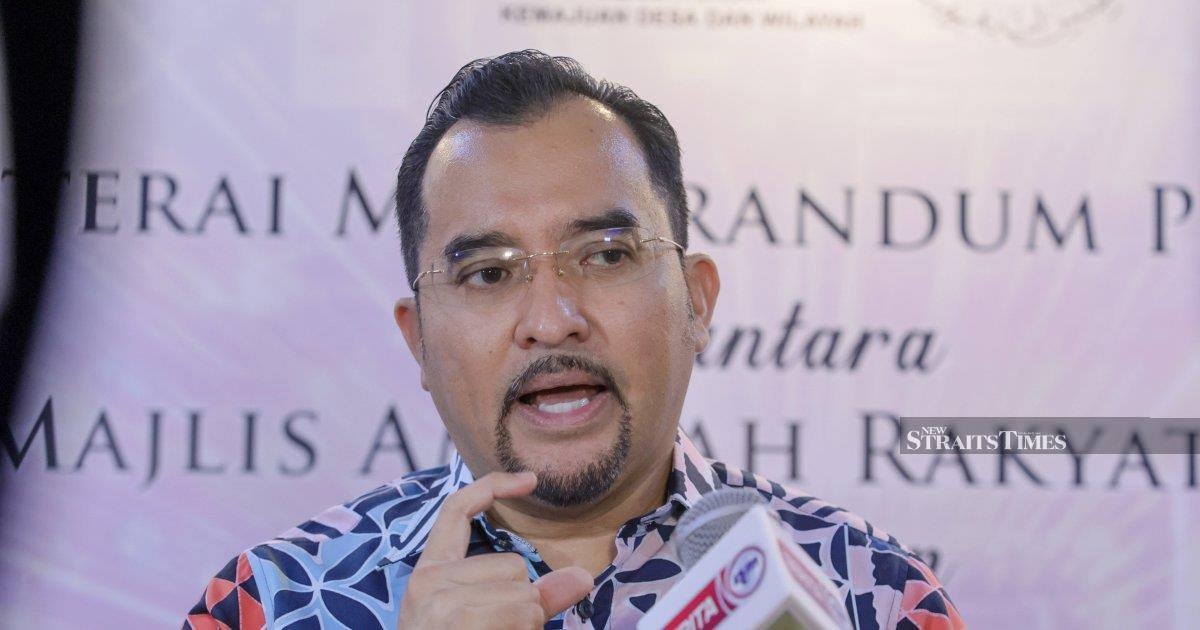
Umno secretary-general Datuk Dr Asyraf Wajdi Dusuki has moved to deflect allegations regarding his involvement in Tabung Haji transactions, asserting he exercised no control over the Islamic pilgrimage fund's commercial dealings during his previous posting as deputy minister in the Prime Minister's Department.
The denial comes amid ongoing scrutiny of a controversial property transaction involving Tabung Haji's subsidiaries and the Al-Rawda development project, which has attracted public attention given the fund's fiduciary obligations to millions of Malaysian pilgrims. Critics have questioned the propriety of certain investments made by the institution, raising concerns about governance standards and the safeguarding of contributors' savings.
Ashyraf's assertion that he held no decision-making power over Tabung Haji matters represents an attempt to distance himself from potential accountability in what has become an increasingly high-profile examination of the fund's operational practices. The timing of his statement underscores the sensitivity surrounding senior government figures and their connections to major institutional transactions, particularly those involving public trust funds entrusted with managing the savings of ordinary Malaysians.
The Tabung Haji controversy reflects broader concerns about institutional governance in Malaysia, where questions about transparency and proper oversight have become recurring issues. The fund manages contributions from millions of Muslims preparing for their hajj pilgrimage, making its stewardship a matter of considerable public interest and religious significance. Any perceived mismanagement or questionable dealings can erode confidence among contributors who view their savings as both a financial instrument and a religious obligation.
During his tenure as deputy minister, Asyraf maintained oversight of matters related to Islam at the federal level, though direct operational control of Tabung Haji would typically rest with the fund's board and management structures. His department's involvement would generally extend to policy guidance rather than day-to-day transaction approvals, a distinction he appears to be emphasizing in his current statement.
The Al-Rawda transaction has drawn particular scrutiny from analysts monitoring institutional investments and development projects. Questions have emerged about whether the terms of the deal provided optimal returns for Tabung Haji contributors and whether proper due diligence procedures were followed. Such inquiries are standard when public institutions commit substantial capital to real estate ventures, especially when those institutions hold funds in trust for specific beneficiary populations.
Tabung Haji's investment arm has pursued various commercial ventures over the years as it seeks to generate returns that supplement contribution-based funding. However, the fund's obligations to pilgrims place constraints on acceptable risk profiles and require that investments align with Islamic principles while protecting principal. When major transactions attract public controversy, institutional leadership typically faces pressure to provide fuller explanations than might otherwise be required.
Asyraf's defensive positioning suggests the matter has escalated sufficiently to warrant proactive clarification from his office. Senior political figures in Malaysia have increasingly recognized that remaining silent on institutional controversies risks allowing narratives to develop unchallenged, particularly in an information environment where social media amplifies concerns rapidly and extensively.
The question of who authorized the Al-Rawda transaction and on what grounds remains central to public discourse. If Asyraf's involvement was indeed peripheral, then scrutiny should focus on the actual decision-makers within Tabung Haji's governance structure. Conversely, if he exercised greater influence than currently acknowledged, his denial may face credibility challenges as additional evidence emerges.
For Malaysian investors and pilgrims contributing to Tabung Haji, the broader institutional credibility question matters enormously. Trust in the fund's management directly affects participation rates and the willingness of Muslims to commit resources to their hajj aspirations. Transparency in resolving questions about past transactions becomes essential to restoring or maintaining that confidence.
The controversy also carries implications for how Malaysia's religious institutions manage their financial operations in an era of heightened accountability expectations. International standards for institutional governance increasingly emphasize independent board oversight, transparent reporting, and clear separation between political influence and commercial decision-making. Tabung Haji must navigate these expectations while maintaining its religious character and social mission.
Asyraf's statement marks one step in what may well be an extended process of investigation and explanation. Stakeholders including pilgrims, financial regulators, and legislative oversight bodies have legitimate interests in understanding the rationale behind significant institutional transactions. Whether his denial resolves those concerns or merely opens new lines of inquiry will depend on what additional evidence and testimony emerges in coming weeks.

