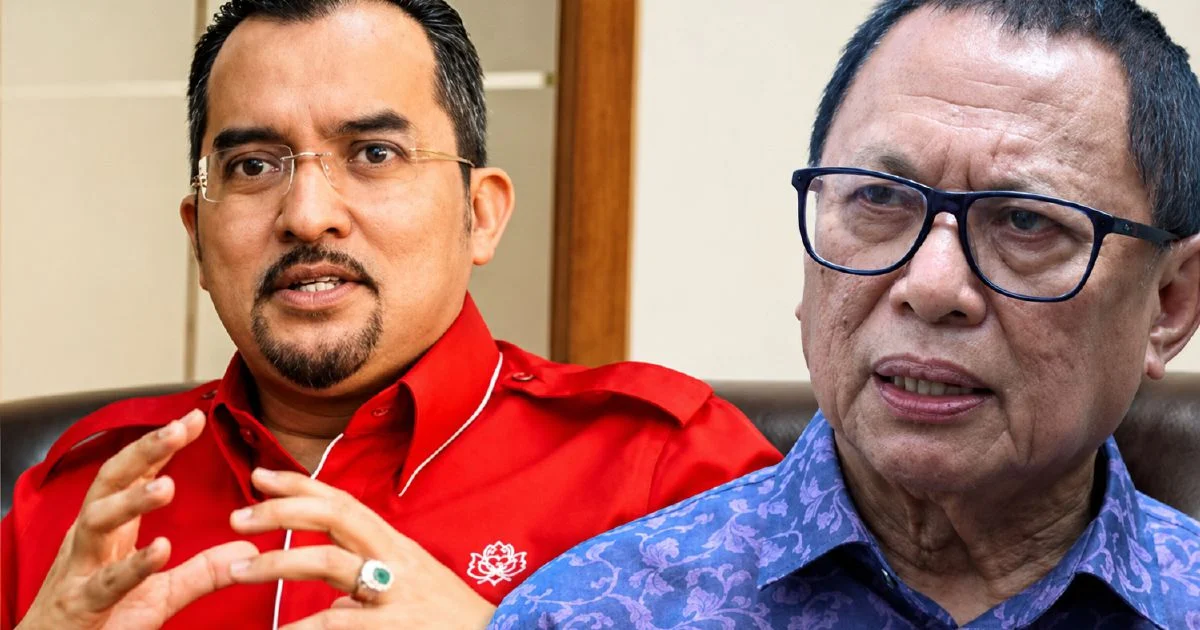
The leadership of Malaysia's dominant Malay-Muslim political party UMNO has descended into open conflict following the resignation of a high-ranking member, with the organisation's secretary-general launching a forceful counterattack against his departing colleague. Datuk Dr Asyraf Wajdi Dusuki, who holds one of the party's most influential administrative positions, has directly challenged assertions made by Datuk Dr Mohd Puad Zarkashi in connection with his exit from the party.
Puad's departure represents a significant rupture within UMNO's ranks at a particularly delicate political moment. As the Menteri Besar of Selangor and a figure with considerable influence across the Klang Valley region, his exit carries immediate implications for the party's organisational coherence and electoral positioning heading into the next general election cycle. The public nature of this conflict, conducted through media statements and press conferences rather than being contained within party structures, signals that attempts at behind-the-scenes reconciliation have likely failed.
The substance of the disagreement appears to revolve around circumstances surrounding Puad's decision to leave UMNO and the accuracy of claims he has made regarding his interactions with palace officials. Such allegations carry particular weight in Malaysian political discourse, where the role and preferences of the royal institutions remain constitutionally sensitive subjects that can dramatically shift the trajectory of party fortunes and individual political careers. Asyraf Wajdi's determination to contest these claims publicly suggests the party leadership views them as sufficiently damaging to warrant immediate official contradiction.
This confrontation exemplifies the recurring instability that has characterised UMNO since its dramatic loss of federal power in 2018, followed by its complex political manoeuvres during the post-Sheraton Move period. The party has struggled to maintain internal discipline while simultaneously competing for relevance in Malaysia's fragmented political landscape. When prominent figures with regional strongholds depart, taking their organisational networks and electoral machinery with them, the central party apparatus feels immediate structural pressure.
Puad's tenure as Selangor Menteri Besar positioned him as a voice distinct from the federal UMNO leadership, potentially cultivating his own power base independent of the party hierarchy. This dynamic has historically created tensions within UMNO, where state-level leaders sometimes develop semi-autonomous political operations that can complicate central coordination. His resignation suggests either that this tension has become irreconcilable or that he has determined his political future lies outside UMNO's current framework.
The timing of this rupture merits scrutiny given UMNO's ongoing negotiations with coalition partners and its attempts to reshape electoral mathematics ahead of future parliamentary contests. Internal departures of this magnitude can signal broader dissatisfaction among party members regarding strategic direction, leadership legitimacy, or resource distribution. Other figures within UMNO may now privately assess whether remaining within the organisation serves their personal political objectives and whether Puad's departure signals a viable alternative pathway.
Ashyraf Wajdi's role as secretary-general positions him as both guardian of party rules and enforcer of leadership discipline. His public rebuke of Puad therefore carries institutional weight beyond personal disagreement, effectively serving notice that such departures will be contested rather than accepted gracefully. This approach may serve short-term leadership interests by projecting strength but risks further alienating those with reservations about current party direction who might otherwise have remained.
The claims regarding palace interactions deserve particular examination. Malaysia's constitutional monarchy exercises significant informal influence over political processes, and suggestions that palace preferences played a role in Puad's departure would signal that factional competition within UMNO has expanded to include royal circles. Such allegations, if substantiated, would indicate that UMNO's internal disputes have transcended mere organisational mechanics to involve the highest ceremonial authorities. Conversely, if Asyraf Wajdi successfully rebuts these claims, he reinforces the narrative that Puad's departure stems from personal dissatisfaction rather than any principled rejection of party direction.
For Malaysian observers and regional political analysts, this episode illustrates UMNO's continuing organisational fragility despite its resumed role in federal governance. The party faces the formidable challenge of projecting unity to voters whilst accommodating diverse interests among state leaders, federal parliamentarians, and grassroots membership. When prominent defectors take their grievances public, they expose these underlying tensions to rivals within the opposition coalition and to potential coalition partners assessing UMNO's reliability.
The broader implications for Selangor's political trajectory warrant consideration. Should Puad transition to a rival political vehicle or forge an independent path, the state's parliamentary and state assembly dynamics would likely shift. UMNO has long sought to recapture the country's most developed and economically significant state, and leadership instability among its deployed figures potentially undermines this objective. Conversely, Puad's exit might create space for alternative UMNO figures to ascend in the state hierarchy.
This clash between Asyraf Wajdi and Puad Zarkashi encapsulates the structural challenges confronting UMNO as it attempts to balance hierarchical control with the operational autonomy that state-level leaders require. The resolution of this particular dispute—whether through reconciliation, institutional separation, or further escalation—will offer important signals regarding the party's capacity to manage internal differences whilst maintaining cohesion in its external political relationships.

