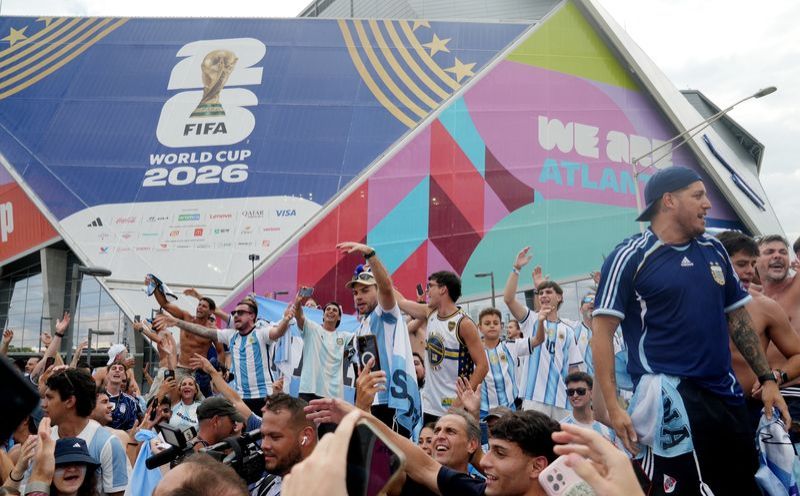
When the final whistle blew on Atlanta's World Cup campaign in July, the sprawling southern metropolis had transformed itself into an unexpected global football theatre, hosting matches ranging from Cape Verde's tournament debut to Argentina's dramatic semifinal triumph over England. Over the course of a month, the city traded its reputation as the epicentre of American hip-hop culture for a different soundtrack altogether—one dominated by international supporters singing their national anthems and chanting in dozens of languages across stadiums and city streets.
The journey to World Cup hosting began unexpectedly in 2017 when Dan Corso, president of the Atlanta host committee, received an email invitation to pursue the event. Despite the short timeline, Corso recalls the decision was swift: "We had a couple of quick meetings and jumped right in." What initially seemed like a long-shot bid would ultimately succeed, transforming the city into a magnet for football fans worldwide and leaving an indelible mark on Atlanta's sporting identity.
Atlanta's ascension as a soccer powerhouse did not happen overnight. The groundwork had been carefully laid in the years preceding the World Cup announcement. The establishment of Major League Soccer franchise Atlanta United in 2017 marked a turning point, introducing professional football to a market previously dominated by American football and basketball. The timing proved fortuitous, as the club's immediate success—including a cup victory just a year after launching—created momentum that accelerated the city's reputation as a serious soccer destination. More significantly, the team's consistent leadership in MLS attendance figures year after year demonstrated genuine grassroots enthusiasm for the sport among the local population.
Arthur Blank, who owns both Atlanta United and the NFL's Falcons, strengthened the city's soccer infrastructure through a substantial commitment of capital. His $50 million donation to the U.S. Soccer National Training Center, located just outside the city, represented a tangible institutional endorsement of Atlanta's role in developing American football talent. This investment, combined with U.S. Soccer's own decision to establish operations in Atlanta, created a compelling narrative for FIFA evaluators assessing potential host cities. Corso acknowledged that these factors proved decisive: the convergence of a thriving professional club, supportive ownership, and centralised national infrastructure created an ecosystem ideally suited to hosting world-class competitions.
Atlanta's experience managing major international sporting events also strengthened its candidacy. The city has a proven track record dating back to the 1996 Olympic Games, which brought the world's attention to a rapidly modernising southern metropolis. More recently, Atlanta has established itself as a premier destination for America's biggest sporting showcase—the Super Bowl will return to the city in 2028 for the fourth occasion, a frequency surpassed by only a handful of American cities. This expertise in hosting large-scale events, managing logistics, accommodating international visitors, and coordinating with government and private sector partners gave organisers confidence in Atlanta's ability to deliver a successful World Cup.
The tournament itself generated extraordinary public engagement across the eight matches held at Atlanta's venues, with 544,516 fans passing through turnstiles to witness knockout rounds and other fixtures. The scale of attendance reflected more than mere curiosity; it demonstrated that football had genuinely captured the imagination of a previously lukewarm market. The Fan Fest, which operated for 19 days across the city, drew more than half a million additional visitors who engaged with the tournament atmosphere without attending matches. This extended cultural footprint indicated that the World Cup had seeped beyond stadiums into the broader urban consciousness.
The volunteer movement proved particularly revealing about Atlanta's investment in the event. More than 2,000 residents from Atlanta and Georgia signed up to support the tournament in various capacities, from stadium operations to fan services. This grassroots involvement suggested that the World Cup had resonated with local communities, offering opportunities for meaningful participation in a historic occasion. The high volunteer turnout contrasted sharply with some previous World Cup host cities, where local populations expressed scepticism or resentment about tournament burdens. In Atlanta, there appeared genuine enthusiasm for showcasing the city to international audiences.
The tournament's legacy extends beyond the memorable matches themselves. The host committee, in partnership with MARTA—the local transportation authority—and the Soccer in the Streets programme, developed a new mini-pitch facility dedicated to providing free access to football for all children in the community. This initiative addresses a critical challenge in expanding sports participation among economically disadvantaged youth, ensuring that the World Cup's presence leaves behind tangible infrastructure and opportunity rather than merely temporary excitement. Such community-focused legacy projects distinguish Atlanta's approach from purely commercial tournament hosting models.
Looking forward, Atlanta's World Cup success has created momentum for additional football investment. The city will welcome a new NWSL women's club commencing operations in 2028, expanding professional football opportunities and generating additional revenue streams for the broader sports ecosystem. More ambitiously, Atlanta is positioning itself as a candidate to host the women's World Cup in 2031, an honour that would represent a remarkable achievement for a city that was not even selected for the 1994 men's tournament held across the United States. If successful, Atlanta would cement its transformation from a peripheral player in American soccer to a central hub for the sport's international competitions.
Corsocaptured the deeper significance of the World Cup beyond statistics and infrastructure: the tournament provided residents and visitors with opportunities to forge new connections with the city and discover its character as a distinctly diverse, cosmopolitan place. For many international fans, Atlanta became associated not with stereotypes about the American South but with global unity, cultural exchange, and passionate football fandom. This rebranding, subtle yet powerful, positions Atlanta advantageously for future international events and for attracting visitors, investment, and talent seeking a dynamic, welcoming metropolitan environment. The World Cup's legacy may ultimately prove as much about Atlanta's international image as about the matches themselves.

