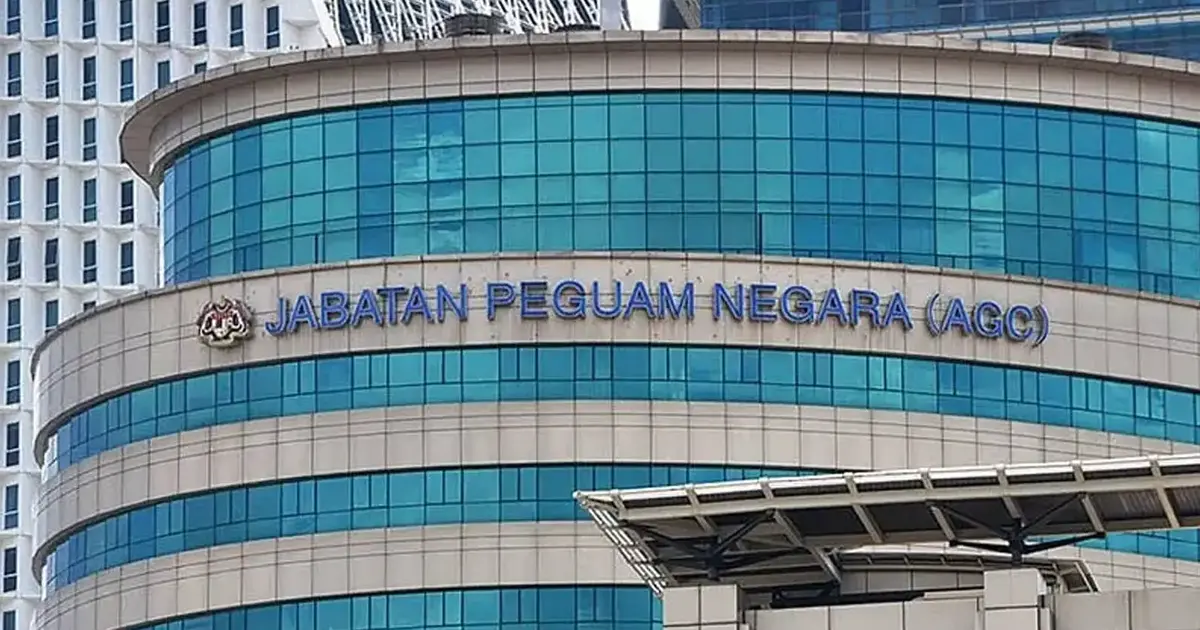
The Attorney-General's Chambers has yet to conclude its examination of investigation materials relating to the Durian Tunggal matter, despite receiving a fresh submission of case documents approximately four weeks ago, according to statements from the Home Minister. The prolonged review process underscores the complexity surrounding this investigation, which has now cycled through multiple rounds of resubmission and reassessment within Malaysia's criminal justice system.
The Home Minister's recent appeal represents an effort to manage public expectations and temper growing impatience with the pace of proceedings. Officials have characterised the extended timeline as a necessary component of thorough legal scrutiny, with the minister emphasising that all relevant parties must permit the prosecutorial machinery to function without external pressure or interference. This messaging reflects broader concerns about maintaining the independence and credibility of Malaysia's legal framework, particularly in cases that attract significant public attention.
The Durian Tunggal investigation has emerged as a matter of considerable public interest, generating sustained media coverage and widespread discussion across Malaysian society. The repeated cycle of submission and review—now reaching a fourth iteration—suggests that investigating authorities and legal prosecutors are grappling with substantial evidentiary or procedural questions that demand careful examination. Each resubmission typically indicates that initial submissions failed to meet prosecutorial standards or lacked sufficient clarity to permit decisive legal action.
For Malaysian readers, this situation illuminates the inherent tensions within the country's criminal justice system between the need for expeditious resolution and the requirement for prosecutorial rigour. The Attorney-General's Chambers, as Malaysia's principal legal institution and keeper of prosecutorial discretion, bears responsibility for determining whether sufficient evidence exists to recommend charges and proceed to court. This gatekeeping function, while essential for preventing frivolous prosecutions, can sometimes extend timelines considerably, particularly in complex or high-profile investigations.
The successive resubmissions point toward potential difficulties in how investigating authorities have compiled or presented evidence. Police investigators may have encountered challenges in assembling materials in a format that satisfies prosecutorial requirements, or the Attorney-General's legal team may have identified gaps in the investigative record necessitating additional work by the police. Such iterative processes are not uncommon in major investigations, though the frequency of resubmission in this instance suggests particularly substantial complications.
From a Southeast Asian perspective, Malaysia's approach to managing high-profile investigations reflects patterns seen elsewhere in the region, where legal systems must balance thoroughness against public pressure for swift outcomes. The institutional separation between investigative and prosecutorial authorities, evident in this case, exists across multiple regional jurisdictions and serves important constitutional purposes, even when it frustrates public demand for quick conclusions. The Home Minister's intervention to appeal for patience represents a characteristic attempt to manage this tension.
The month-long pause following the fourth submission raises questions about the scope of remaining issues. Prosecutorial review timelines vary considerably depending on case complexity, document volume, and the specific legal questions requiring resolution. The Attorney-General's Chambers must evaluate not only whether evidence exists to support charges, but also whether the evidence would likely prove admissible in court and whether the case would withstand defence scrutiny during trial proceedings. These considerations necessarily extend beyond simple documentary review.
For observers within Malaysia's legal community and civil society, the Durian Tunggal investigation serves as a test case for institutional performance and public confidence in the justice system. The ability of authorities to eventually deliver a clear prosecutorial decision—whether recommending charges or declining to proceed—will substantially influence public perception of both the Royal Malaysia Police's investigative competence and the Attorney-General's Chambers' decisiveness. Prolonged indecision, while sometimes necessary, carries reputational costs for these institutions.
The Home Minister's statement that all parties should permit the legal process to unfold represents a standard official position, yet it carries particular weight in an environment where public discussion of pending investigations can sometimes influence official action or create perceptions of improper pressure. By framing patience as a prerequisite for justice, officials seek to establish that sound legal outcomes cannot be rushed, regardless of external demands for acceleration.
Moving forward, stakeholders and the public will likely await further communication from the Attorney-General's Chambers regarding the status of this investigation. The extended timeline thus far suggests that resolution may not be imminent, and additional weeks of review may yet be required. The ultimate prosecutorial decision, when it finally materialises, will presumably be accompanied by some explanation of the considerations that extended the deliberation period. Such transparency would help Malaysians understand how their justice system functions and why complex investigations demand considerable time and expertise to resolve appropriately.
The Durian Tunggal case ultimately reflects the reality that modern criminal investigations, particularly those attracting significant public attention, require substantial institutional resources and careful legal analysis. While the extended timeline may test public patience, the Home Minister's insistence on allowing the system to work according to its procedures emphasises a principle central to rule of law: that proper outcomes require proper process, even when that process consumes considerable time. How Malaysian authorities ultimately resolve this matter will reverberate beyond this single case, influencing public confidence in the institutions responsible for investigating and prosecuting crime throughout the nation.

