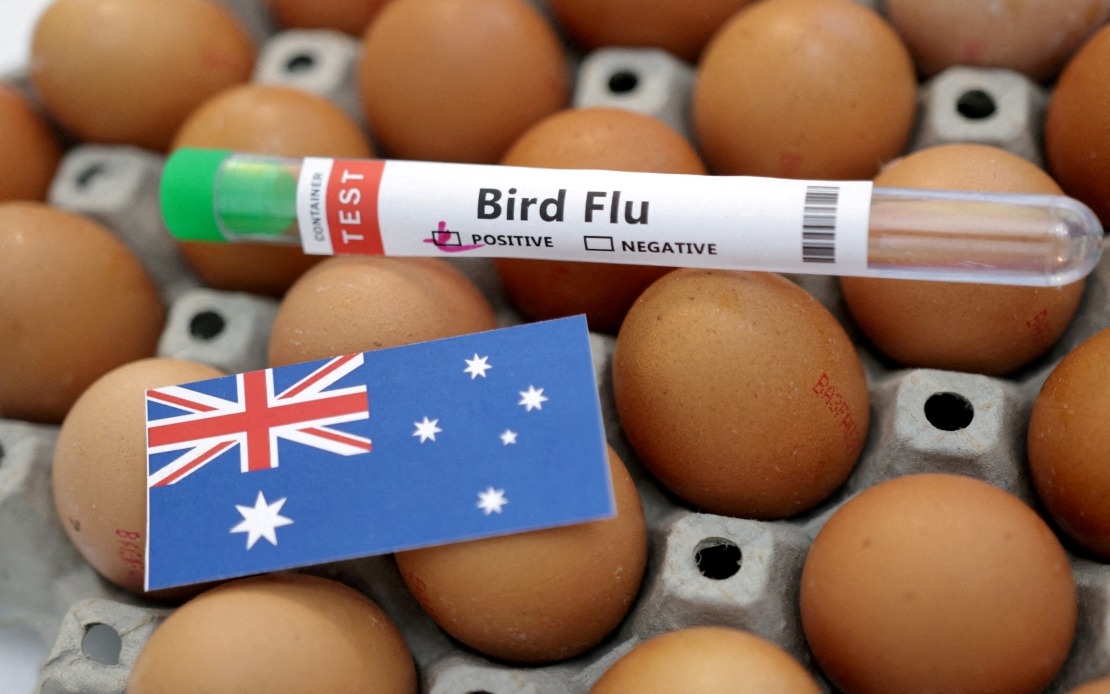
Australia's biosecurity authorities have documented the first confirmed case of H5N1 avian influenza in locally resident wildlife, a significant milestone in the country's ongoing battle against the highly pathogenic virus. The discovery came when a greater crested tern, a non-migratory seabird, was found dead near the coastal town of Robe in South Australia and subsequently tested positive for the deadly strain. Agriculture Minister Julie Collins announced the finding on Friday, emphasizing that this represents a watershed moment for disease surveillance in Australian wildlife.
The greater crested tern case marks a departure from Australia's previous H5N1 detections, which had exclusively involved migratory birds originating from sub-Antarctic regions. These transient species had been responsible for introducing the virus to Australian shores, but their arrival pattern and eventual departure limited the potential for sustained transmission chains within the continent's resident populations. The identification of the virus in a non-migratory species suggests a fundamental shift in how H5N1 may be circulating and establishing itself among Australia's native fauna.
Prior to this discovery, Australia stood as the world's only continent without a confirmed H5N1 case in local wildlife populations. The mainland remained isolated from the global spread of the avian influenza until June, when Western Australia recorded its first detection, breaking the continent's previously unbroken record. With three additional cases now confirmed in South Australia and the greater crested tern discovery, the total number of H5N1 incidents on the Australian mainland has climbed to twelve, signalling an accelerating epidemiological trend.
Investigations are already underway to determine the transmission pathway that led to the greater crested tern's infection. Scientists are working to establish whether the bird contracted the virus from contact with infected migratory species, through exposure to contaminated water sources, or possibly through contact with other carrier animals in its coastal habitat. Understanding this pathway is crucial for predicting how the virus might spread through Australia's resident bird populations and which species face the greatest vulnerability.
South Australian authorities have implemented heightened surveillance measures in the vicinity where the infected tern was discovered, establishing a monitoring zone to track any further outbreaks among local bird populations. This proactive approach aims to identify new cases rapidly before they can spark wider transmission events. The enhanced surveillance framework draws on lessons learned from previous H5N1 outbreaks in other regions and reflects Australia's commitment to early detection and containment.
Minister Collins characterized the development as concerning yet unsurprising, positioning the discovery within the context of Australia's robust biosecurity infrastructure. Her statement underscores the apparent paradox facing public health authorities: the system is functioning effectively by identifying the virus through rigorous testing protocols, yet its discovery indicates that prevention mechanisms have been bypassed. This duality reflects the fundamental challenge of combating a pathogen that spreads across ecosystems through wildlife movement and environmental contamination.
For Southeast Asian nations including Malaysia, Australia's experience offers critical insights into H5N1 surveillance and response. The region has long contended with avian influenza outbreaks across poultry and wild bird populations, making disease monitoring an ongoing priority. Australia's rapid identification and investigation of the greater crested tern case demonstrates the effectiveness of comprehensive testing protocols and wildlife health surveillance, approaches that could inform regional biosecurity strategies.
The implications extend beyond Australia to global bird migration patterns. Many migratory species that traverse Australian skies also migrate through Southeast Asian airspace and territories. The establishment of H5N1 in Australian resident bird populations could potentially facilitate regional spread through shared migration corridors. Malaysia's position as a significant hub in Asian avian migration patterns means that developments in Australian wildlife disease surveillance carry direct relevance to national biosecurity planning.
Australia's response architecture reveals the importance of maintaining robust diagnostic capacity and testing infrastructure as foundational elements of disease prevention. The identification of the infected tern depended on systematic surveillance and laboratory confirmation, underlining that detection capability is as critical as prevention measures. Southeast Asian countries, including Malaysia, may benefit from assessing their own diagnostic networks and ensuring adequate resources for wildlife disease testing.
The virus's successful establishment in Australian resident bird species introduces new epidemiological questions about viral persistence and seasonal patterns. Greater crested terns inhabit coastal regions year-round, potentially creating conditions for sustained viral circulation if the species proves susceptible to ongoing infection cycles. This contrasts with migratory species that seasonally abandon Australian territory, creating natural circuit breakers in transmission chains.
Government statements emphasizing that the discovery reflects effective biosecurity systems rather than system failure attempt to maintain public confidence while acknowledging reality. This framing suggests confidence in Australia's capacity to monitor, detect, and respond to further cases. For Malaysian observers, the message underscores that sophisticated biosecurity systems are reactive as well as preventive, designed to identify breaches quickly rather than guarantee absolute impermeability.
The twelve cases now confirmed on the Australian mainland represent the beginning of what may become a more complex epidemiological situation. As H5N1 establishes itself among local bird populations, the potential for spillover into commercial poultry operations, wildlife rehabilitation facilities, and human contact scenarios increases proportionally. Australia's agricultural sector, particularly its poultry industry, faces heightened vigilance requirements as the virus moves from migratory populations to resident wildlife.
Longer-term, this development may reshape how Australia and the region approach avian influenza management. Rather than viewing the mainland as exceptionally protected, planners must now incorporate the possibility of endemic circulation among wild birds. This shift requires sustained investment in surveillance infrastructure, research into viral transmission pathways, and collaborative regional responses to ensure that Australia's experience informs broader Southeast Asian preparedness strategies.

