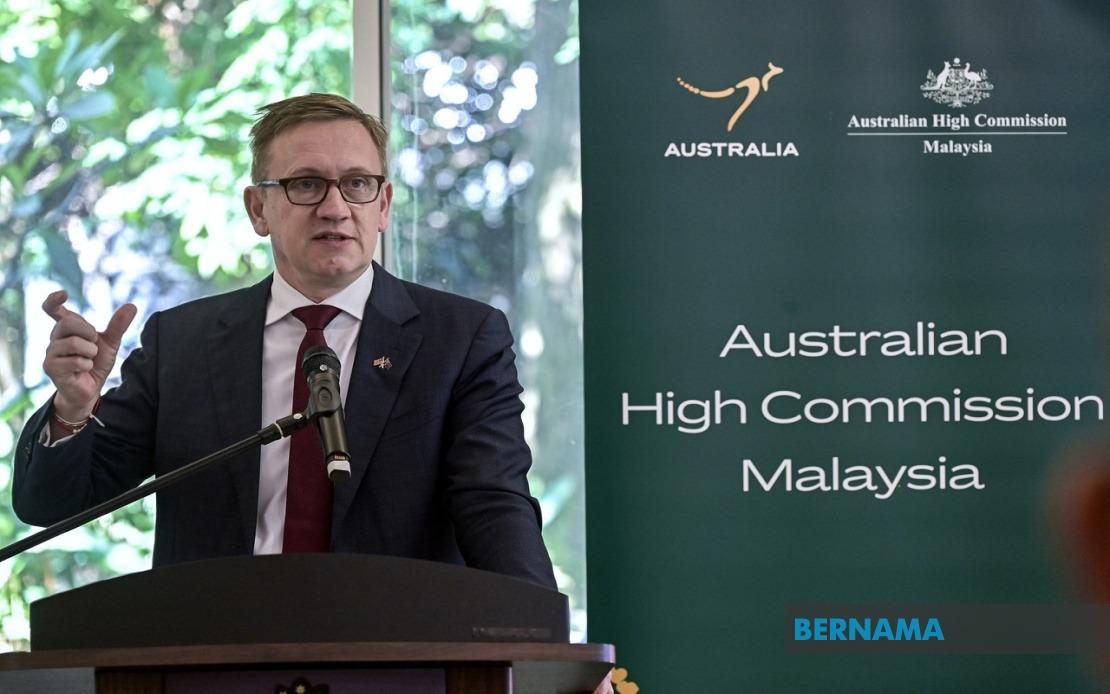
The Australian High Commission in Malaysia has unveiled the Australia Awards-Malaysia Semester Programme, marking a significant expansion of educational pathways between the two nations. Launched in Kuala Lumpur, the initiative represents a deliberate strategic investment in strengthening bilateral relations through enhanced people-to-people connectivity. Assistant Minister for International Education Julian Hill, who officially opened the programme, positioned it as a manifestation of Australia's sustained commitment to building deeper institutional and personal bonds with Malaysia by facilitating student mobility and cultural exchange.
The scholarship framework addresses a practical barrier that has historically limited educational mobility for talented Malaysian students: financial constraints. By providing comprehensive support covering tuition arrangements, accommodation, living expenses, visa processing, travel costs and insurance, the programme removes substantial obstacles that prevent many capable individuals from accessing world-class Australian education. This financial scaffolding proves particularly significant in a region where international education, despite its recognised value, remains economically inaccessible to many merit-qualified candidates. The initiative thus functions as both an educational and economic development tool, enabling talent cultivation regardless of family income background.
Malaysia's historical relationship with Australian higher education is substantial and enduring. Over half a million Malaysians have pursued tertiary studies in Australia across the past several decades, creating an extensive alumni network distributed across various sectors in Malaysia and internationally. Hill emphasised that whilst most graduates return to Malaysia, the expectation extends beyond mere qualification acquisition. The vision articulates a longer-term objective: that returning scholars carry Australian educational experiences, professional networks and collaborative mindsets back to their home nation, positioning them as informal ambassadors and facilitators of bilateral understanding. This conceptualisation of education as bridge-building rather than simple credential conferral reflects sophisticated thinking about soft power and sustained international influence.
The bilateral dimension operates symmetrically within Australia's broader strategic framework. Hill explicitly noted that deepening Malaysia-Australia relations requires reciprocal engagement, not unidirectional benefit flow. Australia therefore simultaneously encourages greater participation of Australian students in Malaysian institutions, particularly through established mechanisms like the New Colombo Plan and semester exchange arrangements. This balanced approach recognises that sustainable educational partnerships depend on mutual investment and benefit perception. Australian university branch campuses operating in Malaysia—currently Curtin University Malaysia, Monash University Malaysia, University of Wollongong Malaysia and Swinburne University of Technology Sarawak Campus—function as both export institutions serving Malaysian learners and potential hosts for Australian students seeking Southeast Asian exposure.
Australian universities operating in Malaysia transcend conventional teaching roles within this strategic vision. They function as research hubs addressing shared regional challenges across medical science, clean energy, mining and agricultural sectors. This reframing positions university campuses not as commercial offshore education operations but as collaborative research entities capable of generating intellectual property and problem-solving capacity relevant to both nations' development agendas. The emphasis on research collaboration suggests that Australia anticipates utilising its educational infrastructure in Malaysia as part of broader innovation ecosystem development, creating mutual economic value beyond standard tuition revenue.
The inaugural cohort comprises 16 Malaysian students who departed for Australia during July intake, initiating the pilot phase of what officials envision as potentially transformative programming. This relatively modest starting number permits careful programme management and outcome monitoring whilst allowing early participants to serve as proof-of-concept ambassadors. The pilot structure itself demonstrates pragmatic policy implementation: Australian government funding commitment extends across an initial four-year budgetary cycle, providing medium-term financial certainty whilst remaining contingent on demonstrated effectiveness and future political endorsement.
For Malaysian policymakers and education sector stakeholders, this programme carries several consequential implications. First, it reinforces Australia's strategic prioritisation of Southeast Asia and Malaysia specifically within international education and soft-power architecture. Second, it creates competitive incentives for other developed education exporters—including New Zealand, Canada, and European nations—to expand their own Malaysian scholarship offerings, potentially benefiting Malaysian students through expanded choice and enhanced competition for enrolments. Third, the programme's focus on semester mobility rather than complete degree relocation suggests a middle path between brain drain concerns and internationalisation benefits, allowing students to maintain domestic institutional affiliations whilst gaining international exposure.
The timing and positioning of this initiative reflect Australia's perceived need to strengthen multilateral engagement throughout Southeast Asia. Geopolitical considerations, though not explicitly articulated by Hill, likely inform Australia's educational investment strategy. Deeper cultural and institutional connections with Malaysia and regional neighbours constitute soft-power infrastructure capable of sustaining cooperative relationships across various political and economic domains. Education-based people-to-people linkages operate as a relatively apolitical yet strategically consequential mechanism for relationship cultivation.
For Malaysian students contemplating international education, the programme removes significant financial friction from Australia-pathway decisions. Whilst Australia already attracts substantial Malaysian enrolments, scholarship support typically derives from individual university-based funding or private family resources. The government-backed scheme signals sustained institutional commitment and reduces price-based selection bias that might otherwise disadvantage exceptional students from modest economic backgrounds. This democratisation of access to prestigious international credentials holds long-term multiplier effects throughout Malaysian society and professional sectors.
The participating Australian universities represent diverse institutional profiles—from research-intensive establishments like Monash through regional-focused institutions like Swinburne Sarawak. This diversity ensures that the programme accommodates varied academic interests and career trajectories rather than funnelling students toward elite metropolitan campuses exclusively. The inclusion of the Sarawak campus particularly signals recognition of East Malaysian educational needs and connectivity, broadening the initiative's regional reach beyond peninsular concentration.
Looking forward, programme sustainability depends on demonstrated outcomes justifying continued government funding beyond the initial four-year commitment. Success metrics likely encompass not merely graduation rates or graduate employment trajectories, but qualitative indicators regarding professional collaboration establishment, research productivity and bilateral relationship strengthening. Early cohort experiences will substantially influence political perceptions regarding programme viability and long-term funding prospects. The 16 initial participants therefore carry implicit responsibility as programme ambassadors whose academic and professional achievements directly influence Australia's capacity to sustain and expand this educational investment.
For Southeast Asia more broadly, Australia's education sector engagement reflects a differentiated regional strategy emphasising Malaysia amongst other priority markets. This scholarship programme constitutes one element within broader Australian positioning as a reliable, forward-thinking education partner committed to sustainable institutional cooperation rather than transactional student recruitment. As regional education markets consolidate and international competition intensifies, initiatives combining financial support, research collaboration opportunities and long-term institutional commitment increasingly define competitive advantage. Australia's calculated investment in Malaysia's talent development thus serves simultaneously as education diplomacy, economic strategy and geopolitical positioning.

