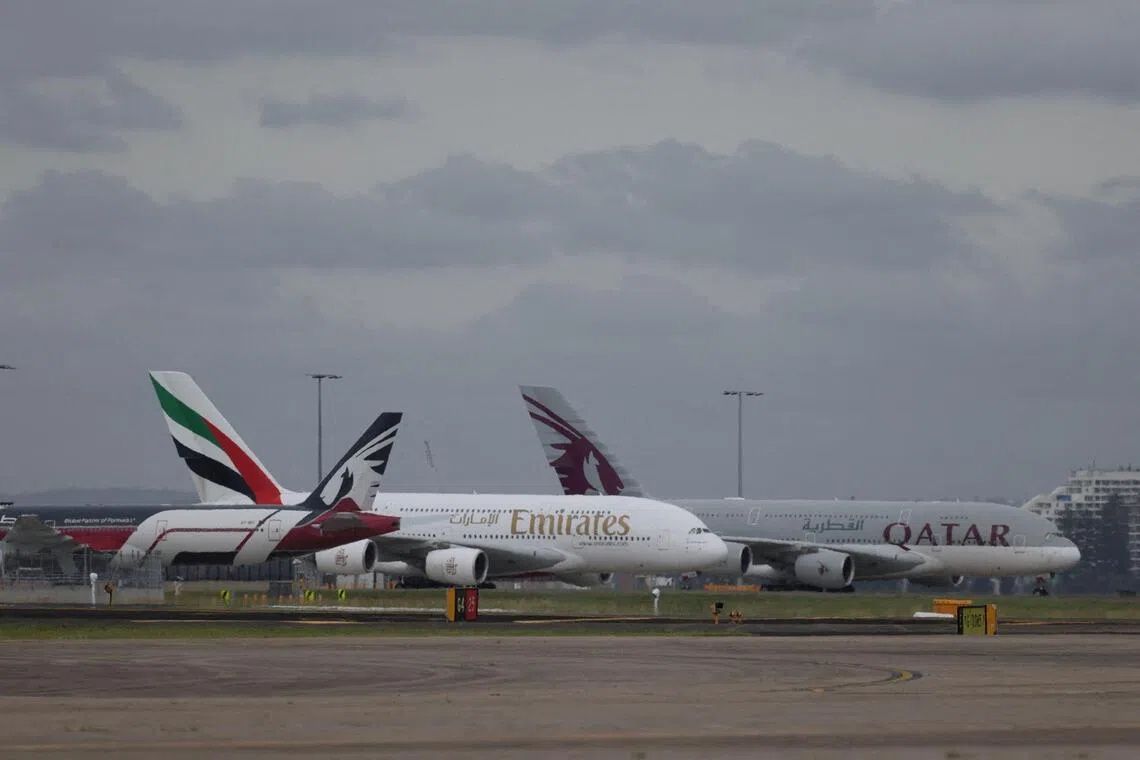
Australia's aviation regulator confirmed on Friday, August 14, that it had opened a formal investigation into three separate near-collision incidents at Sydney Airport occurring over a two-week period, with two alarming episodes unfolding on the same morning. The probes signal growing concerns about operational safety at one of the country's busiest aviation hubs and have triggered a broader examination into whether systemic deficiencies in air traffic control management contributed to the dangerous situations.
The most recent incident, occurring on August 9, involved a Virgin Australia Boeing 737 that had received clearance to depart when crew members spotted a Qantas aircraft crossing the active runway directly ahead of their intended flight path. The Virgin Australia pilots executed an immediate abort procedure, bringing their aircraft to a halt approximately one kilometre away from the other plane, which had also been cleared by air traffic control to taxi across the same runway at that critical moment. The simultaneous clearance of both aircraft to operate on conflicting paths represents a fundamental breakdown in the separation protocols that form the cornerstone of modern aviation safety.
On the same morning, just hours earlier, operational tensions were equally high when a Jetstar pilot performing standard approach procedures was compelled to engage emergency braking systems to avoid a collision with a Qatar Airways aircraft. The rapid sequence of two major incidents within a single operating day at a major international airport underscores the severity of the concerns now facing aviation authorities. These August occurrences follow an earlier near-miss involving two Qantas planes on July 27, when both aircraft had been cleared simultaneously for take-off before the dangerous situation was identified and corrected.
Angus Mitchell, Chief Commissioner of the Australian Transport Safety Bureau, pledged that investigators would examine not only the immediate human decisions that led to each incident, but also the broader operational context and systemic factors that may have created vulnerabilities. His statement indicated the inquiry would scrutinise staffing levels in the control tower, the workload distribution among air traffic controllers on duty, the degree of fatigue among personnel, and the adequacy of separation protocols in effect during the incidents. Mitchell emphasised that any organisational or procedural shortcomings contributing to these dangerous situations would be identified and addressed through comprehensive analysis and timely recommendations.
A particularly troubling aspect of the August 9 incident was the apparent delay in formal reporting, raising questions about whether supervisory staff immediately escalated the matter through proper channels or whether the severity of the situation was initially underestimated. Mitchell acknowledged that supervisory and training activities were occurring at the airport on the day of the Virgin Australia incident, suggesting that the tower may not have been operating at full operational readiness during this critical period. The presence of training operations during a time when aircraft were being cleared to move on active runways introduces additional complexity to the investigation.
The Australian aviation sector is currently experiencing substantial growth in both passenger demand and flight operations, with airlines actively recruiting and training new pilots and air traffic control personnel to meet expanding service requirements. Mitchell acknowledged this expansion phase, noting that the sector is managing a significant ramp-up in air traffic control recruitment, initial training, and qualification programmes. While necessary to meet future demand, this period of rapid personnel development can introduce vulnerabilities if training protocols, supervision standards, or fatigue management systems are inadequate. The timing of these incidents during an expansion phase has prompted investigators to examine whether proper oversight mechanisms are in place.
The incidents at Sydney Airport assume particular significance within the context of the International Civil Aviation Organization's global safety initiatives and regional aviation standards across Asia-Pacific. As a major hub connecting Australia to Southeast Asian and international markets, Sydney Airport serves as a critical gateway for regional travel and cargo operations. Any systemic issues identified in its air traffic management systems could have implications for the broader regional aviation network and raise questions about whether similar vulnerabilities exist at other major airports.
Prime Minister Anthony Albanese joined Transport Safety Bureau officials in calling for a thorough and expedited investigation, signalling that the federal government views these incidents as matters of urgent national concern. The political attention underscores the seriousness with which Australian leadership regards aviation safety, particularly given the potential consequences of runway incursions or mid-air collision scenarios. Such high-level oversight typically accelerates investigative timelines and elevates the visibility of recommendations to airports and airlines.
The investigation will likely examine whether current procedural safeguards are sufficient to prevent the simultaneous clearance of aircraft to operate on intersecting or identical flight paths, and whether technological systems such as ground movement radar and warning systems functioned as designed. Investigators will also determine whether communication protocols between controllers, pilots, and ground personnel meet contemporary standards, and whether fatigue, shift structures, or workload distribution contributed to the control tower errors. The findings may prompt substantial changes to Sydney Airport's operational procedures, potentially serving as a model for safety improvements at other Australian airports.
For the travelling public, particularly business passengers and tourists moving between Australia and Southeast Asia, these investigations will be closely watched as indicators of aviation safety standards. While aviation remains extraordinarily safe globally, the proximity of three serious near-misses within a brief timeframe inevitably generates questions about system reliability. The comprehensiveness and transparency of Australia's regulatory response will likely influence confidence levels among regional travellers and freight operators who depend on Sydney Airport's operations.

