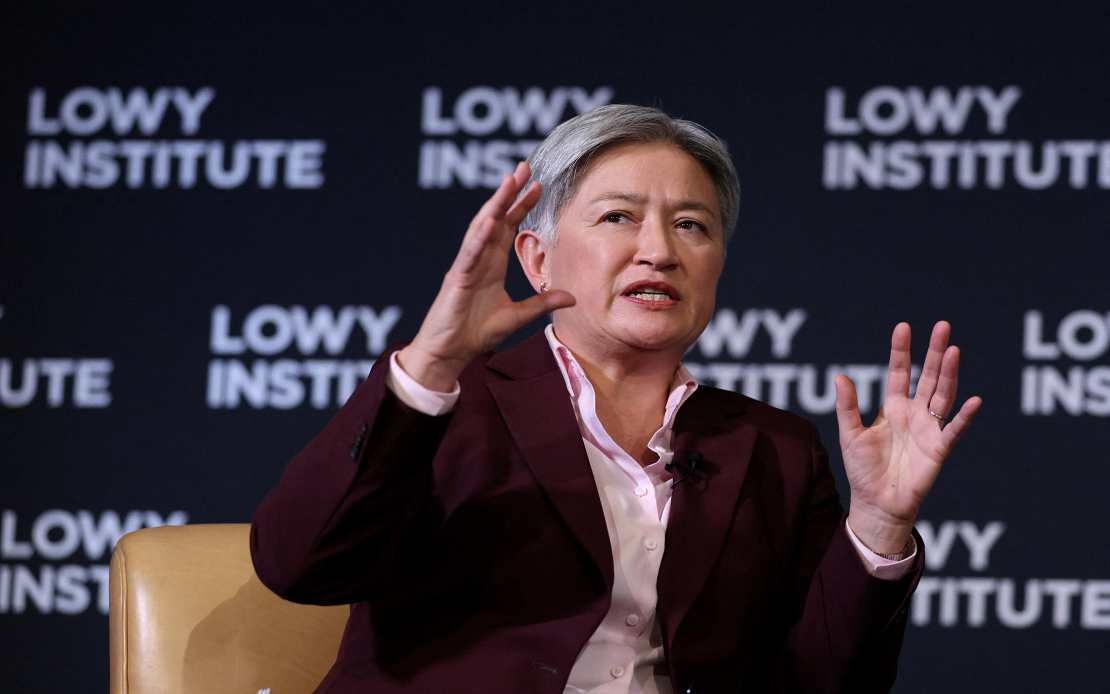
Australia's Foreign Affairs Minister Penny Wong has mounted a forceful defence of multiculturalism, arguing that abandoning the nation's diverse society would undermine its international standing and economic prospects. Speaking at the Lowy Institute in Sydney on Friday, Wong characterised calls for monoculturalism as fundamentally damaging to Australia's capacity to compete and prosper in an increasingly interconnected world. Her remarks arrived as a pointed rebuttal to growing populist pressure within Australian politics, where nationalist sentiments have gained considerable traction among voters dissatisfied with immigration levels and globalisation.
Wong's intervention directly addressed the political challenge posed by Senator Pauline Hanson, whose One Nation party has emerged as a significant force in Australian politics. Hanson had declared in June that Australia ought to reshape itself as a monocultural nation, a position that resonates with a segment of the electorate expressing anxiety about demographic change and cultural identity. The Foreign Minister framed the push for monoculturalism as a retreat from Australia's strengths, describing it as a "melancholic fantasy" that would isolate the nation rather than protect it. She argued that Australia's identity has always been fundamentally multicultural, and that rejecting this reality would constitute a dangerous rupture with the country's historical trajectory.
The practical implications of such policies would be severe, according to Wong's analysis. A monocultural pivot would require Australia to sever international partnerships, withdraw from trade relationships, and diminish its diplomatic influence. She contended that the call for monoculturalism represents an inward turn that would rob Australia of the partnerships, trading relationships, and growth opportunities that define its current prosperity. This framing presents the debate not merely as one about cultural values, but as a matter of national economic and strategic interest—positioning multiculturalism as pragmatic rather than merely ideological.
One Nation's political ascendancy reflects a broader rightward shift in Australian electoral sentiment. The party has vowed to implement strict immigration controls, slash foreign aid allocations, and withdraw from multilateral institutions should it gain power in the 2028 federal election. Recent polling commissioned by YouGov Australia in July revealed startling movement in voter preferences. One Nation support has surged to 26 per cent of respondents indicating voting intention, a dramatic jump from the 6.4 per cent of the vote the party secured at the 2025 election. This represents a four-fold increase in electoral backing within a single year, indicating substantial voter migration toward the populist party.
The polling data demonstrates broader disillusionment with Australia's traditional major parties. The governing Labour Party's support has eroded from 34.5 per cent at the 2025 election to 28 per cent currently, while the conservative Coalition has experienced an even steeper decline, falling from 31.8 per cent to 20 per cent. This fragmentation suggests that neither major party has successfully addressed voter concerns about immigration, economic management, or cultural change. The drift toward One Nation represents not simply endorsement of that party's platform, but rather rejection of the establishment alternatives, creating a political vacuum that populist messaging has effectively exploited.
Public anxiety about immigration levels provides the political oxygen fuelling One Nation's rise. The Lowy Institute's annual 2026 poll, released in June, found that 55 per cent of Australians believe the country is admitting too many migrants. This represents an upward trajectory of concern: the figure stood at 53 per cent in 2025 and 48 per cent in 2024. The consistent year-on-year increase suggests deepening public unease rather than temporary discontent, and indicates that immigration has become a persistent political liability for whichever party governs. Whether this reflects genuine problems with integration, labour market pressures, housing availability, or cultural friction remains contested, but the perception of excess immigration has clearly taken root.
For Malaysian and regional observers, Australia's political turbulence carries significance beyond its borders. Australia remains a major trading partner for Southeast Asian nations, a security anchor through regional institutions, and a destination for education and skilled migration. Should One Nation substantially influence policy direction, Australian engagement with the region could shift markedly. The party's stated intention to reduce foreign aid and withdraw from multilateral institutions could affect development partnerships, security cooperation, and the stability frameworks that underpin regional prosperity. Malaysia, in particular, maintains substantial trade relationships with Australia and benefits from the latter's commitment to regional institutions and defence arrangements.
Wong's intervention represents an attempt by the Australian government to reclaim narrative control over the immigration debate. Rather than conceding that immigration presents problems requiring restriction, the Foreign Minister has reframed the debate around Australia's national interests and international standing. This rhetorical strategy aims to redirect voter attention toward consequences of One Nation policies rather than addressing the underlying anxieties driving voters toward populist solutions. The effectiveness of this approach remains uncertain, particularly given the evidence that voter dissatisfaction spans multiple issues and reflects frustration with traditional political establishments.
The fundamental tension revealed by Australia's political trajectory involves competing visions of national identity and prosperity. One Nation's monocultural vision appeals to voters concerned about rapid social change and cultural cohesion, while Wong and the government argue that diversity and international engagement constitute sources of strength. This debate will likely intensify as the 2028 election approaches, with both sides attempting to frame the terms of discussion. The outcome will shape not only Australia's immigration policy and international relationships, but also serve as a test case for whether multicultural social models can sustain political support amid economic anxieties and cultural disquiet.

