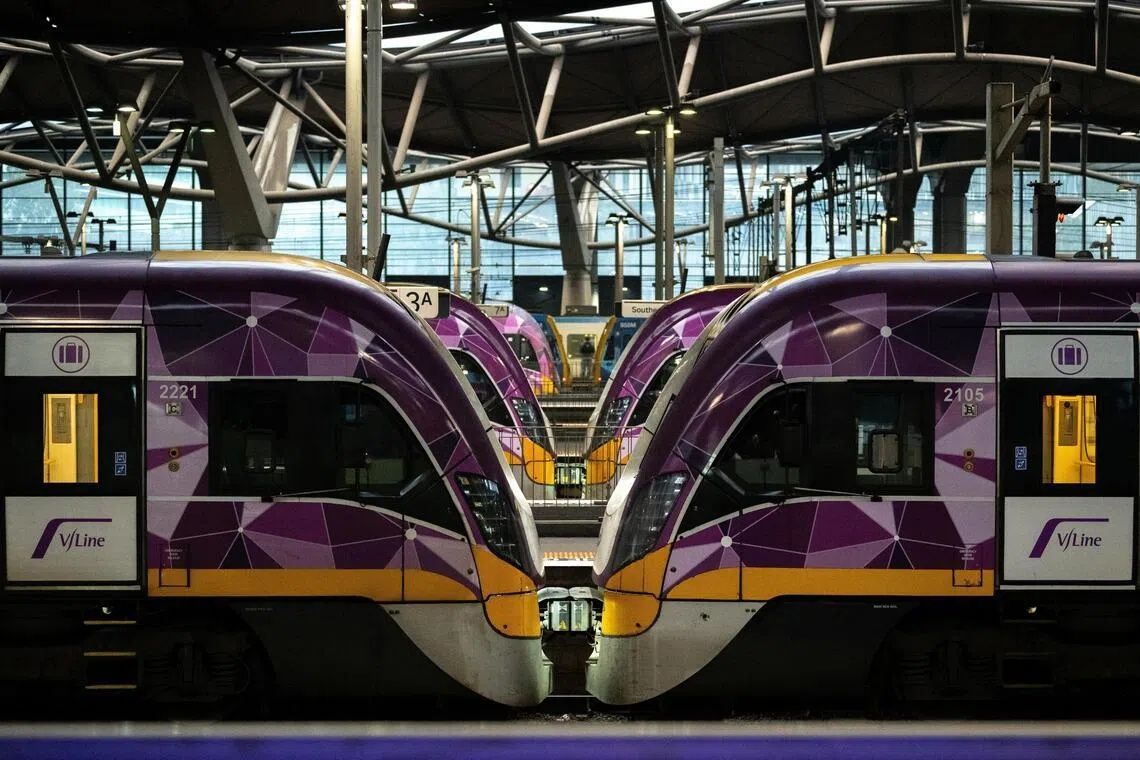
Australia's rail network began restoring services on Thursday following a catastrophic network failure at telecommunications giant Telstra Group Ltd. that had crippled communications across the country the previous day. The outage, which affected roughly 25 million mobile subscribers, forced Australian Rail Track Corp. to suspend train operations in multiple states after losing the ability to communicate with drivers through Telstra's 4G infrastructure—highlighting how deeply Australia's transport system depends on a single telecommunications provider.
Australian Rail Track Corp., which oversees freight and passenger operations spanning five states, announced that normal service would resume progressively throughout Thursday afternoon, contingent on operators being prepared to restart operations. The organisation had implemented a cautious suspension strategy after the outage severed its primary communication channel with train drivers operating across the network. The staged restoration prioritised key metropolitan and regional routes, beginning with services in New South Wales and Victoria's V/Line network, followed by interstate passenger connections.
The crisis unfolded in layers, with Telstra initially managing a software glitch affecting the timing nodes that synchronise its entire system. However, overnight complications emerged on Wednesday, creating what Federal Communications Minister Anika Wells described as a "secondary issue." This secondary problem manifested as erratic call routing, with some calls diverting directly to voicemail and—most alarmingly—certain Triple Zero emergency calls failing to connect. The discovery of this additional layer of failure suggested that the initial resolution had not addressed the complete scope of the network dysfunction.
Telstra Chief Financial Officer Michael Ackland provided technical details during a Thursday morning briefing, confirming that engineers had resolved the primary software issue before identifying the secondary complications. The company subsequently implemented a revised solution designed to prevent recurrence. However, the occurrence of a secondary problem after the initial fix raised uncomfortable questions about Telstra's system resilience and testing protocols. The company's welfare division conducted 639 follow-up checks on customers whose emergency calls had failed, a stark reminder of how network failures translate into real safety risks.
Ackland's reassurance that "customers can feel confident in calling Triple Zero" rang somewhat hollow given the circumstances, though he acknowledged that telecommunications networks operate with inherent complexity requiring ongoing refinement. Telstra's leadership took the disruption seriously enough that Chief Executive Vicki Brady cut short a family holiday overseas to return to the office by Friday, signalling the severity with which the company regarded the incident. Market reaction proved relatively measured, with Telstra shares recovering to trade 1 per cent higher by Thursday afternoon, following a three per cent decline the previous day.
Telecommunications Industry Ombudsman Cynthia Gebert articulated the broader public frustration during a Today program interview, emphasising that the incident represented more than a temporary inconvenience. She highlighted lost income for affected businesses, disrupted travel plans, and the erosion of consumer confidence in an essential service. Her call for a thorough investigation into the underlying causes reflected growing anxiety within the community about whether Australia's telecommunications architecture could withstand modern operational demands. The ombudsman's comments underscored a critical gap between infrastructure expectations and actual reliability.
This latest disruption arrives amid an unsettling pattern of telecommunications failures across Australia. Singapore Telecommunications Ltd.-owned Optus experienced a catastrophic outage in September 2025 that prevented emergency service access, resulting in fatalities—an incident that occurred less than two years following a previous mass outage affecting millions of Optus customers, including those attempting to reach emergency services. The recurring nature of these incidents suggests systemic vulnerabilities rather than isolated operational mishaps. Vodafone Australia similarly reported mobile connectivity issues to customers just the previous month, indicating that network instability has become disturbingly commonplace.
For Malaysian readers and Southeast Asian observers, the Telstra incident carries significant implications. Australia's telecommunications sector serves as a regional technological benchmark, and repeated failures at this scale suggest that even developed markets struggle with network resilience when critical infrastructure becomes overly centralised. The region's own telecommunications operators, managing service across more geographically dispersed and densely populated areas, face similar architectural challenges. The incident demonstrates that no provider—regardless of size or resources—has solved the fundamental problem of ensuring failover capacity when primary systems collapse.
The dependency of rail operations on a single telecommunications provider's network also raises questions about Australia's broader infrastructure resilience planning. Unlike some jurisdictions that mandate redundant communications pathways for critical services, Australia's system evidently concentrated too much reliance on Telstra's capabilities. This design choice, likely driven by cost considerations and competitive consolidation, created a single point of failure that directly translated into disrupted transport services affecting millions of commuters and freight operations. The incident suggests that regulatory frameworks governing critical infrastructure may not have kept pace with operational integration trends.
Moving forward, the investigation into what triggered both the initial software issue and the secondary problem will shape how telecommunications companies approach network design and testing. Telstra's commitment to continued refinement, while necessary, may prove insufficient if root causes remain unaddressed. The broader conversation about infrastructure redundancy, competitive diversity in essential services, and regulatory oversight will likely intensify as Australians—and by extension, the region—confront the reality that modern societies remain vulnerable to telecommunications disruptions despite technological sophistication. The question now becomes whether these repeated incidents will finally catalyse meaningful structural reform.

