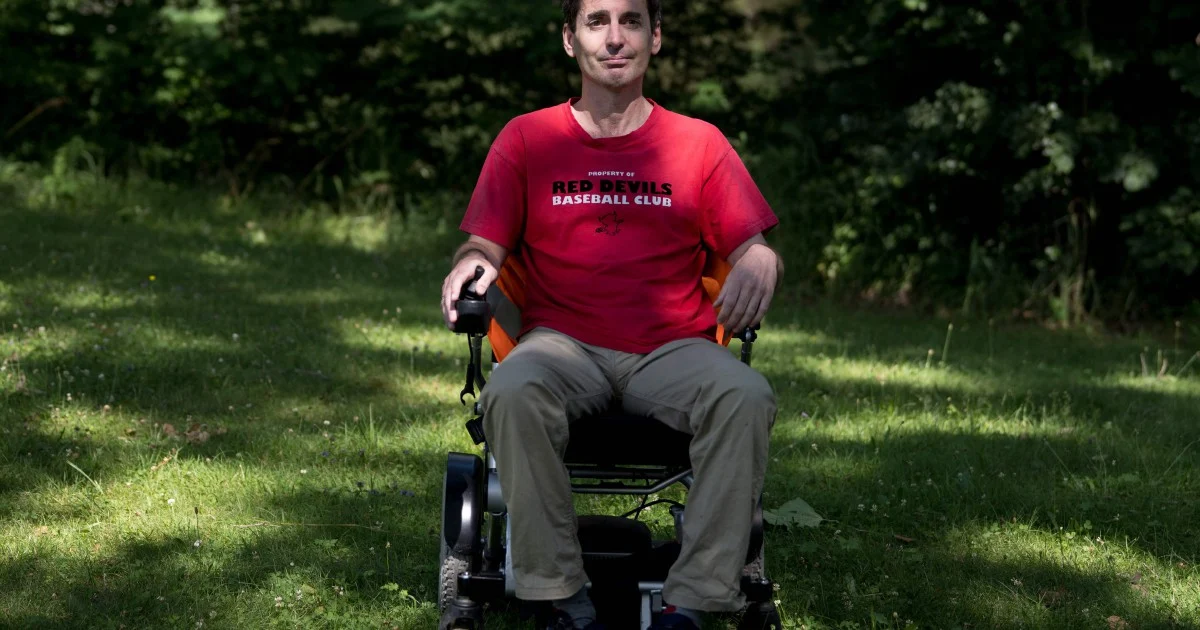
Mex Muellner, an Austrian resident who uses a wheelchair, has filed legal action against his nation's government, contending that the country has failed to implement adequate climate protection measures. His lawsuit centres on the argument that insufficient climate policies leave vulnerable populations—particularly people with disabilities—dangerously exposed to the mounting hazards of extreme heat events.
The case underscores a critical gap in climate litigation: the intersection between environmental policy and disability rights. While much climate action debate focuses on carbon emissions reduction and economic impacts, Muellner's legal challenge brings to the forefront the disproportionate burden that climate inaction places on people with physical limitations. During intense heatwaves, individuals confined to wheelchairs face unique hardships that the broader public may not fully appreciate, from the inability to access cooling facilities to risks of heat exhaustion in environments not designed for vulnerable populations.
Austria, like much of Europe, has experienced increasingly severe heatwaves in recent years. The cumulative effect of rising temperatures creates compounding challenges for people with disabilities, who often lack the mobility to relocate quickly, access emergency services, or modify their immediate environments without assistance. Muellner's struggle during sweltering conditions serves as a concrete example of how abstract climate scenarios translate into tangible, life-threatening circumstances for marginalised groups.
The lawsuit represents a strategic approach to climate accountability. Rather than relying solely on legislative or political channels, Muellner is seeking judicial intervention, leveraging rights-based arguments to pressure the Austrian state into demonstrating meaningful progress on climate mitigation. This legal tactic has gained traction across Europe, where courts in several jurisdictions have begun recognising climate change as a human rights matter that governments must address proactively.
Austria's climate record presents a complex picture. The country has committed to European Union climate targets and has signed international agreements on greenhouse gas reduction. However, critics argue that implementation lags behind ambition, and that the pace of transition falls short of what scientific evidence demands. For disabled citizens like Muellner, these shortfalls translate directly into physical suffering and constrained freedoms during extreme weather.
The disability rights dimension of climate action remains underdeveloped in most policy circles. People with disabilities often face barriers to evacuation during emergencies, limited access to cooling centres, and reduced ability to prepare adequately for adverse weather. During heatwaves, individuals on certain medications, those with respiratory conditions, and those dependent on electrical medical equipment face heightened vulnerability. Wheelchair users face the additional challenge of immobility—the very term Muellner uses to describe his predicament during intense heat.
For Southeast Asian readers, the implications are particularly salient. The region's tropical and subtropical climate already exposes populations to intense heat, and climate projections suggest temperatures will rise further. Countries across Southeast Asia are home to millions of people with disabilities who may face similar vulnerabilities. The precedent of a disability-rights-based climate lawsuit in Austria could inspire or inform legal strategies in Malaysia, Indonesia, Thailand, and neighbouring nations as their residents confront escalating heat stress.
The case also highlights how climate justice intersects with social equity. Wealthier individuals and households possess greater resources to adapt to heat—air conditioning, flexible work arrangements, access to cooled public spaces, and ability to relocate temporarily. Poorer communities, marginalised groups, and people with disabilities often lack these buffers, making them frontline victims of climate hazards. Muellner's lawsuit effectively argues that the state has a responsibility to protect all citizens from predictable climate harms, not merely to meet abstract emissions targets.
European courts have shown increasing willingness to entertain such arguments. In landmark rulings, courts in Germany, France, and other nations have determined that governments must take concrete steps to reduce emissions and adapt infrastructure to climate realities. These judicial decisions have sometimes forced administrative bodies to accelerate climate planning and investment. Austria's legal system may need to grapple with whether climate protection constitutes a fundamental right that the state must actively safeguard.
The broader implications of Muellner's case extend beyond disability advocacy. If successful, it could establish precedent suggesting that inaction on climate change violates citizens' rights to health, safety, and dignity—arguments that could resonate across numerous contexts. For governments already facing pressure to decarbonise their economies, judicial rulings reinforcing climate obligations create additional incentive to accelerate transition timelines.
For Austria specifically, the lawsuit arrives at a moment when the country is reassessing its climate commitments. The case presents an opportunity for policymakers to recognise that climate action is not merely an environmental concern but a social and human rights imperative. Incorporating disability perspectives into climate planning could yield more inclusive, resilient policies that benefit entire populations.
As extreme heat events become more frequent and intense globally, cases like Muellner's will likely multiply. The disability rights lens offers a powerful framework for understanding climate risks and demanding government accountability. In a warming world, the courts may increasingly serve as venues where vulnerable populations assert their rights to protection and dignity.

