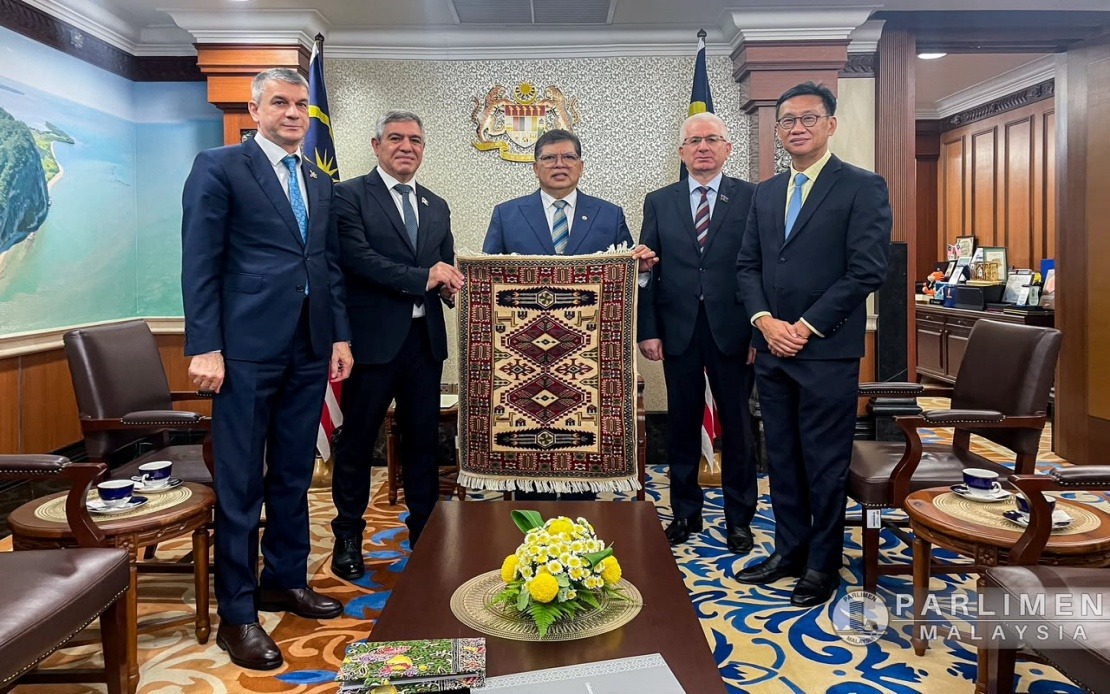
A high-level delegation from Azerbaijan's parliament has concluded a working visit to Malaysia aimed at broadening institutional cooperation and unlocking fresh economic opportunities between the two nations. Led by Vugar Bayramov, who heads the Working Group for Azerbaijani-Malaysian Interparliamentary Relations in the Azerbaijani Parliament, and accompanied by fellow Member of Parliament Bakhtiyar Aliyev, the delegation engaged in substantive discussions with key figures across Malaysia's political and business landscape.
The visit underscores a deliberate strategy by Baku to strengthen formal parliamentary channels with Southeast Asian partners. While bilateral relations between Azerbaijan and Malaysia have historically existed, the establishment of dedicated working groups signals a shift towards more structured engagement. For Malaysia, the visit represents an opportunity to broaden its diplomatic footprint in the Caucasus region and develop partnerships with a country increasingly positioning itself as a bridge between Europe and Asia.
During their time in Kuala Lumpur, Bayramov and Aliyev met with Dewan Rakyat Speaker Tan Sri Johari Abdul, a significant protocol gesture that reflects the importance placed on legislative-level cooperation. Such courtesy calls establish the foundation for ongoing dialogue between parliamentary bodies and create formal channels through which future legislative initiatives can be coordinated. These interactions go beyond ceremonial protocol, often resulting in memoranda of understanding that guide practical collaboration on policy matters of mutual interest.
The delegation's engagement with parliamentary committees proved equally substantive. Meetings with Wong Chen, chairman of the Special Select Committee on International Relations and International Trade, directly addressed trade and economic dimensions of the bilateral relationship. Similarly, discussions with Zahir Hassan, head of the West Asia Friendship Group, provided a platform for deeper exploration of regional security, cultural, and diplomatic concerns. These committee-level interactions allow legislators to assess compatibility on specific policy issues and identify areas where formal cooperation could be formalised.
Conversations with Dewan Negara President Datuk Awang Bemee Awang Ali Basah added an upper-house dimension to the engagement, ensuring comprehensive parliamentary coverage. Both chambers exchanged views on enhancing institutional relations, laying groundwork for future cooperation between Malaysia's bicameral parliament and Azerbaijan's unicameral legislature. Such high-level protocol exchanges, though sometimes understated in media coverage, carry significant diplomatic weight in establishing mutual respect and political will for sustained engagement.
Beyond the political sphere, the delegation's economic engagement with Malaysian business representatives revealed the commercial underpinnings of this diplomatic push. Meetings with the Malaysian National Chamber of Commerce and Industry secretary-general S. Gnanasambanthan and representatives of over 20 Malaysian business entities suggest serious intent to move relations beyond symbolic gestures. Business-to-business connections often prove more durable than government-level ties, creating economic interdependence that stabilizes diplomatic relations during periods of political tension.
The discussions touched on expanding trade flows, identifying investment opportunities, and fostering collaboration between Azerbaijan's and Malaysia's private sectors. For Malaysian enterprises, Azerbaijan offers potential entry points into energy markets and regional trade networks spanning the Caucasus and Central Asia. Conversely, Azerbaijani businesses may find Malaysia useful as a hub for accessing broader Southeast Asian markets. Such commercial complementarity provides tangible incentive structures that sustain diplomatic relationships beyond official rhetoric.
Speaker Johari's subsequent reflections on the visit carried particular significance, emphasizing how people-centred diplomatic initiatives transcend formal state interactions. His observation that parliamentary exchanges serve as conduits for human connection amid geopolitical uncertainty speaks to a broader recognition that parliamentary diplomacy operates at a different level than traditional foreign ministry engagement. Legislators bring constituency perspectives and longer-term institutional viewpoints that sometimes diverge from executive branch positions, enriching bilateral dialogue.
Johari's framing also acknowledges the context of regional complexities—the reference to geopolitical uncertainties likely alludes to ongoing tensions in the Middle East and broader Asian dynamics that indirectly affect both countries' strategic calculations. By emphasizing dialogue's capacity to transcend borders and differences, Malaysian parliamentary leadership implicitly signals openness to engagement regardless of potential third-party sensitivities, a nuanced diplomatic position appropriate for a non-aligned nation balancing multiple international relationships.
For Malaysian policymakers, cultivating relationships with Caucasus region actors diversifies the nation's diplomatic portfolio and provides alternative channels for engaging with powers like Russia and the broader post-Soviet space. Azerbaijan's strategic location, energy resources, and growing international profile make it a worthwhile interlocutor, particularly as Malaysia navigates multipolar competition in Asia. Reciprocally, Azerbaijan's interest in strengthening Malaysian ties reflects broader efforts to expand diplomatic recognition and economic partnerships beyond traditional European and Middle Eastern focuses.
The visit also reflects shifting priorities within Azerbaijan's own foreign policy, where parliamentary diplomacy increasingly complements traditional state-to-state engagement. By deploying parliamentary delegations, Baku demonstrates commitment to building institutional relationships that survive changes in executive leadership or diplomatic circumstances. This approach has proven effective elsewhere, particularly in smaller nations where parliamentary networks sometimes prove more resilient than governmental ties.
Moving forward, the success of this delegation visit will be measured by concrete outcomes: formal cooperation agreements, business transactions, or parliamentary exchange programs that demonstrate tangible follow-through. Initial signals from both sides suggest genuine intention to develop the relationship, though actual implementation will depend on alignment of specific interests and capacity for both nations to resource new commitments. For Malaysia and the broader Southeast Asian region, engagement with Azerbaijan represents another thread in the complex tapestry of twenty-first century multilateral relations, where middle powers pursue flexible partnerships adapted to evolving regional circumstances.

