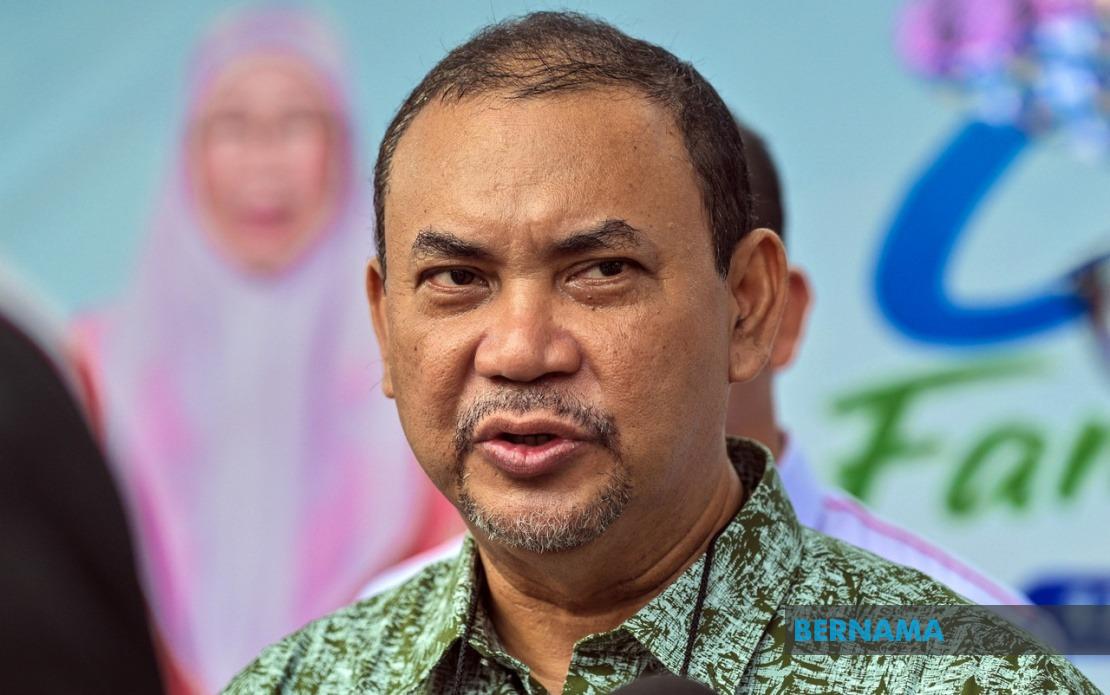
Datuk Azman Abidin, who serves as Prime Minister's Political Secretary and has been tapped to lead efforts in Ampang parliamentary constituency, has given his word to strengthen how government support reaches residents in the area. Following his assignment by Prime Minister Datuk Seri Anwar Ibrahim, Azman outlined a vision for more systematic, organised and responsive delivery of welfare initiatives to those living within the constituency's boundaries.
The coordinator's approach involves working closely with the Implementation Coordination Unit within the Prime Minister's Department, positioning this office as a central hub through which requests for assistance can flow. Rather than residents navigating multiple government touchpoints, Azman's office will serve as the primary intake point for welfare applications specific to Ampang, streamlining what has historically been a fragmented process across various agencies.
This structural reorganisation reflects a broader push within government circles to improve service delivery at the constituency level. By designating a single point of contact within the Prime Minister's political apparatus, officials hope to eliminate gaps where requests fall through administrative cracks. The strategy echoes similar initiatives elsewhere in Southeast Asia where coordinators have been empowered to act as ombudsmen for their respective areas, though Malaysia's model ties this function more directly to the executive branch.
Azman emphasised that coordination extends beyond government bureaucracy alone. Working alongside assemblymen who represent the various state seats within Ampang parliamentary constituency, community leaders, and other stakeholders will be essential to identifying genuine welfare needs. This multi-level engagement recognises that local elected representatives and grassroots organisations often possess ground-level knowledge that federal agencies lack, enabling more targeted and appropriate assistance.
The commitment carries particular weight given Ampang's diversity. The constituency encompasses both urban and semi-urban areas with varied populations facing distinct challenges ranging from housing affordability to employment support. A coordinated approach theoretically allows government programmes to be tailored to specific neighbourhood conditions rather than applied uniformly across all residents. This nuance matters significantly in Malaysian urban centres where concentration of lower-income households in particular zones creates localised pressure points requiring focused intervention.
For residents, the practical implication is clearer access to government support mechanisms. Rather than searching across multiple ministry websites or visiting various offices, people can now direct welfare enquiries to Azman's office, which will then liaise with appropriate agencies. This administrative consolidation should theoretically reduce the time and frustration residents experience when seeking assistance, particularly important for elderly constituents or those unfamiliar with bureaucratic navigation.
Azman's statement emphasised three operational pillars for his tenure: professionalism, integrity and accountability. These principles suggest an intention to move beyond patronage-driven distribution of welfare, a persistent concern in Malaysian politics where government assistance is sometimes perceived as reward for political loyalty rather than objective need. By emphasising accountability, the coordinator signals that decisions will be transparent and reviewable, though implementation will ultimately test whether this promise translates to practice.
The role of constituency coordinators has gained prominence as prime ministers seek to strengthen connections between federal government and grassroots levels. In Malaysia's system, where Members of Parliament hold significant legislative power but limited executive authority, appointing them as formal coordinators with access to resources represents an attempt to bridge that gap. Azman's appointment reflects Prime Minister Anwar Ibrahim's strategy of energising parliamentary representation beyond traditional legislative functions.
For Ampang residents, success will hinge on how quickly this coordination machinery responds to applications. Government agencies sometimes operate on lengthy timelines, and introducing another layer of coordination could potentially slow processes if bureaucratic handoffs become cumbersome. However, if the Implementation Coordination Unit proves effective at expediting cross-agency communication, residents should see faster turnaround on assistance requests compared to previous decentralised approaches.
The broader context involves government spending on targeted welfare programmes, which have expanded significantly in recent years through initiatives like the Bantuan Keluarga Malaysia scheme and various ministry-specific assistance programmes. Azman's coordination role essentially positions Ampang residents to access these funds more efficiently, though funding levels and eligibility criteria remain determined by respective agencies rather than by the constituency coordinator. His function is facilitating access rather than creating new resources.
This initiative also reflects political considerations ahead of potential electoral cycles. Constituency-level coordination demonstrates government responsiveness, a key electoral asset. By improving visible service delivery in Ampang, the ruling coalition aims to demonstrate competence and attentiveness to constituent concerns. Simultaneously, assemblymen and local leaders gain a formal channel through which they can advocate for their communities, potentially improving relationships between federal and state-level representatives.
The success of Azman's appointment ultimately depends on buy-in from implementing agencies, adequate staffing and resources for his office, and genuine commitment to removing bureaucratic obstacles. The statement's emphasis on structured delivery and coordination is encouraging, though Malaysian governance records show that administrative reforms often face practical challenges during implementation. Ampang residents will judge this initiative not on promises but on actual improvements in processing times and responsiveness to their welfare needs.

