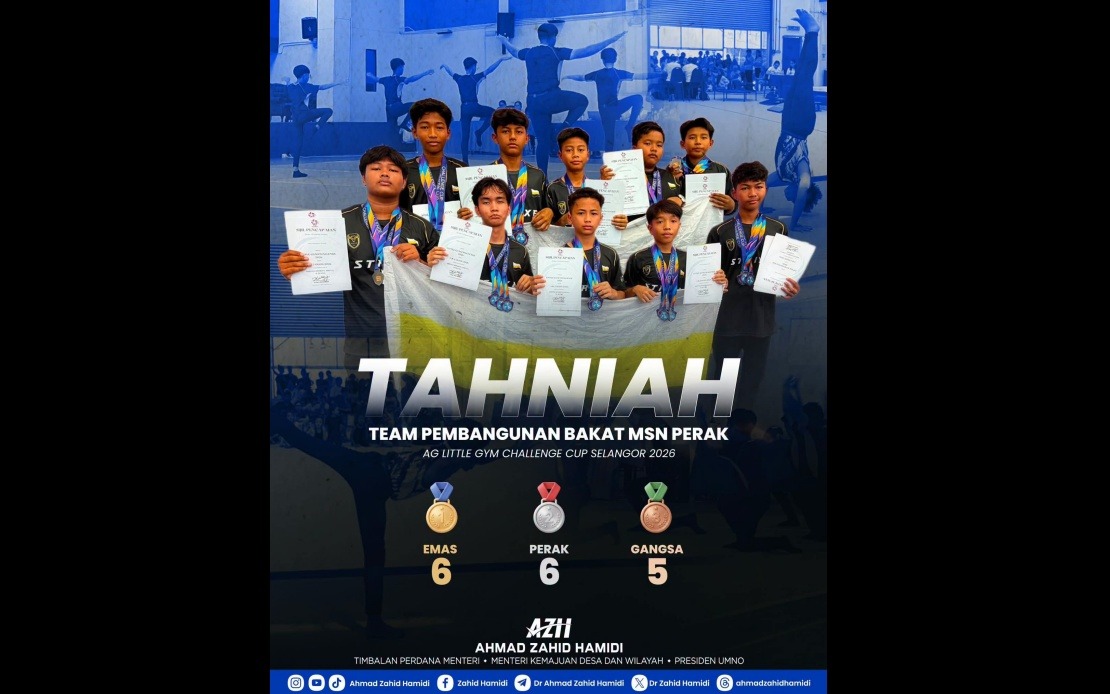
A gymnastics contingent from Bagan Datuk has etched a remarkable milestone in the district's sporting history by capturing six gold medals at the AG Little Gym Challenge Cup Selangor 2026, an invitational competition held in Kajang on August 1. The young athletes' comprehensive haul also included six silver and five bronze medals, showcasing the depth of talent emerging from the Perak constituency. The achievement has resonated beyond the local community, drawing recognition from senior political leadership and underscoring how regional sporting competitions continue to identify and nurture Malaysia's future athletic talent.
Deputy Prime Minister Datuk Seri Dr Ahmad Zahid Hamidi, who represents Bagan Datuk in Parliament, took to social media to celebrate the result, framing the victory as evidence of the district's multifaceted strengths. His public endorsement reflects a broader political recognition of youth sports development as a marker of community wellbeing and socioeconomic vitality. Such acknowledgement from national leadership can significantly elevate the profile of grassroots sporting initiatives, encouraging further investment and participation in disciplines that often struggle to attract sustained funding in comparison to mainstream sports like football and badminton.
In his statement, Ahmad Zahid emphasised that the gymnasts' success demonstrated capacity across multiple domains of human development. He articulated a vision where young people from Bagan Datuk excel not merely in conventional academic pathways but equally in competitive athletics when afforded appropriate resources and mentorship. This framing is particularly significant for Malaysian policymakers and educators grappling with how to create more holistic developmental opportunities for youth beyond traditional examination-focused education systems.
The Deputy Prime Minister extended formal congratulations to the entire contingent, including not only the competing athletes but also their coaches, families, and support networks. This inclusive recognition acknowledges a reality often overlooked in sports coverage: individual medals represent collective effort spanning training environments, financial commitment from households, professional coaching expertise, and parental sacrifice. By highlighting these interconnected roles, Ahmad Zahid's remarks underscore the systemic nature of athletic development and the shared responsibility for cultivating sporting excellence at the community level.
The Bagan Datuk Generasi Muda Gymnastics Club amplified the celebratory messaging through their own social media communications, framing the medalist harvest as validation of their training philosophy and programme structure. Their statement emphasised character development alongside competitive performance, noting that the achievements reflected months or years of disciplined preparation and psychological resilience. This positioning aligns with modern sports development discourse that values intrinsic motivation, persistence through setbacks, and personal growth trajectories rather than reducing athletic success to medal counts alone.
The club's messaging strategically avoided treating the Kajang competition as a culminating achievement, instead characterising it as a milestone within a longer journey of athletic progression. This language choice carries implications for how young competitors view their development, potentially fostering ambition for higher-level competitions and sustained engagement with gymnastics rather than viewing early success as a termination point. For parents considering long-term investment in their children's sporting pursuits, such reassurance that local victories represent developmental phases rather than destination achievements can justify ongoing financial and time commitments.
Gymnastics has historically occupied a niche position within Malaysia's sporting ecosystem, competing for athlete recruitment and sponsorship attention against established disciplines. The Bagan Datuk team's success at a state-level challenge cup demonstrates that competitive gymnastics programming exists beyond Malaysia's major urban centres, suggesting a distributed network of clubs and coaches working to develop the sport across different regions. This decentralisation of gymnastics talent development contrasts with perceptions that elite athletic training concentrates primarily in Klang Valley and other metropolitan zones.
For Southeast Asian sports development comparisons, Malaysia's emergence of competitive gymnastics talent carries implications for regional sporting rankings and medal distributions at multinational games. Countries throughout the region have prioritised gymnastics as an accessible pathway for young athletes, particularly given relatively lower infrastructure requirements compared to sports demanding extensive facilities. As Malaysian gymnastics clubs like Bagan Datuk Generasi Muda mature their coaching and competition structures, they contribute to elevating the region's overall competitive standard and athlete pool.
The timing of this achievement also reflects post-pandemic recovery in youth sports participation, as communities reinvest in structured athletic programmes following disruptions to training schedules and competitions during lockdown periods. The successful hosting and participation in the August 2026 challenge cup indicates that regular competitive calendars have resumed, providing young athletes venues to test their skills against peers from other districts and states. For Malaysian sports administrators tracking participation trends, such events serve as barometers of sector health and youth engagement levels.
The Bagan Datuk gymnasts' success carries particular significance for female athlete development, as gymnastics typically attracts higher female participation rates compared to many other disciplines. If a substantial proportion of the six gold medalists represent young women athletes, the achievement demonstrates pathways for girls' athletic advancement in a nation increasingly focused on gender-inclusive sports participation policies. Such visibility of female gymnastic talent contributes to normalising competitive athletics as accessible and appropriate for young women, potentially encouraging increased participation across schools and clubs throughout Perak and neighbouring states.
Looking forward, the medalist group from Bagan Datuk will likely face questions about progression pathways to state and national selection processes. The district's demonstrated capability to produce competitive gymnasts at regional level may prompt federations and state sports councils to invest in identifying and supporting athletes identified through competitions like the Kajang challenge cup. Such talent pipeline development, when systematically pursued, can substantially elevate national team performance across age categories and international competitions ranging from Southeast Asian Games to potential Olympic qualification pathways.
The public celebration of these young gymnasts' achievements serves a broader social function beyond sporting recognition. It validates investment by families in non-traditional athletic disciplines, demonstrates that excellence emerges through pathways beyond established elite sports systems, and reinforces community pride in competitive achievement. For Bagan Datuk residents and Malaysian youth more broadly, the story exemplifies how access to quality coaching, peer competition, and parental support can transform local sporting culture and produce athletes capable of representing their districts with distinction at regional competitions.

