Bahrain's development minister has confirmed the kingdom has not activated a $5.3 billion currency swap facility secured from the United Arab Emirates, even as the country grapples with the economic fallout from intensifying regional tensions. The revelation underscores Bahrain's cautious optimism about its near-term prospects, despite experiencing among the steepest economic pressures in the Gulf region since conflicts with Iran escalated earlier this year. Speaking to Reuters, Noor bint Ali Alkhulaif, who serves as both Minister of Sustainable Development and Chief Executive of the Bahrain Economic Development Board, stressed that the unused swap demonstrates confidence in the trajectory of economic stabilisation without resorting to emergency financial measures.
The timing of Alkhulaif's comments proved particularly significant, coming as fresh tensions flared across the region and underscoring the persistent vulnerability facing Bahrain's economy. When the Iran conflict first erupted in March, it caught the kingdom at a precarious moment—already managing one of the Gulf's heaviest debt loads while attempting to implement fiscal restraint. International ratings agency S&P Global has projected that the conflict will drag Bahrain's economic growth into negative territory, forecasting a contraction of 3 per cent for the current year alongside a yawning fiscal deficit approaching 8.5 per cent of gross domestic product. These figures paint a sobering picture for a nation that had hoped to focus its energy and resources on ambitious development initiatives rather than crisis management.
Yet Alkhulaif painted a more hopeful picture of the underlying recovery momentum, one that appears to vindicate the decision to preserve the swap facility rather than deploy it. She highlighted how major manufacturing and logistics enterprises operating within and through Bahrain have successfully recalibrated their supply chains, identifying alternative routes that circumvent the strategically vital Strait of Hormuz. This adaptation demonstrates the operational flexibility of the private sector in responding to geopolitical disruption. More tangibly for Bahrain's tourism sector—historically a significant contributor to government revenues—visitor numbers from other Gulf states have rebounded to approximately their pre-conflict levels. Remarkably, travellers from within the region accounted for roughly 90 per cent of Bahrain's 15 million total visitors in the previous year, making their return to the kingdom critically important for hospitality businesses and related services.
The decision to preserve rather than draw upon the swap facility warrants careful interpretation. While Bahrain's foreign exchange reserves have declined to approximately $3 billion—their lowest point since the COVID-19 pandemic disrupted global economic activity—the government's restraint in accessing emergency funding suggests officials believe the current reserve level remains sufficient for near-term obligations. Alkhulaif, who also serves as a board member of Bahrain's central bank and was instrumental in negotiating the April swap agreement with the UAE, formally confirmed that the facility remained unexercised based on available information. This conscious choice reflects either genuine confidence in stabilisation or a strategic preference to preserve the swap as a genuine emergency backstop rather than routine liquidity management.
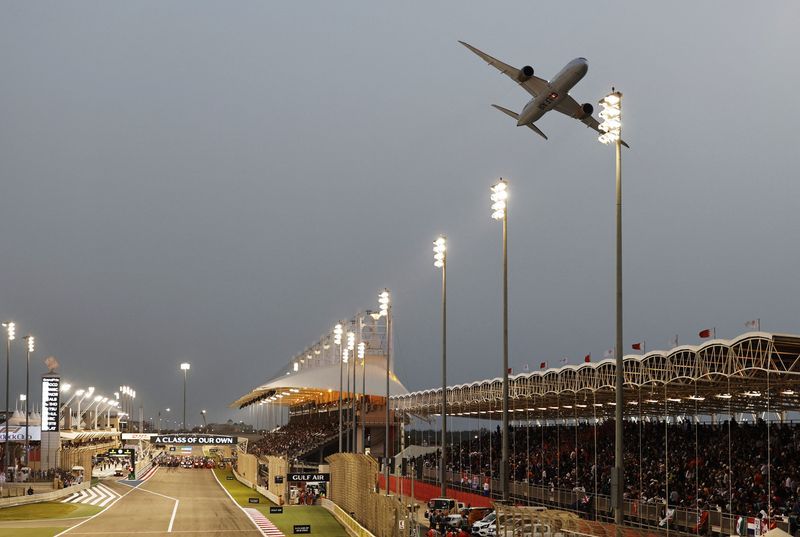
Beyond financial matters, Bahrain is actively pursuing the restoration of its cancelled Formula One Grand Prix—an event that assumes particular symbolic and economic importance following its March cancellation alongside Saudi Arabia's race as hostilities intensified. The race represents not merely a sporting spectacle but a major revenue generator and international showcase for the kingdom. Typically attracting approximately 105,000 spectators across the racing weekend, the event draws a significant cohort of high-spending international visitors comprising roughly 10 to 15 per cent of total attendance. Their spending at hotels, restaurants, retail establishments, and entertainment venues generates meaningful economic activity beyond direct race revenues.
Formula One sources suggest that if reinstated, the most realistic window for Bahrain's 2024 race would be the weekend of October 3-4, positioned strategically between the Azerbaijan Grand Prix in Baku and the Singapore Grand Prix scheduled for October 11. This placement would require only modest adjustments to the international motorsport calendar while providing adequate preparation time for circuit operations and logistics. However, Alkhulaif cautioned that broader geopolitical conditions remain paramount to any decision, with American-Iranian tensions needing to ease sufficiently before the race can proceed. She confirmed discussions were ongoing regarding potentially restoring cancelled races to the calendar but emphasised that no formal confirmation had yet emerged, though prospects appeared promising.
Timing considerations have become increasingly pressing as F1 teams and organisers must plan months in advance to ensure adequate preparation. A decision regarding Bahrain's participation must arrive relatively soon to allow sufficient lead time for teams to make necessary logistical, technical, and operational arrangements. The motorsport calendar operates with considerable rigidity, and any reinstatement requires coordination across multiple stakeholder organisations. Industry experts acknowledge that procrastination risks eliminating 2024 entirely as a feasible option, potentially pushing restoration to the 2025 or 2026 seasons.
Looking further ahead, Bahrain's prospects for hosting major motorsport events appear increasingly positive beyond the immediate 2024 question. The kingdom has also positioned itself to reclaim the prestigious opening round of the 2026-27 Formula One season, contingent on sustained regional stability. Additionally, Bahrain typically hosts crucial pre-season testing rounds that prepare teams for the full championship campaign, activities that generate substantial employment and economic activity for accommodation, catering, and service providers. The earlier scheduling of Ramadan in subsequent years further favours Bahrain's positioning as a season-opening venue, aligning religious observances with sporting calendars more favourably than alternative dates would permit.
The interconnection between Bahrain's financial resilience and its ability to host marquee international events illustrates how geopolitical turbulence reverberates through multiple dimensions of economic life. A kingdom that only months earlier anticipated focusing on development initiatives must simultaneously manage currency reserves, maintain business confidence, and negotiate the restoration of cancelled sporting events. The fact that Alkhulaif can speak with some conviction about recovery and future prospects—while regional tensions remain elevated—suggests that Bahrain's private sector and government officials perceive genuine underlying resilience. Whether this optimism proves justified will depend substantially on whether American-Iranian hostilities stabilise, whether supply chains remain sufficiently adapted to regional disruptions, and whether tourist flows from neighbouring Gulf states prove durable rather than merely cyclical.
For Malaysian and Southeast Asian observers, Bahrain's experience offers instructive lessons about economic vulnerability to regional geopolitical events, the importance of maintaining adequate foreign exchange reserves and emergency credit facilities, and the broader economic significance of international sporting events and tourism to smaller developed economies. Bahrain's relatively transparent public discussion of its financial position and recovery trajectory—including confirmation of unused swap facilities—contrasts with less forthcoming approaches taken by some regional peers and demonstrates how official communication can reassure markets and investors even during crisis periods. The kingdom's strategy of preserving rather than deploying emergency liquidity signals disciplined financial management, though sustained stability ultimately depends upon diplomatic developments beyond any single nation's control.

