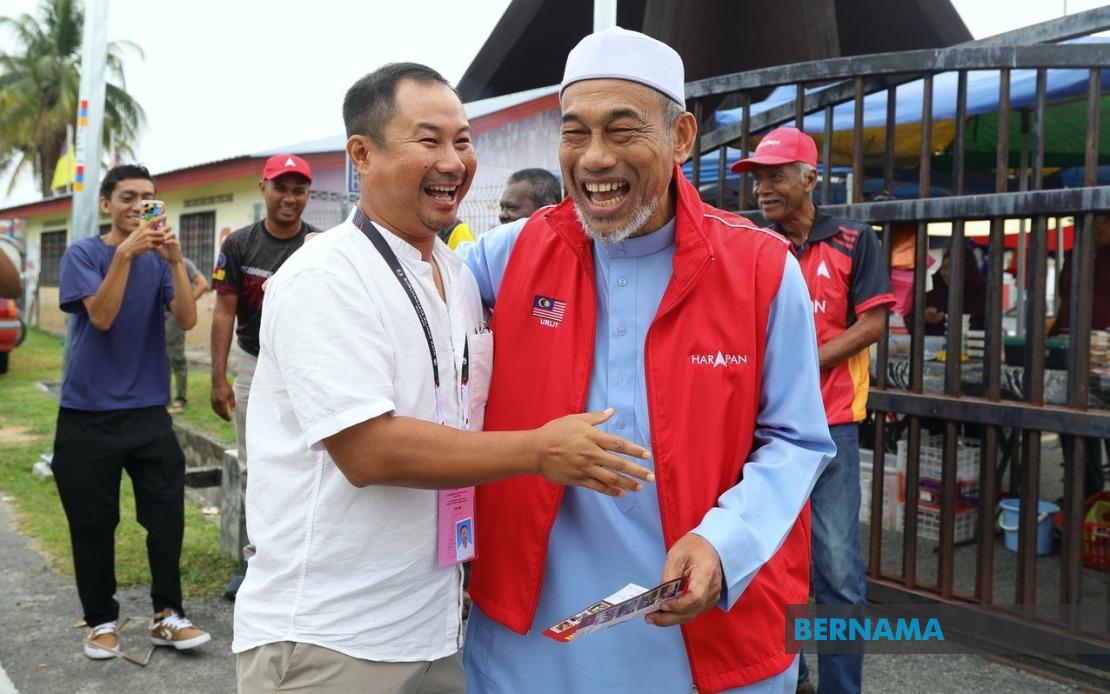
Datuk Bakri Sawir, the incumbent Pakatan Harapan representative for Klawang, is anchoring his re-election campaign on a decade-long commitment to direct constituent engagement and a growing portfolio of development projects. The 67-year-old assemblyman, who has represented the seat since 2018, enters the 16th Negeri Sembilan State Election facing competition from two challengers in what has become a three-way contest that will determine control of a modest but strategically important constituency in the state's Jelebu district.
The cornerstone of Bakri's electoral strategy rests on what he describes as a people-centric governance model fundamentally different from conventional political representation. Rather than maintaining a service centre that residents must visit, he has made it a practice to conduct direct home visits and deliver assistance personally to constituents' doorsteps. This hands-on methodology, which has defined his tenure since his initial election in 2018, reflects a deliberate choice to embed himself within the community rather than maintain institutional distance from those he represents. With the constituency comprising fewer than 14,000 registered voters, such an approach has enabled him to cultivate relationships with substantial portions of the electorate across two full electoral cycles.
Bakri's accessibility is further reinforced by his decision to reside within the Klawang constituency itself, a factor he considers essential to remaining available to residents throughout the year rather than only during formal campaign periods. This residential commitment contrasts sharply with his implicit criticism of representatives who maintain minimal presence between electoral cycles, appearing to constituents primarily during five-yearly campaigns. The accessibility argument carries particular weight in Malaysia's state-level politics, where proximity and personal relationships often outweigh party machinery in determining electoral outcomes, particularly in constituencies with modest voter populations where individual performance becomes highly visible and subject to direct assessment by the electorate.
Philosophically, Bakri frames his political engagement as a form of service motivated by ethical principles rather than pure electoral calculation. His stated desire to transform politics into an act of worship and a pathway to spiritual fulfilment suggests an attempt to elevate his campaign beyond transactional promises to the moral plane, potentially appealing to voters concerned about the sincerity and integrity of their representatives. By explicitly acknowledging that not all constituents will support him and expressing respect for divergent political views, he projects confidence in his track record while avoiding the aggressive partisanship that can alienate swing voters in closely contested seats.
The development initiatives Bakri highlights reveal a mixed strategy combining aspirational long-term projects with pragmatic medium-term infrastructure improvements. His most ambitious vision involves establishing a higher education institution in the Jelebu district—specifically a Universiti Malaysia Negeri Sembilan—designed to strengthen human capital development and address educational access in a largely rural area. However, recognising current fiscal constraints at both state and federal levels, he has recalibrated expectations toward achievable projects that can deliver tangible economic benefits within a single electoral term.
Among these more immediately realizable initiatives is the development of a Rest and Recreation Area (R&R) facility in Tembun, Hulu Klawang. This project represents strategic economic thinking tailored to the constituency's geography and demographics. By providing proper stopover infrastructure along regional transport corridors, the facility could catalyse tourist traffic and create commercial opportunities for local food vendors, petrol retailers, and accommodation providers. Such targeted infrastructure development addresses both quality-of-life improvements for residents and economic diversification for a constituency whose traditional revenue sources may be limited.
Bakri's proposal to transform Bukit Tajali into a recreational park reflects recognition of Malaysia's growing agrotourism and adventure tourism markets. By developing the site to accommodate diverse activities ranging from casual leisure to outdoor adventure pursuits, he positions the Klawang constituency to capture spending from both day-trippers and extended visitors. This diversification of recreational offerings aligns with broader Southeast Asian tourism trends and could particularly appeal to urban visitors from nearby Selangor and Kuala Lumpur seeking weekend escapes.
The development of Jelebu's agrotourism potential through historical narratives similarly demonstrates sophisticated economic reasoning. The British Memorial Stone, a significant colonial-era landmark within the district, provides both cultural anchoring and tourist appeal. By integrating this historical asset into agrotourism development, Bakri proposes extracting economic value from heritage while establishing differentiated tourism positioning distinct from competing rural attractions throughout Negeri Sembilan and neighbouring states.
The electoral context surrounding Klawang remains fluid despite Bakri's incumbency. His opponents include Danni Rais, a 38-year-old Perikatan Nasional candidate representing the Malay-Muslim conservative coalition, and Muhammad Adib Musa, a 25-year-old Bersatu representative offering youth-focused alternatives. The three-way split suggests that no candidate can claim overwhelming support, creating conditions where Bakri's proven track record and constituent relationships might prove decisive. However, the Perikatan Nasional platform has gained traction in rural Negeri Sembilan constituencies, and Bersatu's performance remains unpredictable following its fractious recent history.
The broader 16th Negeri Sembilan State Election, scheduled for August 1 with early voting on July 28, will determine the state's political direction across 36 state assembly seats. A total of 889,490 registered voters are eligible to participate, including 867,151 ordinary voters alongside military and police personnel voting early. The dissolution of the previous assembly on June 5 initiated a compressed campaign period, potentially advantaging incumbents like Bakri who have established institutional networks and prior constituent records compared to first-time candidates operating within condensed timeframes.
Bakri's campaign represents a deliberate bet on localism and personal service delivery as the primary basis for electoral retention in the contemporary Malaysian political environment. Rather than emphasizing party ideology or national narratives, he positions himself as a development broker and community advocate with proven capacity to navigate bureaucratic systems on behalf of constituents. This localized approach reflects the persistent importance of personal relationships and demonstrated competence in Malaysian electoral politics, particularly at the state level where administrative accessibility and individual representative performance remain central to voter decision-making.
The outcome in Klawang will offer insight into whether accumulated service records and personal accessibility remain decisive factors in retaining state seats, or whether broader currents within Perikatan Nasional's appeal or Bersatu's unpredictability can displace established incumbents. Bakri's reliance on grassroots connection and incremental development projects suggests confidence that electoral politics in Malaysia's smaller constituencies remains fundamentally driven by tangible service delivery and constituent relationships rather than abstract national or ideological considerations.

