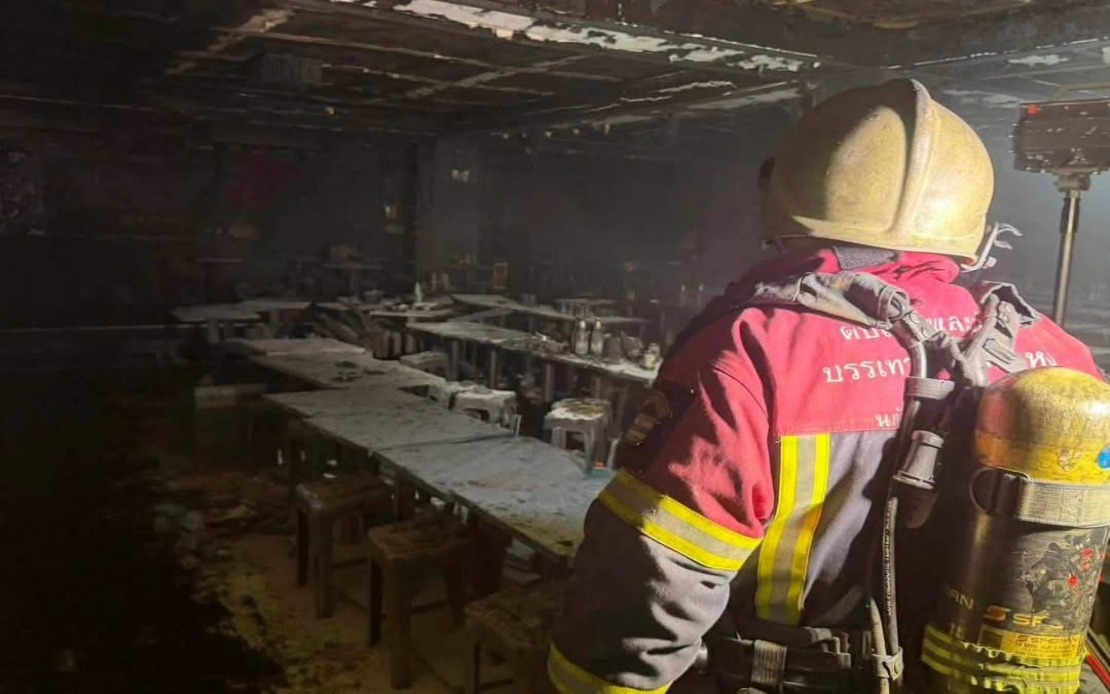
One of Thailand's deadliest bar fires has claimed at least 27 lives in Bangkok's Lat Phrao area within Chatuchak district, with authorities racing to determine what triggered the catastrophic pre-dawn blaze. The incident, which erupted after midnight on Monday, left 18 additional people injured and has raised serious questions about emergency preparedness and venue safety standards across Southeast Asia's hospitality sector.
Bangkok Governor Chadchart Sittipunt arrived at the scene around 2.40 am to assess the devastation firsthand. Speaking to media, he confirmed that police and forensic specialists have assumed control of the investigation into the fire's origin and spread. The Bangkok Metropolitan Administration has secured the premises to allow detailed forensic examination, with particular emphasis on reconstructing how flames moved through the structure so rapidly and identifying systemic failures that may have contributed to the death toll.
According to the BMA's Department of Disaster Prevention and Mitigation, the confirmed fatalities comprise nine men and 18 women. Among the injured, the distribution reveals the severity: eight individuals sustained critical injuries requiring intensive care, seven were moderately injured, and three suffered minor trauma. Medical personnel continue victim identification procedures, with families advised to monitor official coordination channels for updates on their loved ones.
What emerges as particularly alarming from eyewitness accounts and preliminary observations is the speed at which the fire consumed the venue. Governor Chadchart noted that flames spread with remarkable velocity through the ceiling structure, suggesting the inferno propagated through air conditioning ducts or utility spaces rather than spreading methodically across the main floor. Paradoxically, many plastic tables and chairs inside the bar remained largely intact, indicating that most casualties likely resulted from asphyxiation caused by smoke inhalation rather than thermal injuries.
Thailand's Prime Minister Anutin Charnvirakul toured the scene in the early morning hours and gathered details directly from survivors. One musician performing when the fire ignited provided crucial testimony to Anutin, describing how an electrical fault at the switchboard initiated the sequence of events. The performer recounted that explosive detonations followed almost immediately, triggering panic as patrons attempted to flee through thickening smoke. Anutin publicly acknowledged that investigators have yet to confirm the electrical switchboard theory definitively, but preliminary evidence points in this direction.
Investigators have focused attention on a troubling discovery: several fatalities were discovered clustered near an emergency exit on the left side of the building, suggesting possible obstructions that may have prevented escape or created a deadly bottleneck during evacuation. Governor Chadchart cautioned against premature conclusions but indicated that blocking or obscuring emergency egress appears likely to have significantly increased the casualty count. This possibility echoes warnings long voiced by building safety experts regarding Southeast Asian entertainment venues where profit maximization sometimes conflicts with regulatory compliance.
The Bangkok Metropolitan Administration has initiated a comprehensive audit of the establishment's operational licence and adherence to safety protocols. This inspection encompasses the adequacy and functionality of emergency exits, the visibility and condition of directional signage, and whether evacuation routes contained physical or administrative obstructions. Questions also loom regarding whether safety training was provided to staff and whether fire suppression equipment was properly maintained and accessible.
For Malaysian observers, this tragedy carries sobering implications. Thailand and Malaysia share similar hospitality sectors and face comparable regulatory challenges, particularly regarding smaller venues that sometimes operate with minimal oversight. The incident underscores the critical importance of rigorous enforcement of fire safety codes, regular maintenance of electrical systems, and unobstructed emergency pathways—measures that require sustained investment and unwavering regulatory attention rather than periodic crackdowns following disasters.
The incident reflects broader vulnerabilities in how Southeast Asian countries inspect and monitor nightlife establishments. Many bars and clubs operate during hours when municipal oversight diminishes, creating opportunities for deferred maintenance or unauthorised alterations to safety features. The rapid vertical spread through ceiling structures indicates the fire may have exploited pathways designed for air circulation rather than contained by fire-rated separations, a common construction shortcut in the region.
Thailand's authorities face mounting pressure to explain how a venue could operate while harbouring latent hazards capable of producing such catastrophic outcomes. The focus on the electrical switchboard provides an investigative direction, but deeper systemic questions persist regarding inspection frequency, enforcement mechanisms, and venue operator accountability. These questions resonate throughout the region where tourism-dependent economies balance economic growth against public safety obligations.
The casualty figures—predominantly women among the fatalities—raise additional concerns about whether certain areas of the venue were less accessible for evacuation or more densely occupied. Understanding the precise location distribution of victims will inform recommendations for future venue design and operational procedures. Authorities emphasise that detailed forensic examination must precede final conclusions, but preliminary findings will likely drive regulatory reforms across Thai hospitality settings.
As identification of victims continues and authorities piece together the timeline, Bangkok's response to this catastrophe will establish precedent for how Southeast Asian governments address systemic safety failures. The incident demands not merely investigation into this specific tragedy but comprehensive re-evaluation of how entertainment venues across the region comply with fire codes and emergency protocols—a conversation Malaysia and neighbouring countries must urgently initiate.

