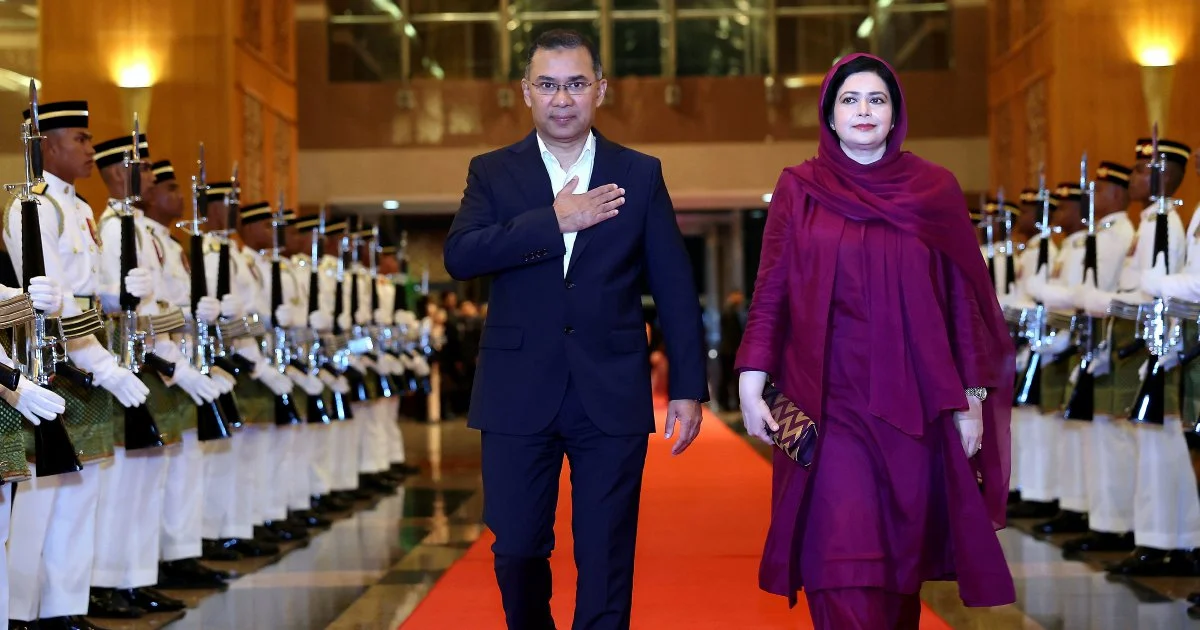
Bangladesh Prime Minister Tarique Rahman has extended a formal invitation to Malaysian businesses and entrepreneurs to consider Bangladesh as a destination for expanding their regional operations, highlighting significant fresh opportunities across the nation's evolving economic landscape. The appeal comes at a moment when Bangladesh has undertaken deliberate structural reforms designed to make the investment climate more attractive to overseas capital, positioning the South Asian nation as an increasingly viable alternative to regional competitors for Malaysian firms evaluating expansion strategies.
This diplomatic outreach underscores a shift in how Bangladesh approaches foreign direct investment, moving beyond passive receptivity toward active recruitment of international business players. Malaysian companies, which have traditionally focused investment efforts on Southeast Asia and China, may find the timing particularly relevant given the region's current economic dynamics and the need to diversify geographical exposure. The invitation suggests Bangladesh recognises that Malaysian enterprises possess both the capital and operational expertise that could drive meaningful economic development within its borders.
Bangladesh's business-friendly initiatives encompass multiple dimensions of the investment infrastructure, including regulatory streamlining, tax incentives, and improved operational frameworks designed to reduce friction for foreign investors. The country has invested substantial resources in manufacturing capabilities, particularly in garments and textiles, but has increasingly diversified into technology, pharmaceuticals, and light manufacturing sectors that could appeal to Malaysian investors seeking supply chain diversification or market access. The textile sector alone remains one of South Asia's most significant, with Bangladesh serving as a major global supplier, yet many Malaysian companies remain underrepresented in these value chains.
For Malaysian businesses, the strategic calculation around Bangladesh investment involves multiple considerations beyond mere market size. The nation's geographic positioning provides access to South Asian consumer markets that remain substantially underpenetrated by Southeast Asian firms, while its labour cost structure remains competitive compared to ASEAN peers. Additionally, Bangladesh's infrastructure development initiatives, particularly in power generation, port facilities, and transportation networks, have created tangible improvements in the ease of doing business that were previously significant obstacles to foreign investors.
The recent political and economic stabilisation in Bangladesh has removed considerable uncertainty that previously deterred some overseas investors. While Bangladesh navigated significant political turbulence in preceding years, more recent developments have created a window of relative stability that policymakers are explicitly attempting to leverage for attracting international capital. This stability messaging from Prime Minister Tarique Rahman appears calibrated toward reassuring investors who may harbour residual concerns about geopolitical risk in the South Asian context.
Malaysian investors might particularly find interest in Bangladesh's emerging technology and digital sectors, where domestic entrepreneurship has flourished but requires foreign partnership and investment capital for scaling operations. The availability of educated, English-speaking workforces in software development, business process outsourcing, and information technology services represents a tangible advantage that could attract Malaysian technology and service companies seeking to establish offshore operations. Several Malaysian multinational corporations have previously explored Bangladesh ventures, but systematic expansion remains limited compared to presence in other regional markets.
The investment climate improvement encompasses both hard infrastructure and regulatory advancement. Bangladesh has reformed its Foreign Direct Investment policies, streamlined approval processes for business registration, and established special economic zones with purpose-built facilities for manufacturing and export-oriented operations. These structural enhancements lower transaction costs and timeline uncertainty for Malaysian companies conducting feasibility assessments for Bangladesh-based ventures. Access to these zones provides foreign investors operational flexibility that mirrors arrangements available in competitor nations across the region.
From Bangladesh's perspective, attracting Malaysian capital addresses multiple policy objectives simultaneously. Foreign direct investment strengthens foreign exchange reserves, generates employment, transfers technological expertise, and enhances the nation's standing within regional economic architecture. Malaysian investors bring not only capital but operational experience in navigating Southeast Asian regulatory environments and supply chain complexities that prove transferable to South Asian contexts. The resulting partnerships tend to strengthen both bilateral business relationships and broader diplomatic ties between nations.
The timing of this outreach reflects broader regional positioning within South Asian economic forums and trade arrangements. Bangladesh seeks to establish itself as a central node within emerging South Asian supply chains and regional trade corridors, requiring partnerships with established business communities across adjacent regions. Malaysian companies, through their investments, would contribute to this positioning while gaining first-mover advantages in sectors that remain relatively open to foreign participation. The mutual benefit proposition positions Bangladesh not as a competing alternative but as a complementary geographic allocation within diversified investment strategies.
Challenges nonetheless persist for Malaysian investors considering Bangladesh exposure. Infrastructure outside economic zones remains inconsistent, logistics reliability can be unpredictable, and corporate governance standards, while improving, remain below Southeast Asian benchmarks in certain sectors. Currency stability concerns and energy cost considerations also factor into investment decision-making for manufacturing-oriented ventures. However, these obstacles appear manageable for appropriately structured investments supported by local partnerships and operational experience.
The scale of potential collaboration remains substantial, given that Malaysian direct investment in Bangladesh currently appears modest relative to both nations' economic size and bilateral trade volumes. The gap between existing engagement levels and potential opportunity creates space for expansion through both greenfield investments and acquisition of existing operations undergoing succession or restructuring. Manufacturing firms, service providers, and technology companies all potentially qualify as candidates for Bangladesh expansion conversations initiated by Tarique Rahman's overture.