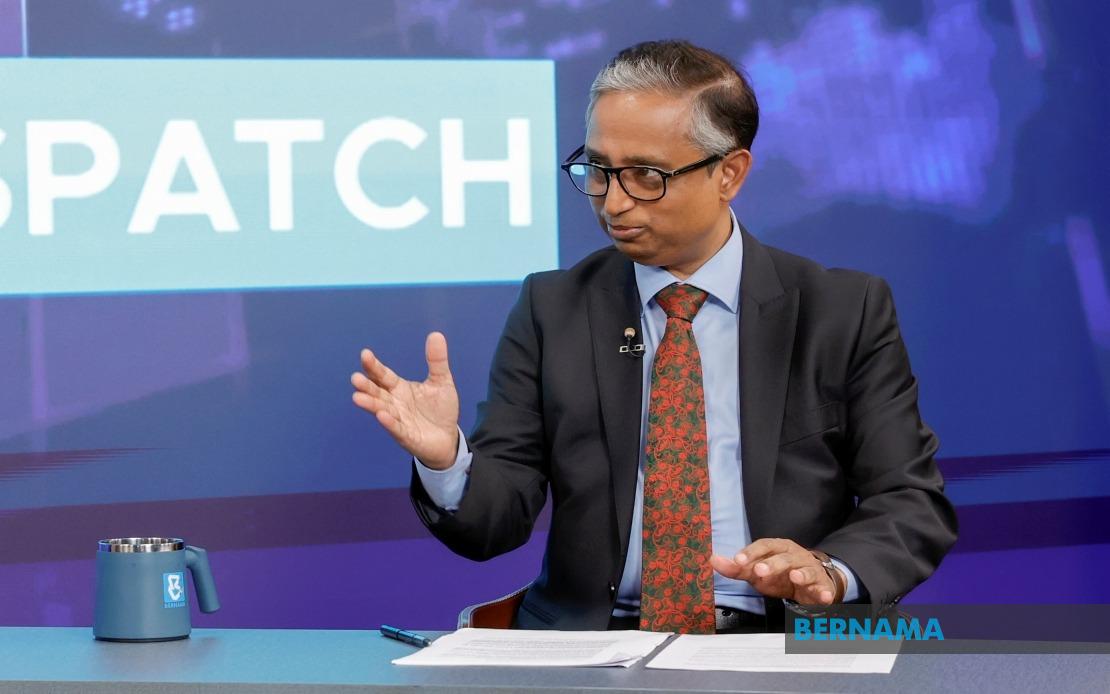
The relationship between Bangladesh and Malaysia has entered a new phase of strategic engagement, marked by Prime Minister Tarique Rahman's recent visit to Kuala Lumpur, which served as his first official bilateral trip abroad since taking office. This carefully choreographed decision to visit Malaysia ahead of other nations carries substantial diplomatic weight, reflecting how Dhaka views its partnership with Kuala Lumpur within the broader context of regional geopolitics and economic development. Bangladesh High Commissioner to Malaysia Manjurul Karim Khan Chowdhury has characterised the significance of this visit as a definitive statement about the depth of trust and partnership potential that exists between the two nations.
During his appearance on Bernama TV's programme 'The Nation', Chowdhury elaborated on what the visit accomplished despite its compressed timeframe of less than 24 hours. He emphasised that both Prime Minister Anwar Ibrahim and Tarique Rahman conveyed unmistakable signals of their determination to transform the bilateral relationship into something more comprehensive and structurally robust. The condensed nature of the visit did not diminish its productivity; rather, it demonstrated the efficiency and strategic focus that both governments brought to their discussions. This approach suggests that Dhaka and Kuala Lumpur have moved beyond ceremonial exchanges toward substantive engagement on matters of mutual interest.
A cornerstone of the renewed relationship is the decision by Malaysia and Bangladesh to accelerate negotiations toward a free trade agreement, with both sides targeting completion by 2027. This timeline is ambitious yet achievable, indicating serious commitment from both governments to formalise commercial frameworks that will unlock significant economic potential. Currently, Bangladeshi products entering the Malaysian market encounter tariff barriers averaging approximately 32 per cent, a substantial impediment to bilateral trade expansion. The proposed FTA would fundamentally alter this dynamic, dramatically reducing these protective barriers and creating conditions for Bangladeshi exports—particularly in textiles, apparel, and footwear—to penetrate Malaysian and broader ASEAN markets more competitively.
From an investment perspective, Bangladesh presents compelling opportunities for Malaysian capital, particularly in sectors where Malaysia possesses technical expertise and financial capacity. The High Commissioner has specifically identified telecommunications infrastructure, road and bridge construction, advanced manufacturing, and digital economy development as priority areas where Malaysian investors can find rewarding partnerships. Bangladesh's ongoing infrastructure expansion programme creates a ready market for these investments, while the prospect of a functioning FTA would enable Malaysian companies to use Bangladesh as a manufacturing base for products destined for ASEAN markets. This triangular arrangement—Malaysian capital and technology, Bangladeshi labour and location, ASEAN market access—could generate substantial returns for all parties involved.
The current trade relationship already demonstrates the potential for growth. In 2025, bilateral commerce between Malaysia and Bangladesh reached RM12.18 billion (US$2.84 billion), positioning Bangladesh as Malaysia's 28th largest trading partner globally and its second-largest trading partner within South Asia after India. Malaysian exports to Bangladesh, valued at RM10.08 billion (US$2.35 billion), consist predominantly of petroleum products, reflecting Bangladesh's energy requirements as an industrial economy. Conversely, Malaysian imports from Bangladesh total RM2.10 billion (US$500 million), comprising primarily textiles, apparel, and footwear—sectors in which Bangladesh possesses considerable competitive advantages rooted in its large, relatively low-cost labour force.
Beyond conventional bilateral commerce and investment flows, Bangladesh is pursuing a broader strategic objective within regional architecture. The country is actively seeking Malaysia's diplomatic support for its aspiration to achieve ASEAN sectoral dialogue partner status—a classification that would formally integrate Bangladesh into ASEAN's framework for sectoral cooperation without full membership. Chowdhury has asserted that Bangladesh stands ready to contribute meaningfully in this capacity, positioning the nation as a reliable and substantive partner capable of enriching ASEAN's work across multiple domains. This ambition reflects Bangladesh's recognition that deeper integration with ASEAN structures would enhance its economic opportunities while simultaneously elevating its regional diplomatic standing.
Malaysia's position as a key supporter of Bangladesh's ASEAN aspirations is particularly important given Malaysia's influential voice within the regional bloc and its demonstrated ability to build consensus among member states. As a founding ASEAN member with substantial experience navigating regional negotiations, Malaysia can provide both practical guidance and political backing to Bangladesh's sectoral dialogue partner application. This diplomatic support, combined with the concurrent economic initiatives outlined through the FTA negotiations and investment frameworks, suggests a multifaceted approach to deepening the Malaysia-Bangladesh partnership across political, economic, and institutional dimensions.
The timing of these developments carries additional significance within the context of broader South Asian and Southeast Asian geopolitics. Bangladesh, as a major economy in South Asia with a population exceeding 170 million people, occupies a pivotal geographic position that bridges South and Southeast Asia. Its engagement with ASEAN and deepening ties with Malaysia represent efforts to diversify its diplomatic relationships and reduce economic dependence on traditional bilateral partners. For Malaysia, strengthening ties with Bangladesh offers opportunities to expand its economic footprint in South Asia while securing a potentially valuable partner within ASEAN's broader strategic considerations.
The bilateral relationship also reflects evolving dynamics within South Asia itself. Bangladesh has historically maintained close relationships with India, but Dhaka's apparent eagerness to develop alternative partnerships—signalled by Tarique Rahman's strategic choice of Malaysia for his first overseas visit—indicates a nuanced approach to regional engagement. This is not necessarily a departure from South Asian relationships but rather a recognition that Bangladesh's economic and strategic interests benefit from diversified partnerships across Asia. Malaysia, similarly, recognises that Bangladesh represents a gateway to South Asian markets and a source of complementary manufacturing capabilities.
Looking forward, the FTA negotiations will serve as a critical test of both governments' commitment to deepening economic integration. Success in concluding these negotiations by 2027 could establish a template for broader cooperation, potentially inspiring similar agreements between Bangladesh and other ASEAN member states. Furthermore, if Bangladesh successfully achieves sectoral dialogue partner status with ASEAN—a goal that would be substantially advanced by Malaysian advocacy—it would create additional institutional mechanisms through which the two countries could collaborate on shared challenges including climate change, maritime security, and digital economy development.
The broader implications for Southeast Asia are noteworthy. Bangladesh's integration into ASEAN frameworks, even in non-membership forms, would enhance the regional bloc's capacity to engage with South Asian affairs and potentially serve as a bridge for broader ASEAN-South Asia cooperation. Malaysia's role in facilitating this integration demonstrates its continued commitment to ASEAN's expansionist vision while simultaneously pursuing bilateral relationships that serve its own economic and strategic interests. This represents a sophisticated balancing act that characterises contemporary Malaysian foreign policy—maintaining ASEAN cohesion while developing bilateral partnerships that enhance mutual prosperity.
For Malaysian businesses and policymakers, the trajectory of Malaysia-Bangladesh relations offers concrete opportunities across multiple sectors. The textiles and apparel industries, for instance, might benefit from Bangladesh's capacity for production, while Malaysian investors in infrastructure, telecommunications, and digital services could find substantial markets. Conversely, Bangladeshi entrepreneurs and investors could access ASEAN markets more readily through Malaysian partnerships, while Bangladeshi consumers would gain access to Malaysian products at reduced tariff rates. These mutual benefits, articulated through formal trade agreements and investment frameworks, form the foundation of a partnership that appears positioned for substantial expansion over the coming years.
The strategic significance of Tarique Rahman's visit, therefore, extends well beyond ceremonial diplomacy or routine bilateral engagement. It represents a deliberate repositioning by Bangladesh toward enhanced regional integration, a conscious effort to build partnerships with ASEAN nations that will support its development ambitions, and a recognition that economic prosperity in South Asia increasingly depends on linkages with Southeast Asia. Malaysia's receptiveness to these overtures, combined with its willingness to support Bangladesh's institutional aspirations within ASEAN, suggests that both nations have identified genuine areas of complementarity and mutual benefit. As negotiations on the FTA progress and as Bangladesh pursues its dialogue partner status, observers will be watching to see whether this renewed partnership can translate into tangible improvements in bilateral trade, investment flows, and institutional cooperation that benefit both populations.

