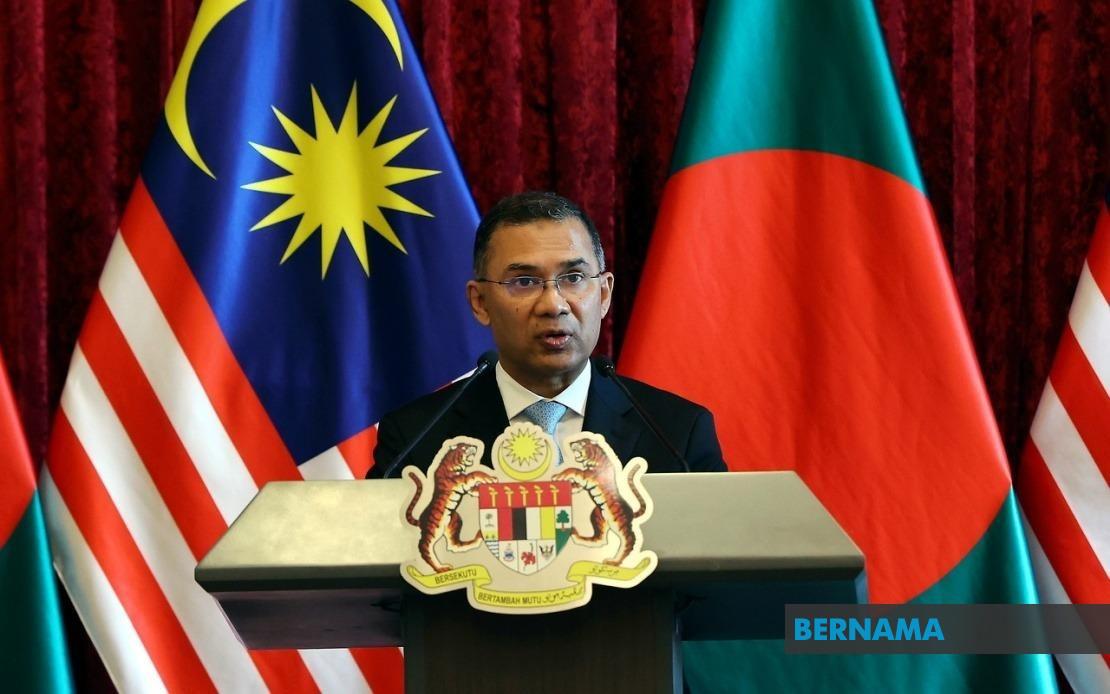
Bangladesh's Health and Family Welfare Minister Sardar Mohammad Sakhawat Hossain has attributed renewed momentum in the country's relationship with Malaysia to Prime Minister Tarique Rahman's recent visit in June, signalling that diplomatic engagement at the highest levels continues to yield tangible results for bilateral affairs. Speaking at an event hosted by the Bangladesh-Malaysia Chamber of Commerce and Industry in Dhaka on Saturday evening, the minister positioned the two countries as natural partners with complementary economic interests and shared regional outlook.
The gathering, officially titled "Towards a Stronger Bangladesh-Malaysia Partnership", brought together key stakeholders from both nations including Malaysian High Commissioner to Bangladesh Mohd Shuhuda Othman and Federation of Bangladesh Chambers of Commerce and Industry (FBCCI) administrator Mohammad Fazlul Haque. This assembly of business leaders and government representatives underscores the growing significance of commercial ties in shaping the broader bilateral relationship, moving beyond traditional diplomatic channels into the realm of economic cooperation.
According to Sakhawat Hossain, the foundation of Bangladesh-Malaysia relations rests upon mutual trust and shared commitment to regional stability. This characterisation reflects how both nations view their partnership not merely as a transactional arrangement but as a durable framework built on common values and strategic alignment. The emphasis on trust is particularly noteworthy given the evolving geopolitical landscape in South and Southeast Asia, where deepening ties between nations can serve as stabilising forces amid regional uncertainties.
A central theme emerging from the discussions was the vital role played by business communities in reinforcing state-to-state relationships. The minister highlighted that consistent interaction between Bangladeshi and Malaysian commercial actors has created multiple channels through which the two countries can collaborate and develop shared prosperity. This people-to-people and business-to-business dimension adds resilience to the relationship, ensuring that bilateral engagement persists even when government priorities shift.
Sakhawat Hossain made an explicit call for Malaysia to expand its import commitments from Bangladesh, signalling that asymmetries in current trade patterns present an opportunity for rebalancing. Bangladesh, with its substantial manufacturing base particularly in garments and textiles, possesses considerable export capacity that remains underutilised in the Malaysian market. Increasing Malaysian demand for Bangladeshi goods would not only boost bilateral trade volumes but also create employment opportunities in Bangladesh and strengthen economic interdependence.
For Malaysian readers, the implications of strengthened Bangladesh-Malaysia ties are multifaceted. Bangladesh represents a substantial market of over 160 million people with growing middle-class consumption and increasing demand for manufactured goods, technology services, and quality imports. Malaysian businesses, particularly those in consumer goods, petrochemicals, and financial services, stand to benefit from deeper market access in Bangladesh. Additionally, closer commercial ties can facilitate Malaysian investment in Bangladesh's manufacturing sectors, creating opportunities for Malaysian firms to establish production bases or source inputs competitively.
The broader Southeast Asian context adds another dimension to this bilateral relationship. Bangladesh's geographical position linking South Asia with Southeast Asia makes it a crucial partner in regional integration initiatives. Malaysia, as a leading ASEAN economy, has strategic interests in supporting Bangladesh's economic development and integration into regional frameworks. Stronger Malaysia-Bangladesh ties can facilitate smoother implementation of initiatives like the ASEAN Regional Forum and contribute to peace and stability across the region.
Prime Minister Tarique Rahman's June visit appears to have catalysed concrete discussions around expanding economic cooperation rather than merely reaffirming diplomatic pleasantries. The fact that both governments are actively promoting these ties through high-level visits and ministerial participation in commercial forums suggests genuine commitment to translating political goodwill into measurable economic outcomes. Such visits typically produce agreements on trade facilitation, visa procedures, investment incentives, and institutional cooperation that have practical implications for businesses operating in both countries.
The involvement of the FBCCI in these discussions is particularly significant as it ensures that the private sector's voice informs government policy direction. Bangladesh's business community has repeatedly expressed interest in accessing Malaysian markets more effectively and attracting Malaysian investment. By hosting such forums and ensuring high-level government participation, Bangladesh signals that it takes these commercial aspirations seriously and is willing to create enabling conditions for bilateral business growth.
Looking ahead, the trajectory of Bangladesh-Malaysia relations appears to be upward. Regular high-level visits, institutional engagement through chambers of commerce, and concrete focus on expanding trade and investment create conditions for sustained bilateral partnership. For Malaysia, strengthening ties with Bangladesh serves both immediate commercial interests and longer-term strategic objectives of maintaining influence and influence in South Asia's most populous Muslim-majority nation. The emphasis on mutual trust and economic cooperation suggests that the relationship will continue to deepen across multiple dimensions in the coming years.

