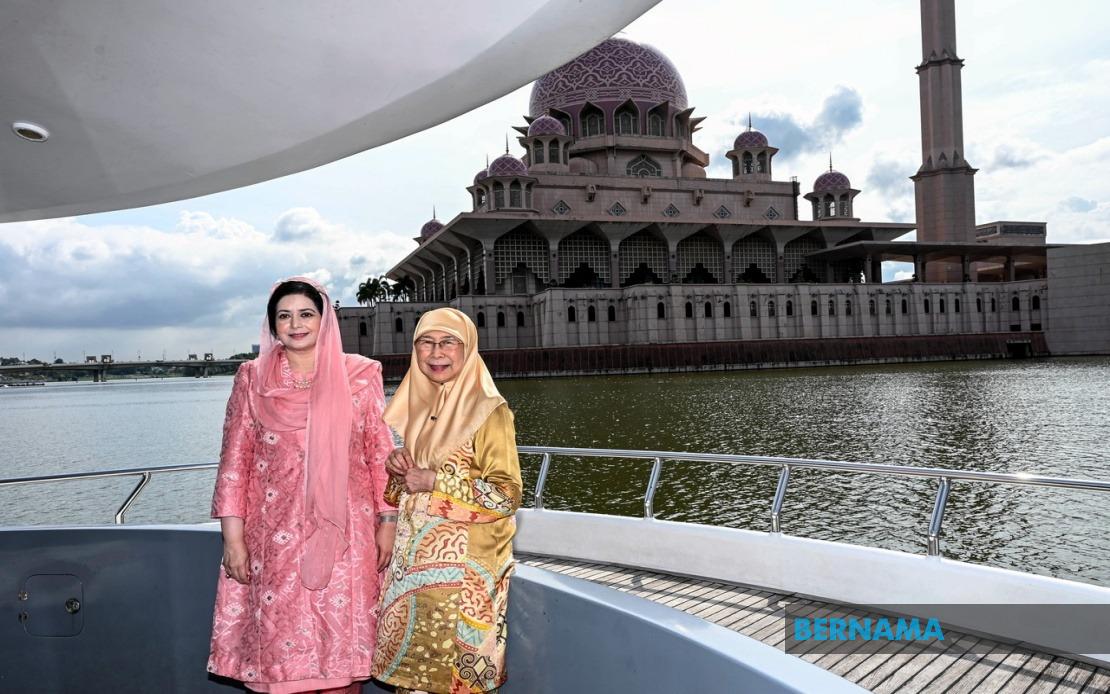
Dr Zubaida Rahman, the wife of Bangladesh Prime Minister Tarique Rahman, spent a leisurely morning cruising across Putrajaya Lake on Sunday, absorbing the architectural splendour and meticulously planned landscape design of Malaysia's federal administrative centre. The visit, which commenced at 9.30 am, allowed her to view the distinctive monuments and structures that define the capital's skyline from the vantage point of the water.
The visitor received a warm welcome from Datuk Seri Dr Wan Azizah Wan Ismail, spouse of Malaysian Prime Minister Datuk Seri Anwar Ibrahim, alongside Hannah Yeoh, the Minister in the Prime Minister's Department overseeing Federal Territories. The presence of both high-ranking Malaysian officials underscored the diplomatic significance of the occasion and reflected the courtesies typically extended during state visits between nations with established bilateral relationships.
During approximately one hour aboard the vessel, Dr Zubaida engaged in substantive conversation with Dr Wan Azizah and Hannah while admiring the carefully landscaped waterfront and the panoramic vistas that make Putrajaya an internationally recognised example of contemporary urban planning. The cruise provided an informal diplomatic setting where discussions could take place in a relaxed environment away from formal protocol settings.
The Lake Cruise outing formed part of the broader two-day official visit that commenced when Tarique and Dr Zubaida arrived in Malaysia on Sunday evening. The visit itself represents a carefully calibrated diplomatic engagement designed to reinvigorate and expand the multifaceted relationship between Dhaka and Kuala Lumpur, with particular attention to deepening cooperation across sectors of shared interest and complementary economic strengths.
Particularly significant is the fact that this journey marks Tarique's inaugural official bilateral visit to a foreign nation since his assumption of office in February 2026. The choice of Malaysia as the destination for this maiden trip demonstrates the priority his administration places on Southeast Asian engagement and reflects long-standing historical ties between the two nations. By hosting this visit and arranging such cultural and scenic experiences, Malaysian authorities have signalled their commitment to maintaining robust relations with Bangladesh.
From an economic perspective, the timing of this visit carries considerable weight. Bangladesh currently ranks as Malaysia's 28th-largest trading partner on a global scale, yet commands significantly greater importance within the Asian regional context. The bilateral trade relationship has matured substantially, with total annual trade volume reaching RM12.18 billion, positioning Bangladesh as Malaysia's second-most valuable trading partner within South Asia, trailing only India in terms of commerce and economic exchange.
This trade relationship reflects deep structural interdependencies between the economies. Bangladesh's manufacturing sector, particularly its renowned textiles and garment industry, maintains important commercial linkages with Malaysian enterprises, while Malaysia supplies essential machinery, chemicals, and electrical components to Bangladeshi industries. The substantial trade volume also underscores shared supply chain connections and growing investment flows in both directions.
The visit demonstrates how bilateral diplomacy increasingly incorporates cultural and leisure dimensions alongside formal governmental negotiations. By arranging the Putrajaya Lake excursion, Malaysian hosts extended hospitality that allowed visiting dignitaries to experience the nation's modern development achievements firsthand, contributing to positive impressions that often prove influential in subsequent policy discussions and negotiations.
For Malaysian stakeholders observing the visit, it represents an opportunity to explore expanded cooperation in areas ranging from trade and investment to education, technology transfer, and people-to-people exchanges. The informal social interaction between Dr Zubaida and Malaysian officials may facilitate future collaborative discussions on matters affecting both nations and the broader South Asian and Southeast Asian communities.
The Putrajaya Lake amenity itself has become an important tool in Malaysia's diplomatic hospitality arsenal, offering visiting delegations an accessible means to appreciate the nation's contemporary urban development model. The setting provides photographers and media with compelling visuals that communicate messages of friendship and cooperation more effectively than conventional press conferences or formal ceremonies could accomplish.
Looking ahead, the success of Tarique's inaugural overseas bilateral visit may set the tone for Bangladesh's engagement strategy with neighbouring and regional powers. A positive experience during his Malaysia sojourn could encourage subsequent visits to other Southeast Asian capitals and reinforce Bangladesh's positioning as an important trading and diplomatic partner within the region's emerging geopolitical landscape.

