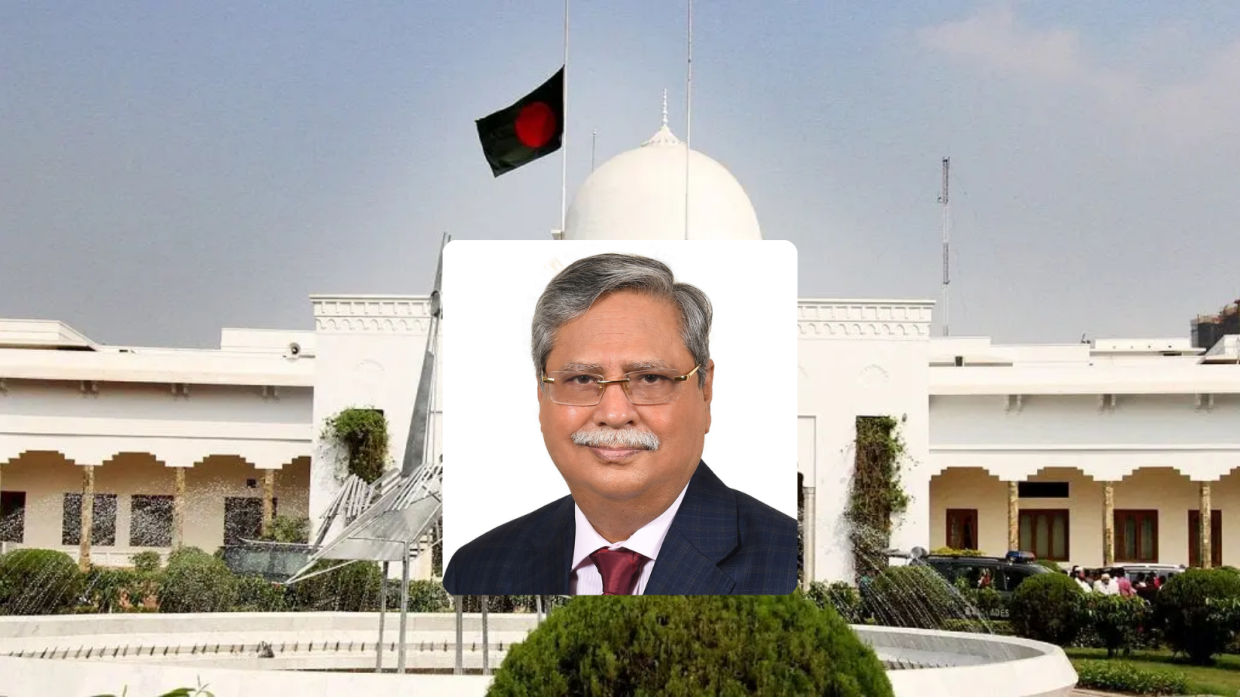
Bangladesh's President Mohammed Shahabuddin appears set to step down in the coming days, according to sources privy to the unfolding political crisis. The anticipated resignation marks a significant turning point for the country's leadership structure, removing the last senior constitutional officer who held position before the transformative mass uprising that swept through the nation in July 2024. This development carries particular weight in a nation already grappling with profound institutional changes and competing visions for its political future.
The groundwork for Shahabuddin's departure took shape following a telephone conversation he held with exiled former Prime Minister Sheikh Hasina during a medical visit to London in May. Hasina, who has remained in India since fleeing during last year's uprising, engaged in what sources describe as a sensitive exchange with the sitting president. Intelligence agencies subsequently learned of this contact, prompting officials to communicate to Shahabuddin that his continued presence in office had become politically untenable. The timing and nature of this communication underscore the heightened sensitivity surrounding connections between the current administration and figures from the previous order.
However, senior figures within the Bangladesh Nationalist Party—which now leads the government—characterise the situation as substantially more intricate than a single controversial phone call. The political calculus has shifted markedly following Hasina's recent public announcement of intentions to return to Bangladesh around December alongside other senior Awami League leaders, explicitly stating plans to surrender to authorities. This declaration has injected fresh urgency into ongoing discussions about removing any remaining symbols of continuity with the pre-uprising government. The prospective return of Hasina, who faces capital punishment charges within Bangladesh while her party remains banned, has intensified pressure on the administration to demonstrate unambiguous distance from previous power structures.
The government's evident concern extends beyond the presidential office itself. Authorities have been actively monitoring reorganisation efforts by Awami League operatives still present within the country, signalling determination to suppress the ousted party's capacity to reconstitute itself. Prime Minister Tarique Rahman reinforced this commitment during a July 17 cabinet meeting, explicitly directing relevant authorities to intensify their campaign against the Awami League alongside affiliated youth and student organisations. This coordinated approach reflects the administration's view that allowing any institutional holdovers from the previous era could undermine the broader consolidation of post-uprising authority.
For Malaysian readers and regional observers, this situation illuminates the volatile dynamics that can persist even months after major political upheaval. Bangladesh's experience demonstrates how individuals occupying institutional positions become lightning rods for broader concerns about regime continuity and perceived loyalties. The push for Shahabuddin's departure, despite his technical independence as a ceremonial head of state, reflects a political culture where symbolism and institutional purity hold enormous weight. Such pressures exist in various forms across Southeast Asia, where transitions of power frequently carry legacies of tension that extend well beyond the immediate aftermath of change.
Shahbuddin's position had grown increasingly precarious since his April 2023 swearing-in as Bangladesh's 22nd president. His explicit acknowledgment in December 2025 that he felt humiliated by the interim government led by Muhammad Yunus suggested growing alienation from circles of power. Subsequently, after the BNP-led government took office, Shahabuddin indicated flexibility about his tenure, stating in a February newspaper interview that he would either remain or depart according to the government's preferences. This posture of conditional permanence has evidently satisfied neither the administration nor others who view his continued presence as anomalous.
Government insiders have provided clear signals about their displeasure with Shahabuddin's conduct in recent months. Officials expressed particular concern that the president had been attempting to reestablish relationships and contacts from his previous associations, interpreted as inappropriate given the altered political landscape. A high-ranking government source described his eventual departure as inevitable and natural, suggesting it represents not extraordinary intervention but merely the logical consequence of changed circumstances. The perspective that maintaining a pre-uprising figure in the country's paramount constitutional position had become imprudent encapsulates the administration's view of necessary institutional realignment.
Constitutional mechanics provide a clear framework for succession should Shahabuddin resign. Under Bangladesh's constitutional arrangements, the speaker of parliament would assume the role of acting president pending election of a permanent replacement. This procedural clarity has likely enabled the relatively straightforward discussions occurring behind closed doors. Sources close to the presidential residence have indicated that a formal decision could materialise within days, with one informant suggesting an announcement might occur imminently. A scheduled meeting between Shahabuddin and non-resident ambassadors from four nations on July 29 adds another temporal marker to this unfolding sequence.
The broader context of this resignation reveals patterns of institutional consolidation common to post-upheaval political systems. When major changes occur—whether through electoral mandate, mass mobilisation, or constitutional crisis—successor administrations often prioritise removing symbols and individuals associated with previous orders. Bangladesh's approach reflects this logic taken to its conclusion: even positions understood as ceremonial or largely symbolic become subject to scrutiny when occupants carry associations with earlier dispensations. For regional governments and observers, the case illustrates how transitions that appear complete can carry lingering tensions requiring eventual resolution.
Shahbuddin's anticipated departure also reflects the Hasina question that will likely dominate Bangladeshi politics through December and beyond. Her stated intention to surrender upon return, coupled with capital charges pending against her, creates an extraordinarily volatile scenario. The government faces pressures from multiple quarters: international observers concerned about justice mechanisms, domestic constituencies with varying views on appropriate accountability, and the practical challenge of managing the return of a polarising figure. Removing Shahabuddin represents, in this context, a preemptive consolidation of institutional authority before that crisis point arrives.
For Bangladesh's international standing and regional relationships, the presidential succession carries implications beyond domestic politics. Neighbouring countries and distant powers alike scrutinise how the government manages institutional transitions, viewing them as indicators of stability and democratic commitment. The circumstances of Shahabuddin's departure—whether presented as voluntary, negotiated, or forced—will shape international perceptions of Bangladesh's political maturity. The administration's apparent effort to engineer a relatively orderly transition rather than precipitate a dramatic confrontation suggests some awareness of these reputational considerations.
The anticipated resignation underscores deeper questions about Bangladesh's post-uprising political trajectory. The nation faces critical choices about accountability for previous governance, integration of international humanitarian and legal standards, and construction of institutional frameworks that command broad legitimacy. Shahabuddin's removal, while administratively straightforward, symbolises the incomplete nature of the broader political settlement. True institutional stability will require addressing not merely symbolic continuities but substantive questions of justice, governance, and political inclusion that will occupy Bangladesh for years ahead.

