%22%2F%3E%3C%2Fpattern%3E%3C%2Fdefs%3E%3Crect%20width%3D%22100%25%22%20height%3D%22100%25%22%20fill%3D%22url(%23ph328iug)%22%2F%3E%3Crect%20width%3D%22100%25%22%20height%3D%22100%25%22%20fill%3D%22url(%23ph328iup)%22%2F%3E%3Ctext%20x%3D%2250%25%22%20y%3D%2250%25%22%20text-anchor%3D%22middle%22%20dominant-baseline%3D%22central%22%20fill%3D%22rgba(255%2C255%2C255%2C0.95)%22%20font-family%3D%22Georgia%2C%20'Times%20New%20Roman'%2C%20serif%22%20font-weight%3D%22700%22%20font-size%3D%22136%22%20letter-spacing%3D%22-0.02em%22%3EBangladesh%3C%2Ftext%3E%3C%2Fsvg%3E)
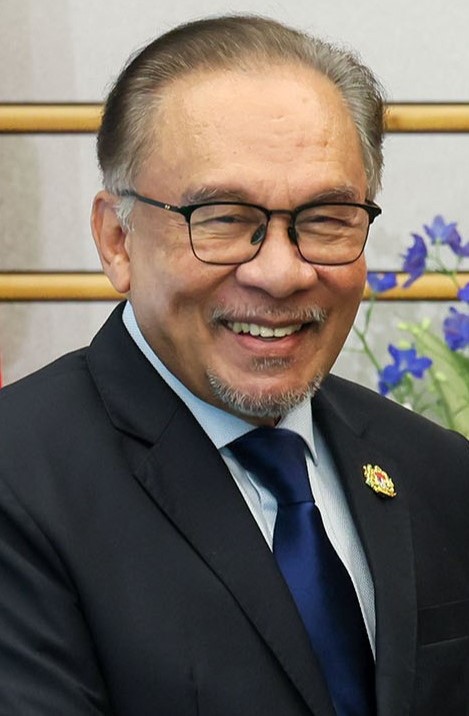
Bangladesh is positioning itself as an increasingly assertive player in regional economic architecture, with Prime Minister Tarique Rahman announcing his country's formal interest in joining ASEAN's expanding network of dialogue partnerships while simultaneously pursuing membership in the Regional Comprehensive Economic Partnership. Speaking alongside Malaysian Prime Minister Datuk Seri Anwar Ibrahim in Putrajaya on June 22, Rahman articulated a vision of deeper South Asian engagement with Southeast Asia's institutional frameworks, signalling that Dhaka views closer ASEAN integration as central to its economic and strategic future.
The aspiration to achieve ASEAN Sectoral Dialogue Partner status represents a significant diplomatic manoeuvre for Bangladesh, which has historically maintained cordial but measured relations with the bloc. Such a designation would grant Bangladesh enhanced participation rights in ASEAN forums across specific sectors, though it falls short of full membership—a prospect that remains complicated by ASEAN's enlargement protocols and competing regional interests. Rahman's emphasis on Malaysia's support for Bangladesh's regional integration efforts underscores the critical role that bilateral relationships play in navigating ASEAN's consensus-driven decision-making processes, where individual member states often champion prospective partners' admission.
The simultaneous expression of interest in RCEP membership carries even greater economic weight. The 15-member trade agreement, which encompasses ASEAN, China, Japan, South Korea, Australia, and New Zealand, represents the world's largest regional trade bloc by GDP. For Bangladesh, RCEP participation would provide preferential market access across a region responsible for substantial portions of global commerce and manufacturing. This is particularly significant given Bangladesh's strategic position as a major exporter of textiles, apparel, and labour-intensive manufactures—sectors where tariff reductions could meaningfully boost export competitiveness across multiple RCEP markets simultaneously.
Current bilateral trade dynamics between Malaysia and Bangladesh demonstrate the commercial potential underlying deeper institutional engagement. In 2025, two-way trade reached RM12.18 billion, equivalent to approximately US$2.84 billion, positioning Bangladesh as Malaysia's 28th largest trading partner globally and its second-largest export destination and import source within South Asia after India. Malaysia's export portfolio to Bangladesh remains dominated by petroleum products, reflecting the energy-intensive nature of Bangladesh's garment manufacturing sector, which consumes substantial quantities of refined fuels and petrochemicals in production processes. Conversely, Malaysian imports from Bangladesh totalled RM2.10 billion, comprising primarily textiles, apparel, and footwear—categories that demonstrate Bangladesh's manufacturing specialisation and integration into regional supply chains.
The bilateral agreements signed during Rahman's visit reflect a deliberate strategy to institutionalise economic and security cooperation. The Memorandum of Understanding on Cultural Cooperation addresses softer dimensions of the relationship, fostering people-to-people connections that underpin sustained political goodwill. Simultaneously, the Exchanges of Notes addressing counter-terrorism research and investment promotion signal recognition of shared security challenges and the mutual economic benefits derivable from facilitated capital flows. Counter-terrorism cooperation holds particular salience given both nations' experience with militant activities threatening textile production zones and other economically vital infrastructure.
Investment promotion mechanics warrant particular attention for Malaysian businesses contemplating regional expansion. Bangladesh's 170 million-person market, coupled with its concentration in labour-intensive manufacturing, presents natural synergies for Malaysian firms seeking production relocation or sourcing opportunities. The formal exchange of notes on investment facilitation establishes clearer procedural pathways and regulatory certainty—critical prerequisites for substantial capital deployment in developing markets where institutional frameworks remain in flux. Malaysian companies currently operating in Bangladesh's export processing zones stand to benefit from clarified rules regarding profit repatriation, technology transfer obligations, and dispute resolution mechanisms.
Rahman's explicit invitation to Prime Minister Anwar and his spouse to visit Dhaka carries diplomatic significance beyond ceremonial protocol. Such visits typically catalyse announcements regarding joint ventures, sectoral cooperation frameworks, and elevated cooperation mechanisms. Bangladesh's eagerness to host Malaysian leadership reflects the premium Dhaka places on the relationship and suggests willingness to accommodate Malaysian interests across sectors ranging from energy security to halal certification standards that facilitate Malaysian food exports into the Bangladeshi consumer market.
The broader geopolitical context shaping Bangladesh's ASEAN outreach cannot be overlooked. South Asia's relative economic underperformance compared to Southeast Asia has prompted countries including Bangladesh to diversify their regional anchoring arrangements. While the South Asian Association for Regional Cooperation remains institutionally weak, Bangladesh's pursuit of ASEAN engagement represents a hedging strategy that acknowledges Southeast Asia's superior institutional effectiveness and economic dynamism. RCEP membership would simultaneously bind Bangladesh into a trade framework encompassing China, Japan, and South Korea—major sources of investment capital and technology transfer—thereby diversifying Bangladesh's external economic relationships beyond traditional reliance on India and Western markets.
For Malaysia specifically, Bangladesh's strengthened ASEAN engagement carries commercial implications. Sectoral Dialogue Partner status would likely expand bilateral cooperation mechanisms in priority areas including maritime security, where both nations share interest in securing critical sea lanes, and digital economy development, where Malaysia's fintech expertise could support Bangladesh's financial inclusion initiatives. Enhanced institutional ties would create additional forums for addressing irritants in the bilateral relationship, such as coordination on migrant worker protections—an issue affecting thousands of Bangladeshi nationals employed across Malaysia's manufacturing and service sectors.
The implications for Malaysian policymakers extend to regional architecture questions. Bangladesh's integration into ASEAN's broader ecosystem of partnerships reflects the bloc's evolution toward hub status within Asian regionalism, though it also raises questions about capacity constraints and decision-making efficiency as dialogue partnership networks expand. Malaysia's role in championing Bangladesh's aspirations reflects broader strategic positioning whereby Kuala Lumpur seeks to position itself as a bridge between South and Southeast Asia, leveraging its economic weight and institutional experience to facilitate regional integration across the extended Indo-Pacific.
Looking forward, Bangladesh's pursuit of RCEP membership warrants monitoring of timeline and procedural developments. RCEP accession requires consensus among all 15 existing members, suggesting potential deliberation spanning multiple years. However, the explicit expression of interest at ministerial level, coupled with Malaysia's visible support, signals that Bangladesh's ambitions are likely to progress through established diplomatic channels. Success would fundamentally reorient Bangladesh's external economic policy architecture, binding it more tightly to regional institutions and creating framework dependencies that would shape trade, investment, and security cooperation for decades.