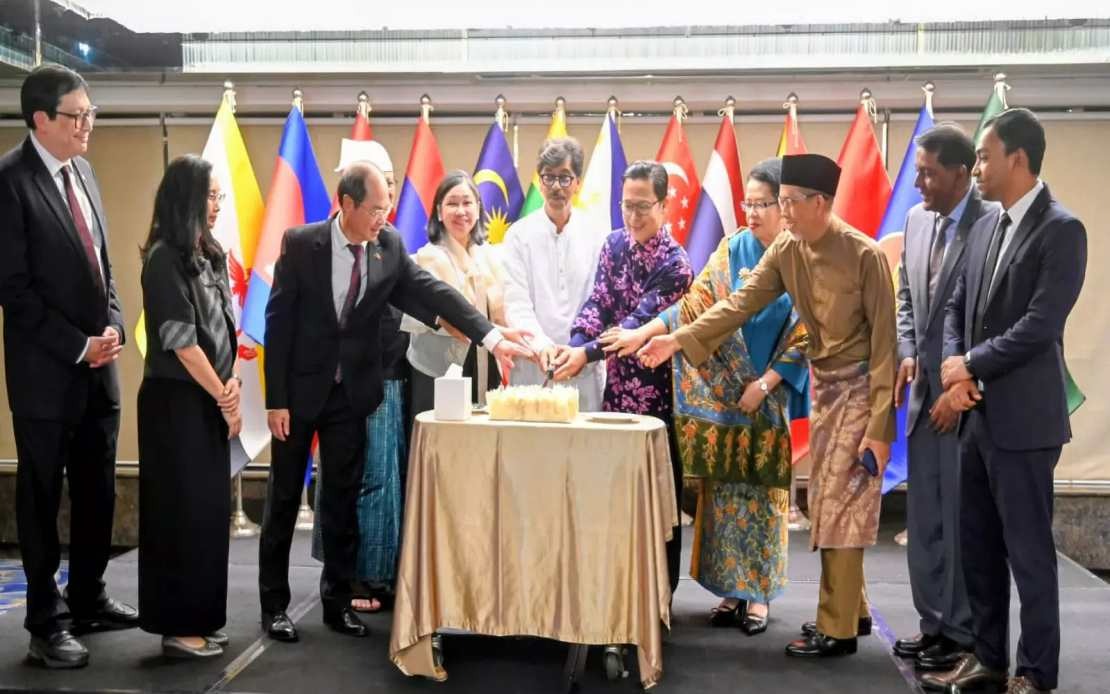
Bangladesh is making a strategic push to deepen its engagement with ASEAN, marking a significant shift in how the South Asian nation positions itself within Southeast Asian regional architecture. Speaking at a reception held by the ASEAN Dhaka Committee on Monday to commemorate the 59th ASEAN Day, Fisheries, Livestock and Agriculture Minister Mohammed Aminur Rashid outlined an ambitious agenda to elevate bilateral and multilateral relations across multiple sectors. The formal application for Sectoral Dialogue Partner status represents the government's determination to institutionalise ties that have historically been built on cultural affinity, geographical proximity, and shared commercial interests.
The timing of Bangladesh's diplomatic outreach carries particular significance given the broader geopolitical dynamics reshaping South and Southeast Asia. Prime Minister Tarique Rahman's selection of Malaysia for his inaugural official foreign visit underscores how seriously Dhaka views its Southeast Asian relationships. This calculated choice signals that Malaysia, as the country holding the ASEAN chair and a major regional economic player, occupies a central position in Bangladesh's strategic calculations. The decision to visit Malaysia first, rather than traditional allies in South Asia, reflects a deliberate reorientation toward seeking opportunities and partnerships within the ASEAN framework.
Bangladesh's pursuit of Sectoral Dialogue Partner status addresses a long-standing gap in its institutional relationship with ASEAN. While the country has maintained robust connections with individual member states, the absence of formal dialogue partnership status has limited its participation in regional decision-making processes and collective initiatives. SDP status would grant Bangladesh a defined seat at the table for specific sectoral engagements, allowing it to shape policy discussions and benefit from coordinated regional approaches in areas where it has genuine competitive advantages or development needs.
The fisheries and aquaculture sector exemplifies Bangladesh's strategic focus. The ongoing US$1 million Bangladesh-ASEAN Cooperation Project on Fisheries and Aquaculture, implemented under Minister Aminur's portfolio, demonstrates concrete commitment beyond rhetoric. Bangladesh possesses significant expertise in aquaculture and fisheries management, with a vibrant industry that supplies both domestic consumption and regional export markets. Formalising cooperation in this domain allows Bangladesh to share best practices while learning from ASEAN nations' experience in sustainable fishing management and value-chain development.
Beyond fisheries, Bangladesh is cultivating partnerships across tourism, information and communication technology, and cultural exchange. These sectors represent growth engines for Southeast Asian economies and align with Bangladesh's own development priorities. Tourism cooperation could unlock economic potential in both directions—Southeast Asian tourists could discover Bangladesh's historical and cultural attractions, while Bangladesh citizens gain access to the region's established tourism infrastructure and expertise. ICT collaboration is particularly strategic, as it bridges Bangladesh's growing digital economy ambitions with ASEAN's reputation as a technology innovation hub.
The cultural dimension of Bangladesh's ASEAN engagement cannot be overstated. The reception itself showcased this commitment through carefully curated cuisine featuring Black Bengal Goat, a globally recognised geographical indication product, and biryani prepared with indigenous Kalijira rice. These culinary choices were not incidental; they deliberately communicated Bangladesh's distinctive agricultural heritage and gastronomic traditions to ASEAN diplomatic representatives. Such gestures build the soft power foundations necessary for sustained regional partnerships, demonstrating that Bangladesh brings unique cultural and economic offerings to regional cooperation.
For Malaysian readers and broader Southeast Asian audiences, Bangladesh's intensifying engagement merits close attention. A strengthened Bangladesh-ASEAN partnership has ripple effects across the region's connectivity infrastructure, trade routes, and geopolitical balance. Bangladesh's strategic location along major shipping lanes and its growing role as a manufacturing hub make it increasingly relevant to ASEAN's economic integration agenda. The country's 170 million-strong population represents both a market and a labour pool with which ASEAN nations increasingly interact.
The government's emphasis on Prime Minister Tarique Rahman's commitment to all eleven ASEAN member states reflects recognition that regional cooperation is no longer optional but essential for Bangladesh's development trajectory. Rather than viewing ASEAN membership as exclusively a Southeast Asian matter, Dhaka is positioning Bangladesh as a natural partner capable of contributing to regional stability and prosperity. This perspective acknowledges that Bangladesh's maritime interests, trade dependencies, and security concerns are increasingly intertwined with Southeast Asian dynamics.
The active solicitation of support from ASEAN envoys for Bangladesh's SDP status application demonstrates diplomatic sophistication. By framing this as a mutual opportunity for deeper engagement rather than a unilateral ask, Minister Aminur encouraged ambassadors to champion Bangladesh's bid within their respective capitals. This approach recognises that ASEAN decisions operate through consensus-building and that individual member state advocacy significantly influences collective outcomes.
From a Malaysian perspective, Bangladesh's movement toward closer ASEAN integration carries particular significance. As ASEAN chair, Malaysia plays a pivotal role in facilitating Bangladesh's aspirations. The early diplomatic priority accorded to Malaysia by Prime Minister Tarique Rahman signals Bangladesh's recognition of this role. Enhanced Bangladesh-Malaysia cooperation could serve as a pilot for broader ASEAN-Bangladesh engagement, with potential spillovers into joint maritime security initiatives, trade facilitation, and people-to-people exchanges.
Looking forward, the success of Bangladesh's SDP application would reshape regional cooperation architectures. It would provide a template for how South Asian nations engage with Southeast Asian regional structures, potentially influencing how other South Asian countries approach ASEAN partnerships. For Bangladesh specifically, formalisation of sectoral dialogue partnerships would elevate the country's voice in regional forums and create institutional mechanisms for sustained, systematic cooperation that extends beyond the fluctuations of bilateral relationships.

