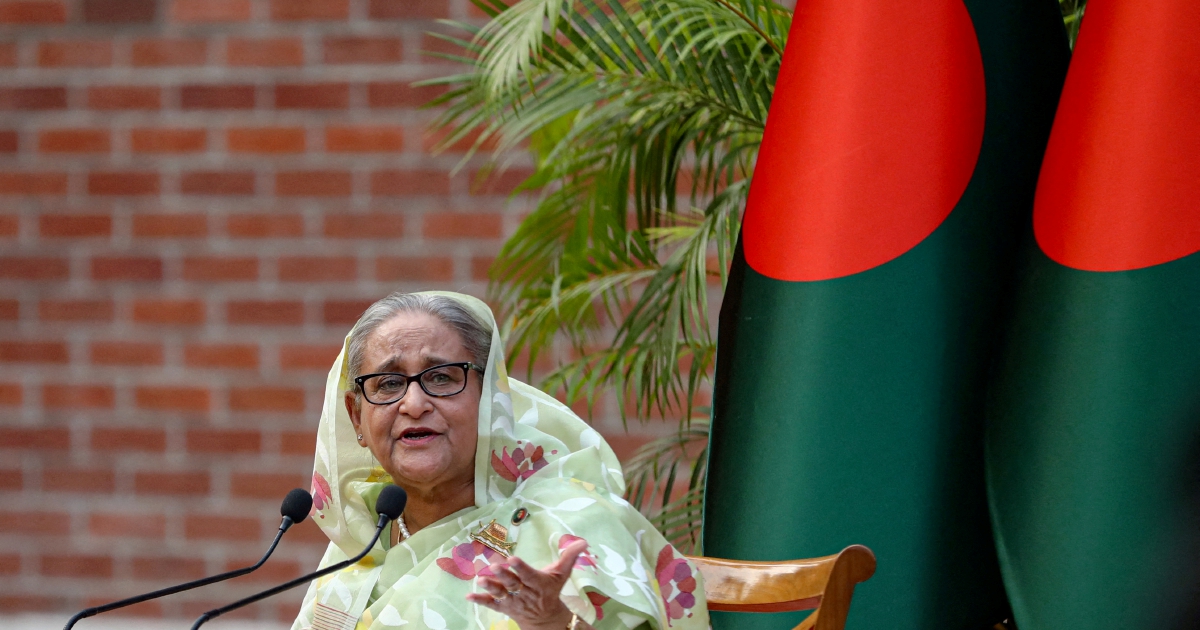
Bangladesh has moved aggressively to seize approximately 760 billion taka—roughly $6.2 billion in US currency—from assets controlled by ousted Prime Minister Sheikh Hasina, her immediate family, and a network of 10 significant business conglomerates. The announcement by government authorities on Wednesday represents one of the most substantial asset recovery operations in the country's recent history, signalling a determined effort to claw back wealth accumulated during the former leader's administration.
The seizure comes in the wake of Sheikh Hasina's dramatic departure from power in August 2024, when mass protests and widespread civil unrest forced her to flee Bangladesh and seek refuge abroad. Her exit marked the end of nearly 16 years of consecutive governance, a period during which she wielded considerable authority over the nation's political and economic machinery. The scale of assets now being recovered underscores long-standing allegations that substantial wealth accumulation occurred through her tenure, with critics pointing to opaque dealings and preferential treatment granted to favoured business interests.
The 10 business groups targeted in the confiscation order represent some of Bangladesh's most prominent industrial and commercial enterprises. These entities, which span sectors ranging from manufacturing to telecommunications, telecommunications, and retail operations, had allegedly benefited from preferential government policies, contracts, and regulatory advantages during Hasina's rule. Investigators have been systematically tracing financial flows and asset ownership structures to establish the nature and extent of connections between these business operations and the former prime minister's network.
For Malaysian observers, the Bangladesh case offers instructive parallels to earlier accountability campaigns in the region. Like Malaysia's experience following the 1MDB scandal and subsequent change in government, Bangladesh faces the complex challenge of recovering assets that have been deliberately obscured through layered corporate structures, international financial transfers, and shell company arrangements. The Bangladeshi authorities will likely encounter similar difficulties in tracing assets that may have been moved offshore or hidden through real estate purchases and financial instruments.
The asset seizure strategy employed by Bangladesh reflects a broader regional trend toward post-transition accountability measures. Countries including Myanmar and Cambodia have similarly pursued former leaders and their associates to recover state resources. However, the success of such operations frequently depends on judicial independence, technical capacity within investigating agencies, and international cooperation—areas where developing South Asian and Southeast Asian nations often face constraints.
Family assets form a particularly sensitive component of the confiscation effort. Sheikh Hasina's relatives, including members of her immediate household, accumulated substantial property holdings and business interests throughout her tenure. Separating ill-gotten gains from legitimately earned assets presents investigators with significant evidentiary challenges, as family members may argue that their wealth arose from independent business ventures rather than political connections.
The timing of this major asset seizure reflects pressure from Bangladesh's interim government to demonstrate tangible progress in accountability efforts. Public sentiment following Hasina's departure reflected deep frustration over perceived corruption and economic mismanagement, with particular anger directed at what citizens viewed as a self-serving elite enriching itself at the nation's expense. By moving decisively on high-profile asset recovery, interim authorities are attempting to satisfy demands for justice and accountability.
International dimensions will complicate the recovery process substantially. Wealthy Bangladeshi businesspeople and politicians have historically maintained assets in multiple jurisdictions, including India, the United Arab Emirates, Singapore, and Western countries. Bangladesh authorities will require formal cooperation agreements and mutual legal assistance treaties to access and ultimately recover assets located abroad. Previous regional experiences demonstrate that this process can take years and often yields incomplete results.
The financial magnitude involved—$6.2 billion represents roughly 2-3% of Bangladesh's annual GDP—underscores the scale of resource diversion that occurred. These recovered funds, if successfully converted to state accounts, could theoretically finance substantial public infrastructure projects or social programmes. However, managing such repatriated assets effectively presents its own governance challenges, particularly ensuring that recovered funds are deployed transparently rather than becoming vehicles for new forms of misappropriation.
For Bangladesh's struggling economy, which faces persistent inflation, currency depreciation, and fiscal pressures, the recovery of such substantial assets could theoretically provide meaningful relief. The nation's foreign exchange reserves have repeatedly come under pressure, and repatriation of offshore assets could help stabilise the balance of payments. However, realising these theoretical benefits requires sustained institutional commitment and protection from political pressures that might otherwise derail recovery efforts.
The confiscation order also carries significant implications for Bangladesh's investment climate and international reputation. While accountability measures are necessary for institutional credibility, excessive uncertainty regarding property rights and investment security could deter legitimate foreign investment. Bangladeshi policymakers must balance their accountability objectives with reassurance to investors that legitimate business operations remain protected.
Regional observers will monitor whether Bangladesh successfully converts these seizure orders into actual asset recovery. Comparable efforts elsewhere in Asia have frequently encountered legal challenges, asset-hiding, and diplomatic complications. The coming months will test whether Bangladesh possesses the institutional capacity, judicial independence, and sustained political will required to transform an ambitious confiscation order into concrete recovery of state resources.

