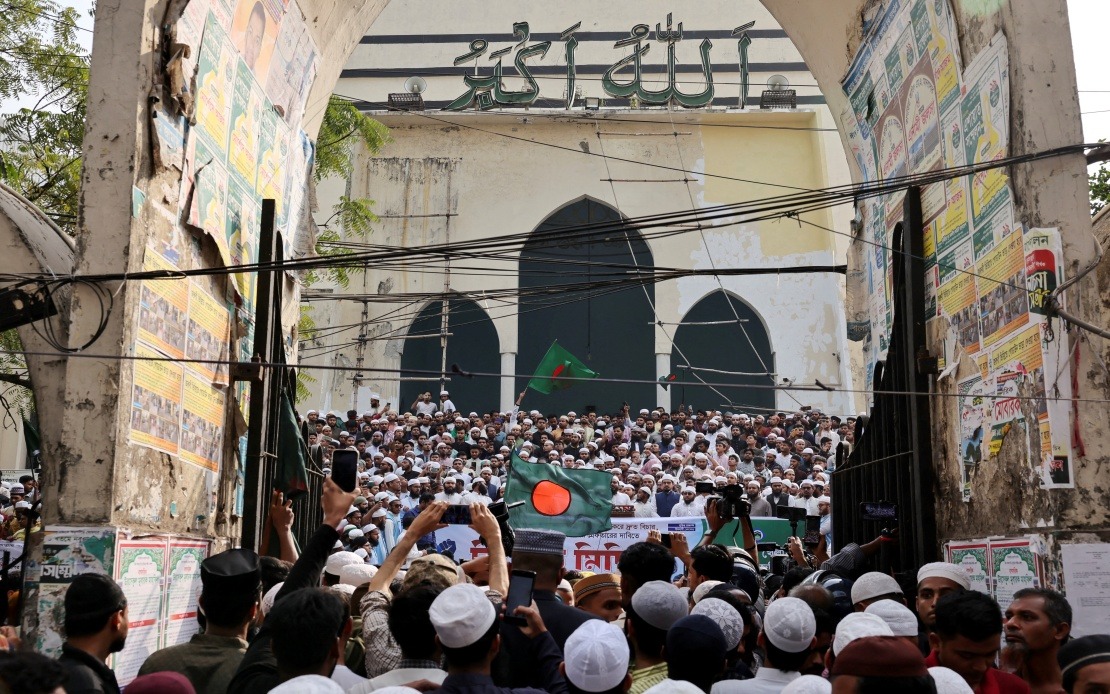
Bangladesh's International Crimes Tribunal has handed down capital sentences against three senior police officers for their involvement in the violent crackdown on protesters during the tumultuous July 2024 uprising that ultimately precipitated the collapse of Sheikh Hasina's government. The tribunal, presided over by Justice Md Golam Mortuza Mozumder, delivered its verdicts on Sunday in proceedings that mark an escalation in accountability measures targeting security force personnel implicated in the mass violence.
The three death sentences in absentia have been imposed on former Dhaka Metropolitan Police Commissioner Habibur Rahman, former DMP Additional Deputy Commissioner Md Rashedul Islam, and former Rampura Police Chief Md Mashiur Rahman. All three remain at large, their whereabouts unknown to authorities pursuing the cases. The tribunal separately sentenced two other officers to life imprisonment plus an additional 20-year term, including former sub-inspector Tariqul Islam Bhuiyan. These convictions are rooted in charges of crimes against humanity stemming from the shooting deaths of civilians, including a particularly shocking incident captured on video showing a young man fatally shot whilst hanging from a building in Dhaka during the height of the unrest.
The tribunal's findings underscore the brutality that characterised the government's response to the 2024 uprising, which mobilised hundreds of thousands of Bangladeshis demanding political reform and accountability. According to United Nations assessments, the security forces killed approximately 1,400 people during the uprising, with the overwhelming majority of deaths attributed to police gunfire. Thousands more sustained injuries, many serious. The violence disproportionately affected students and young activists who formed the vanguard of the protest movement, lending the uprising a distinctly generational character that resonated throughout South Asian societies.
The particular killings for which convictions were secured generated viral social media circulation, amplifying public outrage and galvanising demonstrations nationwide. The visual documentation of state violence—especially the image of the young man shot whilst suspended from a building—crystallised public perception of an unaccountable police force acting with impunity. These moments of graphic brutality transformed what might have remained localised grievances into a nationwide reckoning with governance and the use of force by security apparatus accountable nominally but not practically to civilian oversight mechanisms.
These convictions represent part of a broader post-uprising judicial process seeking to establish accountability for the security establishment's actions. In November of the previous year, the same tribunal had already sentenced former Prime Minister Sheikh Hasina to death in a separate case prosecuting crimes against humanity. Hasina, who departed Bangladesh in August 2024 following the uprising's success, currently remains in exile. Her government, which had governed Bangladesh through two separate terms, ultimately fell when the security forces proved unable or unwilling to suppress the uprising through additional force.
The timing and nature of these convictions carry significance for Southeast Asia and the broader region, where questions of civilian control over security forces, accountability mechanisms for state violence, and the vulnerability of governments to mass mobilisation remain pertinent across multiple jurisdictions. Bangladesh's experience demonstrates both the capacity of coordinated popular movements to challenge entrenched power and the severe human costs such challenges can extract. The tribunal's verdicts, whilst delivered against fugitive defendants, signal an institutional commitment to retrospective accountability even where actual detention and imprisonment remain impossible in the immediate term.
For Malaysia and other regional states, the Bangladesh precedent presents instructive implications regarding the political consequences of security force overreach and the potential activation of judicial mechanisms against state actors in post-transition environments. The 2024 uprising occurred within a specific Bangladeshi context of longstanding institutional tensions, perceived governance failures, and generational demands for democratic deepening. However, the underlying dynamics—youth frustration with economic opportunity, demands for responsive governance, and willingness to challenge authority despite violent suppression—resonate across Southeast Asia where similar demographic pressures and governance challenges persist.
The sentences imposed, though in absentia against fugitive defendants, establish a legal precedent within Bangladesh's judicial system. The International Crimes Tribunal, initially established to address crimes from the 1971 independence war, has been repurposed to prosecute contemporary crimes against humanity. This institutional flexibility demonstrates how transitional justice mechanisms can adapt to contemporary needs, though questions persist regarding whether trials in absentia against permanently exiled defendants can achieve genuine accountability or primarily serve symbolic and deterrent functions.
The conviction of the former Dhaka Metropolitan Police Commissioner carries particular weight given his institutional position and command responsibility over the largest urban police force in Bangladesh. His earlier death sentence in an unrelated case, combined with this conviction, establishes multiple capital sentences against a single defendant—a punitive approach reflecting the severity with which Bangladesh's transitional authorities view police conduct during the uprising. Similarly, the conviction of the Rampura Police Chief and the Additional Deputy Commissioner demonstrates that the tribunal is pursuing accountability across multiple levels of the police hierarchy rather than concentrating exclusively on senior figures or isolated actors.
The life sentences imposed on two additional officers, including the sub-inspector, reflect the tribunal's calibration of penalties according to hierarchical position and apparent culpability. These differentiated sentences suggest judicial attention to proportionality and the distinction between command-level actors and operational personnel, though both categories receive severe sentences reflecting the tribunal's view of the gravity of crimes committed. The determination to prosecute across rank structures potentially encourages more comprehensive accountability, though critics question whether trials of low-ranking officers deflect attention from institutional and political responsibility.
The fugitive status of all convicted officers complicates enforcement of the tribunal's verdicts. Bangladesh maintains no extradition treaties with many jurisdictions where these individuals might potentially be located, rendering apprehension dependent on bilateral cooperation or international coordination mechanisms that remain underdeveloped. This enforcement gap raises questions about whether death sentences pronounced against absent defendants constitute effective accountability or primarily serve symbolic functions within Bangladesh's post-uprising political landscape.
The International Crimes Tribunal's continued activity and these latest convictions reflect Bangladesh's commitment to prosecuting security force violence through formal judicial channels rather than pursuing alternative transitional justice mechanisms such as truth commissions or amnesties. This prosecutorial approach aligns Bangladesh with certain post-conflict transitional justice models whilst distinguishing it from other regional examples that have favoured amnesty or reconciliation-focused approaches. Whether this model ultimately produces genuine institutional accountability or perpetuates cycles of legal retaliation remains a substantive question for Bangladesh's emerging democratic order and for regional observers considering similar mechanisms.

