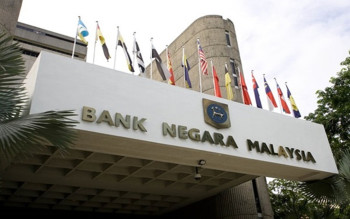
Bank Negara Malaysia repeatedly cautioned Tabung Haji about a dangerous imbalance in its financial position, issuing five formal warning letters to the institution's chairman and the Minister of Religious Affairs, yet the troubled pilgrimage savings fund failed to take corrective action. Dr Zulkifli Hasan, the Minister in the Prime Minister's Department overseeing religious affairs, disclosed this troubling pattern of neglect during parliamentary proceedings as he presented details on the Royal Commission of Inquiry findings into TH's collapse and the recovery measures now underway.
The central regulator had flagged that the divergence between TH's assets and liabilities represented a material threat to Malaysia's broader financial ecosystem. Rather than heeding these escalating alerts from the nation's monetary authority, TH's leadership allowed the situation to deteriorate unchecked, leaving the institution in persistent breach of financial regulations that should have triggered immediate remedial steps. This institutional failure to respond to regulatory pressure underscores a broader governance breakdown that permitted financial mismanagement to continue largely unabated throughout the latter part of the previous decade.
Following Bank Negara's warnings, Malaysia's Auditor-General added its voice to the chorus of concern when it issued a formal reprimand through the 2017 Financial Statements Report. The reprimand specifically highlighted an Emphasis of Matter notation regarding TH's approach to impairment accounting, which had been altered twice within the same fiscal year—a red flag indicating potential manipulation designed to artificially inflate reported earnings. Such accounting adjustments, executed with suspicious frequency and timing, suggested that TH's management may have been attempting to mask deteriorating asset quality rather than confront it transparently.
The extent of the financial distress at TH became undeniable only after the newly constituted board engaged the international accounting firm PricewaterhouseCoopers in 2018 to conduct an independent forensic-style reassessment of the institution's true financial position. PwC's examination, grounded in rigorous global accounting standards rather than the flexible interpretations TH's previous management had adopted, revealed shocking discrepancies between reported valuations and market reality. Of the RM4.6 billion in assets that TH had claimed on its books, merely RM556 million—roughly 12 percent—had been evaluated by qualified professional valuers; the remainder appeared to represent either inflated or unverified valuations.
This validation of financial manipulation by an internationally respected auditor vindicated concerns that regulators and oversight bodies had been raising for years. The gap between TH's stated asset base and the professionally verified portion suggested that the institution had been operating under significantly distorted financial information, creating false impressions of stability for millions of depositing members who relied on the fund to safeguard their pilgrimage savings and retirement contributions. The discovery that over 88 percent of recorded assets lacked independent professional verification indicated systemic failures in due diligence, governance oversight, and internal controls.
The Royal Commission of Inquiry, established in 2021 and formally constituted with member appointments in January 2022, spent months investigating TH's operations during the critical 2014-2020 period when the institution's problems accumulated. The resulting 211-page report, presented to the Yang di-Pertuan Agong in August 2022 and subsequently made public on July 29, catalogued extensive weaknesses in management practices, operational procedures, and governance structures that had enabled financial irregularities to flourish. The RCI's detailed findings provided a comprehensive anatomy of institutional dysfunction that extended well beyond simple accounting errors.
Among the RCI's output were 25 specific recommendations intended to strengthen TH's governance framework and prevent recurrence of past failures. By July 30—barely a day after the report's public release—TH had already begun implementing these suggestions, with the institution claiming that approximately 75 percent of the recommendations had been acted upon or were in active progress. This rapid implementation pace, while potentially demonstrating responsiveness, also raised questions about whether thorough institutional transformation could realistically be completed within such compressed timeframes.
For Malaysian policymakers and regulators, the TH episode represents a cautionary tale about the dangers of regulatory forbearance and the importance of following through on supervisory warnings. When a central bank issues multiple formal cautions about systemic risks, the implied expectation is that regulated institutions will treat such communications as critical escalation points requiring immediate strategic intervention. TH's apparent dismissal of Bank Negara's five warnings suggests either a dangerous level of institutional arrogance, a profound disconnect between TH's board and management, or both—a situation that regulators must now work to ensure cannot recur elsewhere in Malaysia's financial system.
The case also highlights particular vulnerabilities in the governance of religiously-mandated savings institutions, where deep social and cultural significance may sometimes insulate management from the accountability pressures that commercial institutions face more acutely. With millions of Malaysians, particularly those with limited financial literacy, relying on TH to manage their pilgrimage funds and savings, the stakes of institutional failure extend far beyond financial markets into the broader social fabric and religious observance patterns of the Muslim-majority nation.
Moving forward, close monitoring of TH's implementation of the RCI recommendations will be essential to rebuilding depositor confidence and demonstrating that the institution can be rehabilitated into a genuinely sound financial entity. Bank Negara and the Ministry of Religious Affairs face shared responsibility for ensuring that the reforms stick, that governance improvements become embedded in institutional culture rather than merely superficial compliance exercises, and that the early warning systems that failed during TH's crisis period are substantially strengthened to catch problems before they reach systemic proportions.

