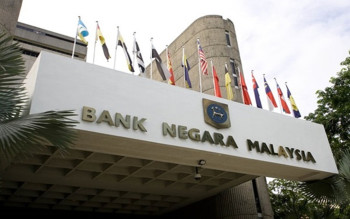
Bank Negara Malaysia has clarified that advice offered to the Lembaga Tabung Haji forms part of its broader financial stability responsibilities enshrined in the Central Bank of Malaysia Act 2009. The central bank's position emerged amid ongoing scrutiny from a Royal Commission of Inquiry into the pilgrimage fund, which has been examining governance and financial management at the institution that oversees the savings of millions of Malaysian Muslims preparing for the hajj pilgrimage.
The bank's statutory obligations extend beyond traditional banking supervision to encompass the health of non-bank financial institutions that maintain meaningful connections within Malaysia's financial ecosystem. This preventative approach reflects international best practices where central banks maintain systemic oversight responsibilities that transcend their direct regulatory perimeter. Bank Negara's mandate includes continuous monitoring and early identification of emerging risks that could destabilise the broader financial system, potentially threatening depositor confidence or interconnected institutions.
To operationalise this mandate, Bank Negara established the Financial Stability Executive Committee under the same 2009 legislation. This committee functions as an internal governance mechanism through which the central bank coordinates surveillance activities across the financial landscape and formulates policy responses to identified vulnerabilities. The committee's work involves analysing macroprudential data, stress-testing scenarios, and evaluating the health of systemically important institutions, whether or not they fall under the bank's direct regulatory authority.
Tabung Haji occupies a unique position within Malaysia's financial architecture. Despite managing billions of ringgit in pilgrim savings and holding accumulated assets across property, equities, and other investments, the institution historically escaped Bank Negara's direct supervisory jurisdiction. However, this structural separation does not insulate it from the central bank's systemic risk mandate. The sheer scale of Tabung Haji's operations and the millions of Malaysians dependent upon its financial soundness create potential spillover consequences should the institution experience serious difficulties.
Bank Negara's intervention through advisory channels represents a pragmatic middle ground between rigid regulatory boundaries and systemic irresponsibility. Rather than restricting itself to institutions explicitly under its purview, the bank has provided counsel directly to Tabung Haji's Board and to the Minister responsible for the fund. This approach prioritises early remediation and voluntary compliance over confrontational enforcement, potentially more effective when dealing with institutions managed through political or religious governance structures.
The substance of Bank Negara's concerns emerged clearly through five separate warning letters dispatched to Tabung Haji's leadership and the Minister of Religious Affairs. These communications specifically highlighted a critical structural weakness: the growing divergence between the fund's asset base and its accumulated liabilities. Such imbalances foreshadow solvency challenges and erode the institution's capacity to honour commitments to millions of savers. The warnings demonstrated that Bank Negara's advisory role translated into concrete, specific guidance rather than vague exhortations.
Bank Negara's concerns proved prescient. The Auditor-General independently identified deficiencies in Tabung Haji's financial stewardship within the 2017 Financial Statements Report, validating the central bank's earlier assessment. This convergence between Bank Negara's surveillance alerts and external audit findings underscored the legitimacy of the bank's systemic risk concerns and reinforced the value of its early warning mechanisms.
The Royal Commission of Inquiry, formally established by the government in 2021 and commissioned with specific members in January 2022, represents a more intensive institutional examination. The RCI's investigation has examined governance lapses, investment decisions, and financial management practices within Tabung Haji. When the RCI presented its findings to the Yang di-Pertuan Agong on August 30, 2022, it provided an official assessment of the institutional failings that prompted Bank Negara's earlier cautionary interventions.
Bank Negara's articulation of its financial stability mandate carries broader implications for how Malaysia's central bank approaches systemic oversight. The explicit invocation of statutory authority signals that the bank views its responsibilities comprehensively, extending proactively to institutions not formally within its regulatory remit when their potential failure could threaten financial system integrity. This interpretation potentially expands the practical scope of central banking authority beyond what legislative language alone might suggest.
For Malaysian depositors and pilgrims relying upon Tabung Haji, Bank Negara's involvement offers a layer of protection through which the nation's paramount financial authority maintains surveillance of their savings. The multi-institutional approach—combining Bank Negara's warnings, the Auditor-General's scrutiny, and the RCI's comprehensive investigation—reflects a system attempting to identify and address institutional vulnerabilities through overlapping accountability mechanisms.
The case illuminates persistent tensions within financial regulation: how to maintain flexible, proportionate oversight of non-bank institutions without either neglecting systemic risks or imposing regulatory burdens inappropriate to their governance structures. Bank Negara's approach, framed as supportive advice rather than directive regulation, seeks to navigate this balance while preserving its capacity to address threats to financial stability.

