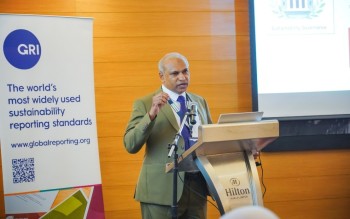
The Malaysian financial sector is fundamentally reordering its lending practices, with banks and financial institutions now routinely requesting comprehensive sustainability reports from companies seeking loans. This represents a decisive shift away from treating environmental, social and governance (ESG) performance as optional corporate embellishment toward recognising it as a core component of creditworthiness and risk assessment. The implications extend far beyond compliance departments; companies that fail to demonstrate credible sustainability credentials increasingly face reduced access to capital, while those embracing reporting standards gain competitive advantages in both domestic and international markets.
Prathab V, principal consultant at ESGright Sdn Bhd, articulated this emerging reality in discussions with industry leaders, emphasising that businesses of all sizes now benefit significantly from adopting sustainability reporting frameworks. The pressure originates not from government mandates alone but from the investment and lending community itself, which recognises that environmental risks, labour practices, and governance structures materially affect long-term financial performance. Large enterprises and smaller operations alike must navigate this landscape, though the capacity to do so varies considerably across the business spectrum.
While Malaysia's regulatory environment mandates sustainability statements exclusively for listed companies on Bursa Malaysia, unlisted firms face no legal obligation to publish such reports. This creates a bifurcated market in which publicly traded corporations operate under clear disclosure requirements while private enterprises can technically avoid formal ESG reporting. However, this regulatory distinction increasingly means little in practical terms. Banks evaluating loan applications now probe deeply into sustainability credentials regardless of listing status, effectively extending mandatory-equivalent standards to the entire corporate ecosystem through lending conditions rather than statutory rules. The effect is that voluntary adoption has become a de facto necessity for businesses seeking favourable financing terms.
The strategic advantage flowing from sustainability reporting extends beyond borrowing costs alone. Companies demonstrating robust environmental and governance practices gain preferential access to what industry participants term "smart capital"—investment that comes with lower interest rates, longer terms, and fewer restrictive covenants. Conversely, enterprises neglecting sustainability metrics gradually lose competitive positioning as supply chain partners, particularly multinational corporations and their major suppliers, increasingly screen vendors for ESG performance. For Malaysian SMEs serving international customers or functioning within complex global supply chains, this represents an existential consideration rather than an optional improvement.
The complexity of this transition intensified dramatically in recent years. Malaysia has positioned itself as a regional leader in sustainability professional development, ranking third globally among GRI-certified trainers and maintaining one of ASEAN's largest populations of qualified sustainability practitioners. This institutional capacity reflects government recognition that Malaysia's economic future depends on embedding sustainability into core business operations. ESGright's recent appointment as Malaysia's first approved education partner by the International Financial Reporting Standards Foundation underscores this commitment, providing structured pathways for professionals to master increasingly technical disclosure requirements aligned with International Sustainability Standards Board standards.
Yet even as training capacity expands, companies confront mounting complexity in navigating overlapping disclosure frameworks. Different regulatory bodies, industry standards, and investor expectations create what practitioners identify as "compliance fatigue"—the burden of meeting proliferating requirements that often overlap, contradict, or demand similar information in incompatible formats. A large corporation might simultaneously report under GRI Standards, IFRS sustainability disclosures, Bursa Malaysia requirements, and specific customer or investor mandates, each requiring marginal variations in data collection and presentation. This fragmentation imposes real costs, particularly on firms lacking dedicated sustainability functions.
Small and medium enterprises face distinctly different challenges than their larger counterparts. While major listed companies possess dedicated ESG teams, sophisticated data management systems, and substantial budgets for external advisers, SMEs typically operate with constrained resources and competing priorities. Robin Hodess, chief executive of the Global Reporting Initiative, emphasised that effective sustainability frameworks for smaller enterprises must be proportionate to their capacity, recognising that excessive reporting burdens could paradoxically discourage adoption. She advocated for scaled disclosure requirements that capture material sustainability impacts without demanding the comprehensive disclosure regimes appropriate for multinational corporations.
The supply chain dimension proves particularly relevant for Malaysian SMEs. As major multinational corporations intensify ESG requirements across their vendor networks, suppliers lacking sustainability reporting face exclusion from lucrative contracts. This creates a cascading effect throughout the economy: multinational manufacturers demand sustainability credentials from their Malaysian component suppliers, who then must demonstrate governance and environmental standards to remain viable partners. For many SMEs, this effectively transforms ESG reporting from an aspirational corporate practice into a market access requirement. Supply chain opportunities—critical for smaller enterprises seeking growth—increasingly depend on demonstrating credible sustainability performance.
Malaysia's early adopters of ESG practices, particularly listed companies, already recognised these market realities years before regulatory requirements emerged. These enterprises began reporting under GRI Standards and similar frameworks because they understood that international market access, investor confidence, and export competitiveness depended on demonstrable sustainability credentials. Their forward-thinking approach created a virtuous cycle in which transparency strengthened relationships with global partners and generated tangible commercial advantages. This experience now diffuses through the broader business community as competitive pressure forces lagging enterprises to adopt comparable standards.
The government's role in facilitating this transition extends beyond regulatory mandates. Through various industry bodies and sustainability guidelines, Malaysian authorities have actively encouraged voluntary adoption among unlisted companies, recognising that waiting for legal requirements would allow competitors in other jurisdictions to establish leadership positions. This proactive stance reflects understanding that sustainability reporting capability represents an emerging competitive advantage in global markets. Nations that develop sophisticated, professional sustainability reporting ecosystems earlier position their enterprises more favourably in international competition.
Prathab V highlighted a frequently overlooked aspect of sustainability reporting adoption: companies need not attempt perfect performance across every environmental and social dimension simultaneously. Instead, enterprises achieve greater impact by identifying areas where they can make meaningful contributions—whether environmental stewardship, biodiversity protection, labour practice improvement, or governance enhancement—and focusing resources to excel in those domains. This strategic focus reduces the overwhelming nature of comprehensive sustainability transformation and allows companies to generate demonstrable, authentic improvements rather than superficial compliance across numerous areas. Such authenticity matters increasingly to sophisticated investors and lenders who scrutinise whether reported improvements reflect genuine operational change or mere accounting manipulation.
The emerging ecosystem of financial incentives tied to sustainability performance will likely intensify over coming years. As climate risk, resource scarcity, and governance failures impose visible costs on economies, financial institutions incorporate these factors more systematically into lending decisions. Malaysian banks' increasing demands for ESG reporting reflect this evolution, positioning early adopters to access capital on favourable terms while laggards face higher costs and reduced availability. For Malaysian businesses seeking to maintain competitiveness in global supply chains, penetrate international markets, and secure capital at reasonable costs, sustainability reporting has transitioned from a corporate luxury to an operational necessity shaped by market forces rather than regulatory commands.

