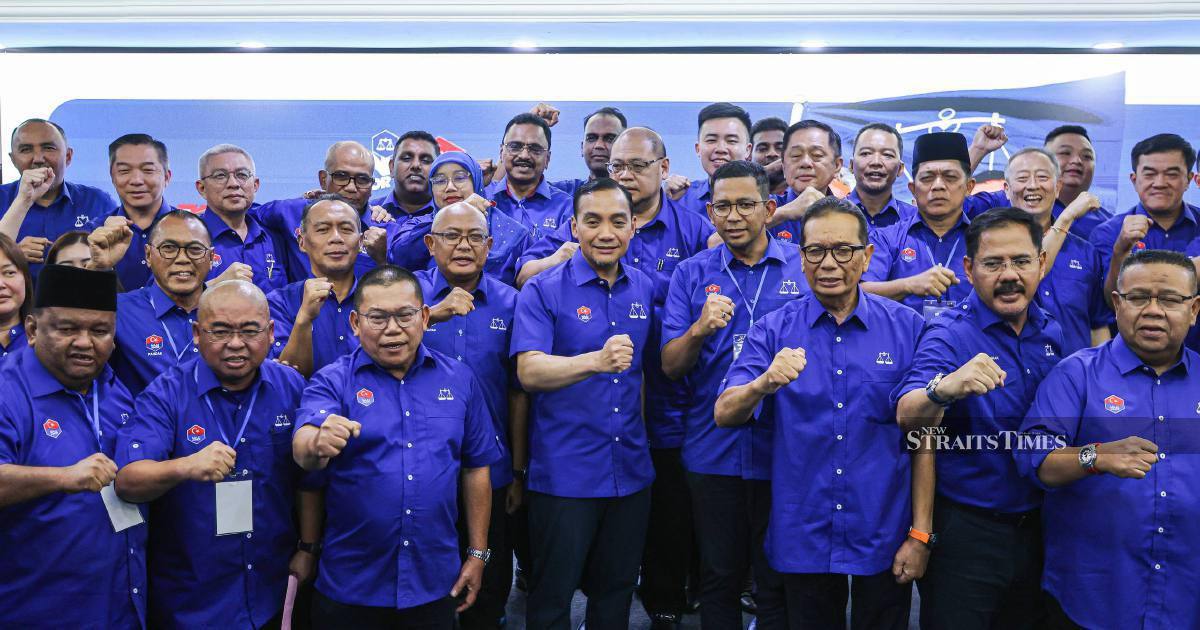
Barisan Nasional's Johor chapter has drawn a hard line on its electoral strategy, firmly rejecting any prospect of coalition arrangements with competing political parties once voting concludes in the state. The declaration signals the ruling alliance's confidence in its capacity to secure an outright majority, whilst simultaneously narrowing the political terrain for potential post-election negotiations. This unequivocal position marks a departure from the pragmatic coalition-building that has become increasingly common in Malaysian politics since 2018, suggesting BN intends to contest the election from a position of strength rather than as a fallback option.
Onn Hafiz, the senior BN figure articulating this stance, has characterised the party's position as final and non-negotiable, lending considerable weight to the announcement. His public commitment effectively closes the door to backroom dealings with opposition groups or independent candidates who might otherwise harbour hopes of negotiating legislative support in exchange for ministerial posts or policy concessions. The timing of this declaration carries strategic significance, as it clarifies the electoral choice facing Johor voters by eliminating ambiguity about what a BN victory would entail regarding governance arrangements.
The refusal to contemplate coalition arrangements reflects broader shifts within BN's internal calculus. The alliance appears to have calculated that explicitly pledging singular governance will resonate with voters seeking stability and clear mandates rather than messy post-election negotiations. This approach contrasts sharply with the uncertainty that characterised the 2022 general election and subsequent state contests, where coalition flexibility enabled minority governments but also generated perceptions of instability and opportunism.
For Johor specifically, the implications extend beyond simple governance mechanics. The state represents crucial symbolic territory for BN, having historically served as a stronghold for the alliance's component parties. A victory secured on these terms would reinforce the narrative of BN's revival following its 2018 electoral collapse, suggesting the ruling coalition has convincingly reestablished its grip on traditional support bases. Conversely, any electoral setback would validate opposition arguments that Malaysian voters are gravitating toward alternative political alignments.
The statement also carries implications for Malaysia's broader political equilibrium. Johor's electoral outcome will significantly influence dynamics ahead of any future general election, as the state's demographic weight and electoral machinery constitute substantial assets for whichever coalition secures them. Should BN win decisively on a solo-governance platform, it would demonstrate that voters remain responsive to classic appeals for clear leadership and proven institutional competence rather than innovative political experimentation.
Opposition parties have predictably contested BN's monopolistic framing, arguing that the ruling coalition's unwillingness to contemplate power-sharing reflects arrogance and democratic deficiency rather than confidence. This rhetorical clash illuminates fundamental disagreements about how Malaysian democracy should function, with BN emphasising electoral mandates and clear governance lines whilst opposition voices champion coalition-building as a mechanism for broader representation and institutional checks.
The declaration must be contextualised within Johor's recent political history. The state experienced significant turbulence following defections and realignments that complicated governance, culminating in circumstances where coalition arrangements became necessary. BN's determination to avoid repeating this experience reflects lessons learnt about the costs of ambiguous electoral outcomes and the complications arising from governing on razor-thin majorities dependent on shifting alliances.
Critically, Onn Hafiz's assertion of non-negotiable positioning carries an implicit acknowledgment that other parties might harbour different calculations. The emphatic language suggests BN leadership anticipated speculation about potential negotiations and moved to forestall such expectations before they crystallised into formal approaches. This preventative messaging seeks to establish psychological advantage by framing BN as the decisive political force rather than merely one participant in potential post-election haggling.
For Malaysian political observers, this development signals the continued salience of zero-sum electoral framing despite the country's recent experience with coalition necessities. Rather than treating coalition-building as an inevitable feature of contemporary Malaysian politics requiring institutional adaptation, BN appears to view it as an anomaly to be overcome through sufficiently commanding electoral performance. This perspective carries implications for constitutional development and parliamentary conventions that may prove consequential regardless of which party ultimately governs.
The broader question animating this declaration concerns what electoral outcome would actually permit BN to govern alone. Vote-splitting among opposition parties might deliver BN a parliamentary majority whilst still representing a plurality rather than majority of Johor voters. Such circumstances would test whether BN's principled stance on non-negotiable independence would withstand pressure to accommodate independents or smaller parties seeking ministerial recognition. The robustness of BN's position depends substantially on the magnitude of its eventual victory margin.
Moving forward, all political actors will scrutinise actual electoral results against this declared position. Should BN fall marginally short of workable majorities, the credibility of its categorical rejection of coalition arrangements will face immediate stress. Conversely, a decisive BN victory would vindicate this electoral strategy and establish momentum for subsequent contests. The state election consequently functions simultaneously as assessment of voter preferences and testing ground for competing visions of how Malaysian democracy should navigate questions of electoral mandates and power-sharing arrangements.