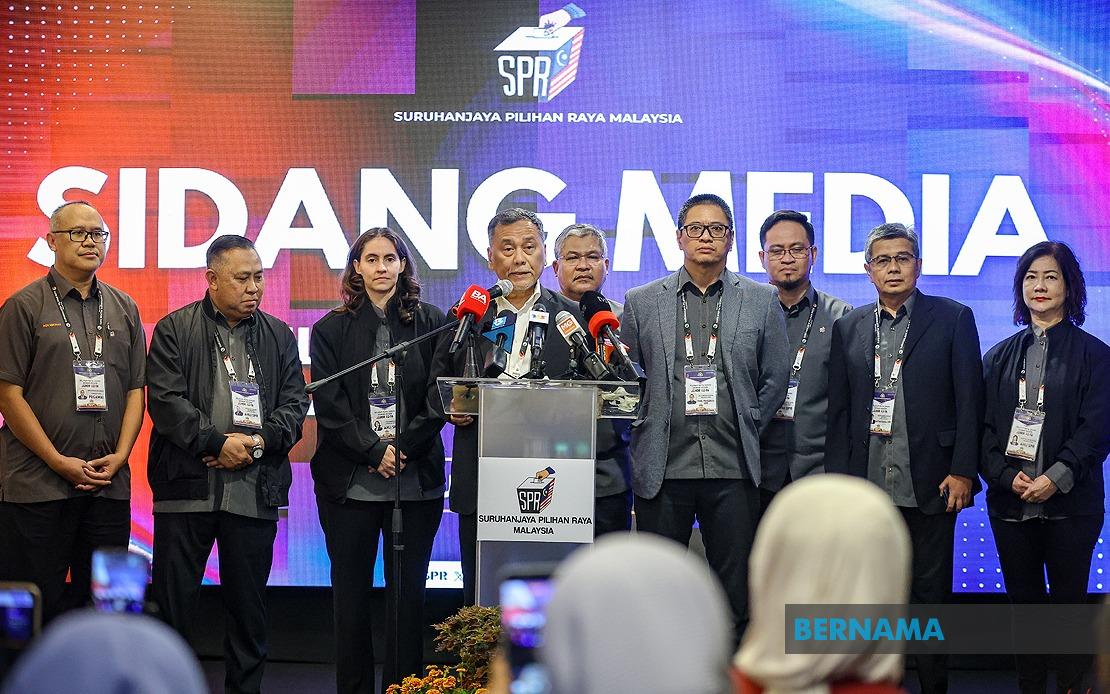
Barisan Nasional has reinforced its political stranglehold on Johor with a commanding electoral performance, capturing 48 of the 56 contested seats in the state assembly election and establishing a commanding two-thirds supermajority that extends its governing authority. The decisive outcome, announced in the early hours of July 12, represents a marked improvement on BN's 2022 showing when the coalition won 40 seats, making this an eight-seat gain that underscores the coalition's resilience in one of Malaysia's most economically significant states. Pakatan Harapan's campaign secured only eight seats, a substantial reversal that signals erosion of opposition momentum in a state where both coalitions have competed intensively over the past three years.
Within the BN tent, the results reflect the traditional power dynamics of the coalition structure. Umno, as the dominant Malay-Muslim party, captured 36 of the coalition's 48 seats—reinforcing its core strength in the peninsula's Malay-majority constituencies. The Malaysian Chinese Association secured eight seats, demonstrating continued relevance among urban and semi-urban Chinese voters despite broader challenges facing the party nationally. The Malaysian Indian Congress achieved a perfect sweep in four seats it fielded, with all nominees—K. Raven Kumar in Kemelah, V. Rugendran in Kahang, P. Pannir Selvam in Perling, and R. Kumaran in Bukit Batu—crossing the finish line successfully. This clean victory for MIC is particularly noteworthy given the party's marginal position within national politics, suggesting that targeted campaigning and ground-level engagement in specific constituencies can still produce results for the Indian-focused coalition member.
The defeat inflicted on opposition forces, particularly on the Democratic Action Party, represents one of the election's starkest narratives. DAP entered the contest defending 17 seats but departed with only six, suffering a net loss of 11 positions. Most painfully for the party, it surrendered four previously held constituencies—Johor Jaya, Tangkak, Jementah, and Perling—to MCA and MIC candidates. These losses are particularly significant because they suggest that DAP's typical strongholds among urban and educated voters have become vulnerable, possibly due to shifting demographic patterns, internal party dissatisfaction, or the tactical effectiveness of BN's coalition redistribution strategy. PKR and Amanah, the other major PH components, managed only one seat each, with Dr Maszlee Malik, the former Education Minister, securing Puteri Wangsa in a multi-cornered contest against BN, Bersama, MUDA, and an independent candidate.
The complete elimination of Perikatan Nasional representation marks a dramatic reversal for a coalition that won three seats in 2022. The failure of Dr Sahruddin Jamal, the former Johor Menteri Besar and Bersatu chairman, to retain his Bukit Kepong seat epitomizes the broader collapse of PN's electoral machinery in the state. The coalition's inability to defend Endau and Maharani compounds these losses, suggesting that PN's attempts to build an independent political infrastructure separate from Umno have faltered in Johor's competitive environment. This outcome carries implications beyond state-level politics, as it affects the balance of power within the larger Malaysian political ecosystem where PN has sought to position itself as an alternative to both BN and PH.
Perikatan Nasional's disappearance from Johor's legislature stands in contrast to its performance in several other states, raising questions about whether PN's appeal is geographically limited or whether state-specific factors—including possibly stronger BN organizational capacity and entrenched advantages in Johor—prevent the coalition from establishing a foothold. The collapse particularly affects Bersatu, the party founded by former Prime Minister Mahathir Mohamad, which has pinned significant hopes on becoming a pivot force in Malaysian politics. The failure in Johor, following mixed results elsewhere, suggests that Bersatu may need to reassess its strategic direction and coalition partnerships to remain electorally viable.
The performance of minor parties and independent candidates provides additional texture to the results. Parti Bersama Malaysia, which contested 15 constituencies, lost all candidate deposits—a humiliation that raises questions about its viability as a political force. The Malaysian United Democratic Alliance, the youth-focused reform party, similarly failed to translate its internet-age appeal into electoral success. These results suggest that despite Malaysia's growing political pluralism, the traditional two-coalition framework remains formidable, and breakthrough performances by newer or fringe parties remain elusive in state-level contests. The absence of seats for PSM and ASLI similarly underscores the challenges facing ideological and communal parties in the contemporary electoral landscape.
Johor's results hold particular significance for Malaysia's evolving political trajectory because the state occupies crucial strategic real estate both economically and politically. As Malaysia's most industrialized and economically dynamic state after Selangor, Johor's governance influences sentiment regarding BN's capacity to manage complex, developed jurisdictions. The two-thirds majority furnishes BN's Johor administration with substantial legislative flexibility to pass laws and policies without requiring opposition support or managing fractious internal coalitions—a luxury that can accelerate development initiatives but also potentially reduce accountability mechanisms. For the federal government, Johor's emphatic endorsement provides a valuable counterweight to political uncertainties at the national level, where coalition dynamics remain fluid and succession questions linger.
The personal success of Onn Hafiz Ghazi, the Johor BN chairman, in retaining the Machap constituency with an overwhelming majority of 15,375 votes provides continuity in BN's state leadership. His characterization of the mandate as a directive to serve Johor's people and address pressing issues reflects the coalition's effort to position this victory as an endorsement of governance competence rather than mere factional triumph. The retention of all nine state executive councillors who were renominated suggests institutional stability and suggests that BN's state government has achieved sufficient legitimacy among legislators to avoid internal rebellions or defections. Samsolbari Jamali's sixth consecutive victory in Semarang represents generational political continuity and reflects the persistence of grassroots party machinery in Johor's smaller towns.
The two-thirds supermajority fundamentally alters the calculus for Johor's governance trajectory over the next five years. With such commanding numerical strength, the state government can pursue ambitious policy agendas, enact constitutional amendments at the state level, and potentially reshape institutional frameworks with minimal parliamentary obstruction. This dominance also allows BN to weather internal disagreements between coalition members more easily, as individual party defections would not threaten overall legislative control. However, such concentration of power also places heightened responsibility on the administration to deliver tangible improvements in public services, infrastructure, and economic opportunity—failure to do so would erode the mandate without providing opposition checks to blame for obstruction.
For Pakatan Harapan, the Johor result represents a setback that demands strategic recalibration. The coalition entered these elections with aspirations of expanding its foothold in major states; instead, it has retreated from its 2022 position. The loss of DAP seats particularly damages PH's claim to represent urban, educated constituencies and raises questions about whether internal coalition frictions or broader voter dissatisfaction with PH's federal governance record have compromised its electoral appeal in peninsular states. PKR director Amirudin Shari's statement about remaining a principled opposition suggests internal acknowledgment that PH must rebuild credibility after setbacks, particularly on bread-and-butter issues affecting ordinary Malaysians. The coalition's strategic direction will likely shift as it confronts the reality that Johor's electorate—despite its economic dynamism and modern urbanization—remains attached to BN governance.
The election involved 172 candidates competing across 56 constituencies, drawing from diverse political organizations and reflecting Malaysia's increasingly pluralistic candidate base. The participation of 2.7 million registered voters in Johor demonstrates substantial civic engagement with state-level democracy, though turnout figures remain undisclosed. The breadth of candidate diversity—from traditional parties to newer formations to independents—illustrates the fragmentation of Malaysia's political marketplace, yet the concentration of actual seats in BN's hands underscores how electoral systems translate diversity of choice into concentration of power. This dynamic raises ongoing questions about electoral reform, representation, and whether Malaysia's first-past-the-post system adequately reflects the diversity of voter preferences or whether alternative mechanisms might produce different outcomes.
Looking forward, Johor's emphatic endorsement of BN governance creates momentum for the coalition ahead of the next federal general election, now constitutionally due by late 2025. The state's economic importance—particularly its manufacturing base, port facilities, and cross-border trade with Singapore—makes it a bellwether for national investor confidence and regional stability. An effectively governed Johor under BN stewardship can project competence and economic management capacity at the federal level, potentially buttressing the coalition's national campaign narrative. Conversely, failure to translate this electoral mandate into improved living standards and economic outcomes could undermine BN's broader political positioning and embolden opposition claims that the coalition lacks vision for contemporary Malaysia. The stakes for Johor's governance extend well beyond state boundaries into the broader struggle for national political legitimacy.

