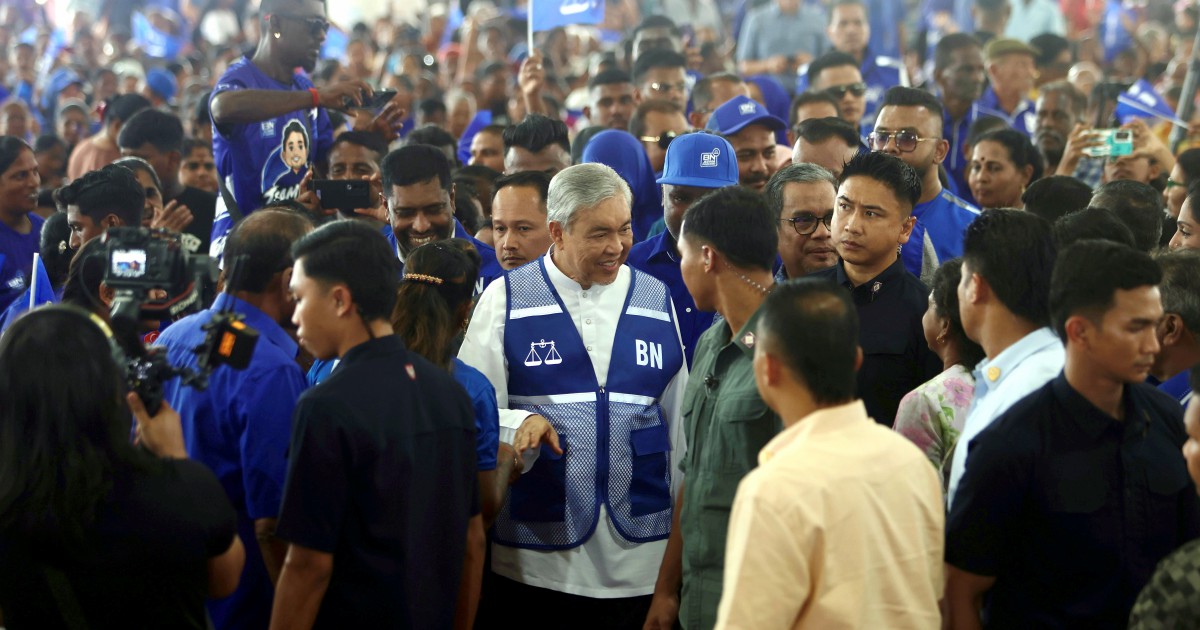
Barisan Nasional has signalled its readiness to engage in substantive discussions with Perikatan Nasional concerning the possibility of extending their electoral understanding to encompass the upcoming Melaka election. The development represents a pragmatic approach from the ruling coalition as it navigates the competitive landscape of state-level politics in Malaysia's southern states.
The openness to negotiations reflects the complex dynamics of Malaysian politics, where national coalition agreements do not automatically translate into synchronized efforts at the state level. Melaka, as a strategically important state and a traditional BN stronghold, has become a focal point for coalition building efforts. The potential expansion of the BN-PN understanding in Melaka would represent a significant coordination between two major political blocs that have maintained varying degrees of cooperation and competition across different electoral contexts.
Peikatan Nasional, which has consolidated significant political strength across multiple states and at the federal level following the 2022 general election, represents a meaningful political force that BN must contend with in state contests. The prospect of an electoral accommodation rather than direct competition could reshape the political contest in Melaka, potentially influencing voter dynamics and seat distribution scenarios that would otherwise favour either coalition independently.
The willingness to explore such arrangements underscores the increasingly transactional nature of Malaysian politics at the state level, where outcomes in any single election can have cascading effects on coalition stability and parliamentary mathematics. In Melaka specifically, where BN has governed continuously as the primary ruling force, negotiations with PN must balance the desire to retain electoral dominance with the practical benefits of reducing candidate competition and vote-splitting between allied coalitions.
Historically, Melaka has been a solid BN state, with the coalition maintaining control across multiple electoral cycles. However, the political upheaval of recent years, culminating in the fractionalisation of UMNO and the rise of alternative political movements, has complicated the traditional voting patterns. Perikatan Nasional's emergence as a credible political alternative, particularly through its PAS component and support base in certain communities, means that uncoordinated contests could result in vote division that ultimately benefits opposition coalitions.
The timing of these preliminary discussions is significant as electoral cycles in Malaysian states follow different schedules, and Melaka's upcoming polls come at a juncture when both BN and PN are assessing their electoral positioning ahead of potential federal elections. State election results often serve as bellwethers for subsequent national contests, making Melaka's outcome consequential beyond its immediate territorial significance.
From a voter perspective, the potential electoral arrangement would alter the effective choice available in Melaka constituencies. Constituencies where both BN and PN candidates might previously have contested would instead feature a unified candidature, altering the tactical calculations of voters and potentially affecting turnout patterns. This consolidation could strengthen the combined bloc's position against opposition coalitions like Pakatan Harapan, which has also demonstrated capacity to win in selected Melaka constituencies during previous contests.
The framework of such an electoral understanding would likely involve detailed negotiations regarding seat allocations, with BN possessing greater leverage given its historical dominance and organizational strength in the state. The discussions would need to address not only which coalition's party receives which seats, but also mechanisms for campaign coordination, resource sharing, and managing the distinct political identities of BN component parties and PN's constituent members.
For Southeast Asian observers, Malaysia's coalition dynamics reveal the sophistication required in managing multi-party democracy with significant communal dimensions. Unlike simpler two-party or clear coalition systems, Malaysia requires continuous negotiation among multiple significant players with distinct constituencies, ideological orientations, and territorial strengths. The BN-PN discussions in Melaka exemplify this complexity, showing how major political actors must simultaneously compete and cooperate depending on the electoral context.
The outcome of these negotiations could establish precedents for how BN and PN manage subsequent state elections, potentially solidifying a pattern of electoral coordination across multiple contested states. Alternatively, negotiations could falter over seat distribution disputes or demands from either coalition's component parties, resulting in return to direct competition that fragments the non-opposition vote.
Melaka voters ultimately hold the determinative power in this political calculus. Their willingness to support a unified BN-PN slate would depend on the attractiveness of candidates, local governance records, and broader political sentiments regarding the competing coalitions' visions for the state's development. The electoral understanding, should it materialize, would represent elite-level coordination that requires popular validation at the ballot box.
As negotiations progress, stakeholders across Malaysia's political spectrum will closely monitor developments in Melaka, recognizing that successful coalition management in a major state could reshape calculations for future federal politics. The flexibility demonstrated by BN in entertaining such discussions suggests recognition that electoral success increasingly depends on strategic coordination rather than individual coalition dominance, a lesson that extends implications throughout Malaysia's political system.

