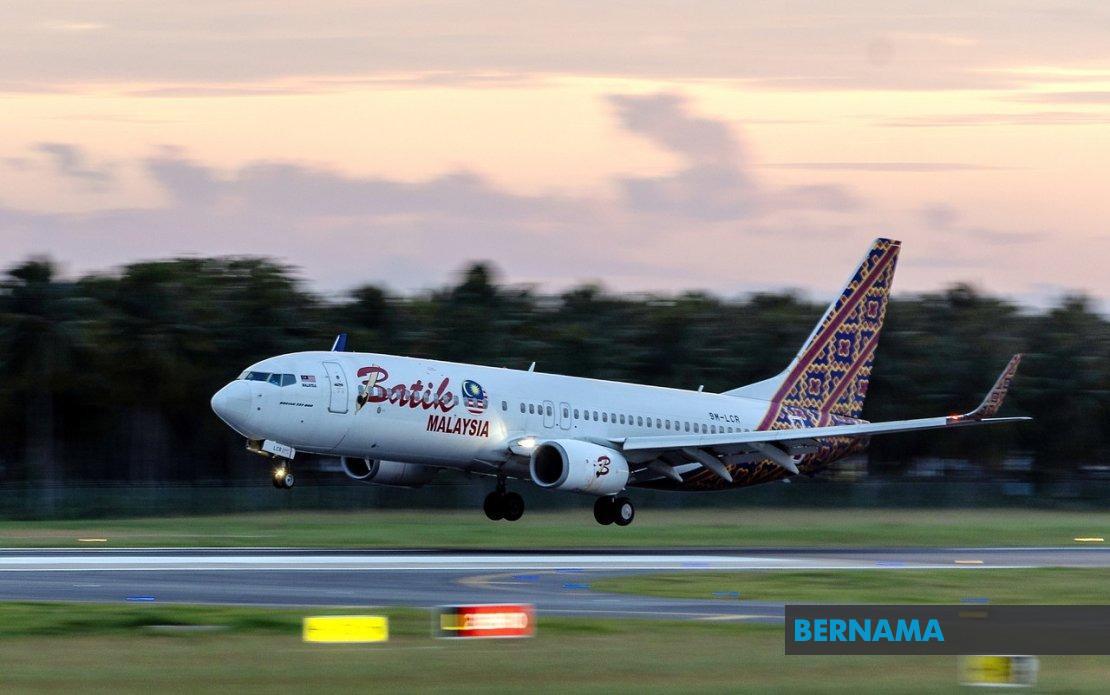
Batik Air will expand its Bintulu-Kuala Lumpur service to twice daily from July 20, marking a significant increase in connectivity between the Sarawak destination and Malaysia's capital. The decision comes after Tourism, Arts and Culture Minister Datuk Seri Tiong King Sing engaged directly with the airline to tackle mounting public complaints about flight scarcity and escalating ticket prices that have burdened travellers and businesses dependent on the route.
The minister's announcement signals a tangible government response to the frustrations expressed by Bintulu residents and commercial interests who had faced severe constraints following the airline's earlier reduction in service frequency. Tiong's intervention demonstrates how political pressure, when properly channelled through dialogue with carriers, can yield concrete outcomes that benefit regional connectivity. The new schedule will see departures from Kuala Lumpur at 10 am and 2.30 pm, with return flights from Bintulu leaving at 1.10 pm and 5.40 pm, providing passengers with more flexible timing options for business trips, medical visits, and leisure travel.
Bintulu's economic trajectory has created genuine travel demand that outpaced airline capacity. The coastal region has experienced steady development across multiple sectors, generating requirements for frequent air connections to facilitate commerce, educational pursuits, healthcare services, and tourism activities. Business professionals, students, and patients requiring treatment in Peninsular Malaysia have particularly felt the pinch of limited flight availability, with some forced to accept inconvenient schedules or prohibitively expensive fares. This expansion addresses those practical constraints while supporting the broader economic integration of Sarawak with the Malaysian peninsula.
During negotiations, Tiong initially pressed for three daily flights but the airline proposed implementing one additional service as a first step, allowing time to assess demand and operational sustainability. This compromise reflects the commercial realities facing carriers balancing network expansion with aircraft utilization rates and route profitability. However, the minister secured an important commitment: both parties acknowledged that future frequency increases remain possible if passenger traffic justifies the investment. A potential progression to three daily flights is explicitly on the table, contingent on demonstrated demand growth over coming months.
Airfare stability emerged as a central concern throughout the coordination process. Tiong emphasized to Batik Air the economic burden that escalating ticket prices place on ordinary travellers and their negative long-term impact on route viability. His argument that competitively priced fares stimulate passenger growth—creating mutual benefits for both the airline and consumers—carries strategic weight in Malaysia's regional aviation market. As Southeast Asian carriers compete for market share and route profitability, the minister's advocacy for reasonable pricing reflects a broader policy position favouring affordability without compromising service quality.
The minister also addressed operational reliability, urging Batik Air to maintain consistent scheduling and minimize cancellations that disrupt travel plans and erode passenger confidence. Flight cancellations and last-minute schedule changes create cascading problems for business meetings, academic commitments, and medical appointments, particularly affecting Bintulu's professional community. Passengers require dependable service underpinning the route's economic value, not merely additional flights that prove unreliable. This operational dimension distinguishes the government's expectations from simply increasing flight numbers on paper.
Bintulu's significance within Sarawak's economic ecosystem justifies enhanced aviation infrastructure. The region's oil and gas industry, along with emerging sectors, requires seamless transport links for executives, technicians, and support personnel. Students pursuing higher education in Kuala Lumpur and other peninsular cities benefit from improved scheduling that reduces travel time and costs. Medical tourism and specialist healthcare access represent another category of demand that responsive aviation services can effectively serve, potentially positioning Bintulu as a more competitive healthcare destination.
From a broader Southeast Asian perspective, this expansion illustrates how regional transportation networks require continuous calibration to match evolving economic needs. Sarawak's integration with Malaysia's national economy depends partly on efficient domestic aviation serving secondary cities beyond Kuala Lumpur and Kuching. Improved Bintulu connectivity strengthens internal trade flows, facilitates labour mobility, and supports the decentralization of economic activity beyond Malaysia's largest metropolitan areas. For Malaysian businesses with operations spanning multiple states, enhanced regional flight frequency reduces operational friction.
The government's role in coordinating this expansion reflects evolving expectations around state engagement with private carriers. Rather than imposing mandates or regulatory requirements, Tiong pursued collaborative dialogue that accommodated both public interest and airline commercial viability. This approach yields more sustainable outcomes than heavy-handed intervention, as carriers invest meaningfully in routes they perceive as commercially viable rather than regulatory obligations. The model suggests how policymakers can effectively advocate for regional development without destabilizing airline economics.
Looking forward, the twice-daily service provides a foundation for assessing genuine passenger demand and supporting business cases for further expansion. If utilization rates climb over the coming months, the explicit prospect of three daily flights becomes achievable, creating a clear pathway for ongoing network enhancement. For Bintulu's business community, improved flight availability should gradually translate into reduced airfares as competitive pressures and higher passenger volumes improve route economics. The July 20 launch date provides six weeks for the airline to finalize scheduling and inform passengers of new departure times, enabling travellers to adjust plans accordingly.

