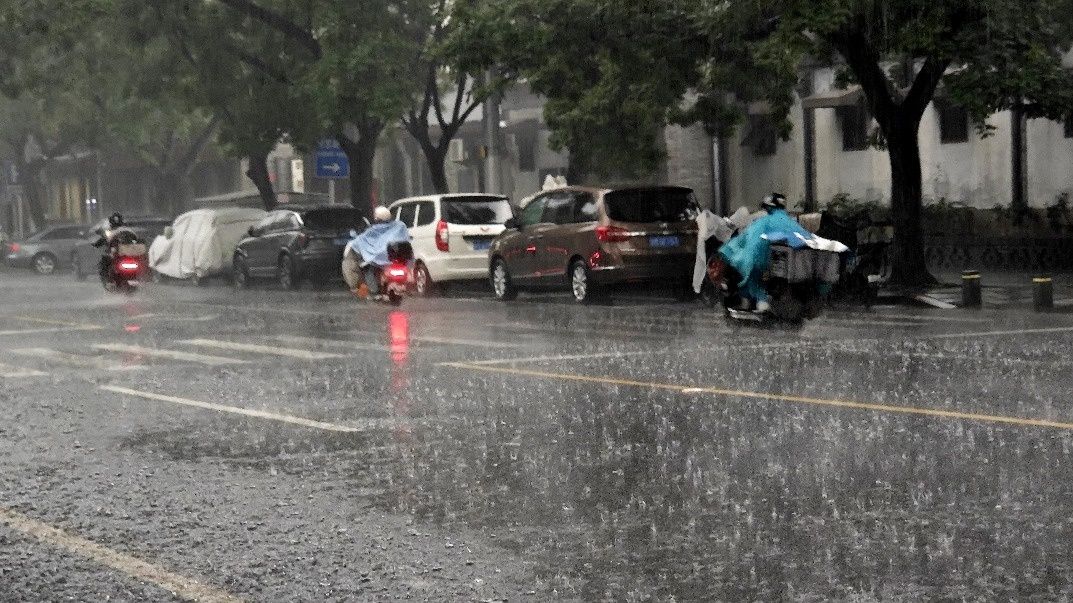
Beijing's meteorological observatory has issued its first orange-level rainstorm alert of the year, signalling the intensification of the 2026 flood season across the capital region. The warning was released at 1.30 pm on Thursday, prompting authorities to simultaneously activate a Level-II flood control emergency response—the second-highest tier in China's four-category warning system that ranks alerts from red (most severe) through orange, yellow, and blue. This coordinated action underscores growing concern about the meteorological hazards and potential infrastructure strain facing the city as weather patterns intensify.
The alert's scope extends across multiple vulnerable areas within and around Beijing, with particular attention directed towards districts including Huairou, Miyun, Pinggu, Shunyi and Fangshan. These regions face the prospect of particularly severe weather from 2.00 pm on Friday through 8.00 am on Sunday—a 42-hour window during which rainfall is expected to reach dangerous levels. The forecast carries substantial implications for population centres and infrastructure across these districts, many of which have experienced waterlogging issues during previous heavy precipitation events. Authorities have begun coordinating preparations and advisories specifically targeting these high-risk zones to mitigate potential damage and disruption.
The quantified precipitation projections reveal the intensity of the anticipated weather event. Hourly rainfall in some areas is forecast to exceed 70 millimetres, representing the rate at which water would accumulate on any exposed surface. Over the full 24-hour period, cumulative rainfall in the most severely affected areas could surpass 150 millimetres—roughly equivalent to a month's worth of typical precipitation compressed into a single day. These figures position this event in the upper range of heavy rainfall episodes and establish clear thresholds for assessing flood risk and infrastructure vulnerability across the affected territories.
The meteorological risks associated with Beijing's topography present particular challenges during such events. The alert specifically emphasises elevated hazard potential in mountainous and hilly terrain, where intense precipitation can trigger rapid runoff, mudslides, and flash flooding that develop with minimal warning. Simultaneously, the alert warns of waterlogging in lower-lying urban and peri-urban areas where drainage infrastructure may become overwhelmed by the volume and speed of water accumulation. This dual geographic vulnerability means that different parts of Beijing face distinct hazardous scenarios requiring tailored response strategies and protective measures.
Mobility and transportation patterns face substantial disruption under the alert protocols. Flood control authorities have advised the public to minimise outdoor movement and to prioritise public transportation over private vehicles where travel cannot be avoided. This guidance reflects both safety concerns—reduced visibility, unstable road conditions, and hazardous water depths—and the desire to concentrate limited travel onto managed public systems capable of operating within the constraints of severe weather. The messaging represents a significant departure from normal activity patterns, signalling authorities' assessment of the seriousness of the threat.
Institutional responses extend across multiple sectors of Beijing's economy and social fabric. Schools are advised to suspend classes, in-person training sessions, and field teaching activities based on evolving weather conditions, allowing educational administrators discretion in implementation based on local circumstances. Concurrently, commercial enterprises and public institutions are encouraged to adopt flexible working arrangements or staggered commuting schedules, effectively spreading out the timing of employee movements to reduce peak-hour congestion and minimise simultaneous exposure to hazardous conditions. These measures reflect recognition that weather emergencies require coordinated adjustments across multiple organisational actors rather than centralised mandates alone.
Public-facing restrictions and warnings constitute perhaps the most stringent elements of the alert regime. Residents are explicitly warned against visiting scenic attractions involving mountains or waterways—environments where rapidly developing hazards pose acute dangers to unprepared visitors. Underground commercial facilities present particular risk during heavy rainfall, as these below-grade spaces can fill with water rapidly, trapping occupants. Similarly, residents are advised to avoid areas with known geological hazard potential and to maintain distance from rivers and channels where water levels rise swiftly during intense precipitation. These place-based restrictions map directly onto categories of environment where mortality risk during weather emergencies historically concentrates.
The breadth of activity suspension demonstrates the comprehensive nature of alert implementation. All outdoor activities, operational processes, and construction work are to cease throughout the affected period, effectively putting substantial portions of Beijing's daily operations into suspension. Construction sites represent particular vulnerability during heavy rainfall, with exposed workers and unfinished structures facing heightened risk. The decision to suspend construction activities reflects trade-offs between economic continuity and worker safety, with authorities determining that hazard mitigation outweighs productivity considerations during the warning period.
Understanding China's weather warning framework provides important context for interpreting the significance of this alert. The four-tier system—with red representing catastrophic risk, orange indicating severe hazard potential, yellow signalling moderate concern, and blue representing the lowest level of official warning—establishes a graduated response architecture calibrated to weather severity. The issuance of an orange alert, the second-highest tier, indicates that Beijing's meteorological authorities have assessed the developing situation as posing serious hazard potential across significant portions of the capital region. For Malaysian and Southeast Asian readers, this framework demonstrates how major regional economies operationalise weather risk communication and institutional response coordination during climate-related emergencies—a model increasingly relevant as regional precipitation patterns shift and extreme weather events intensify across Asia.

