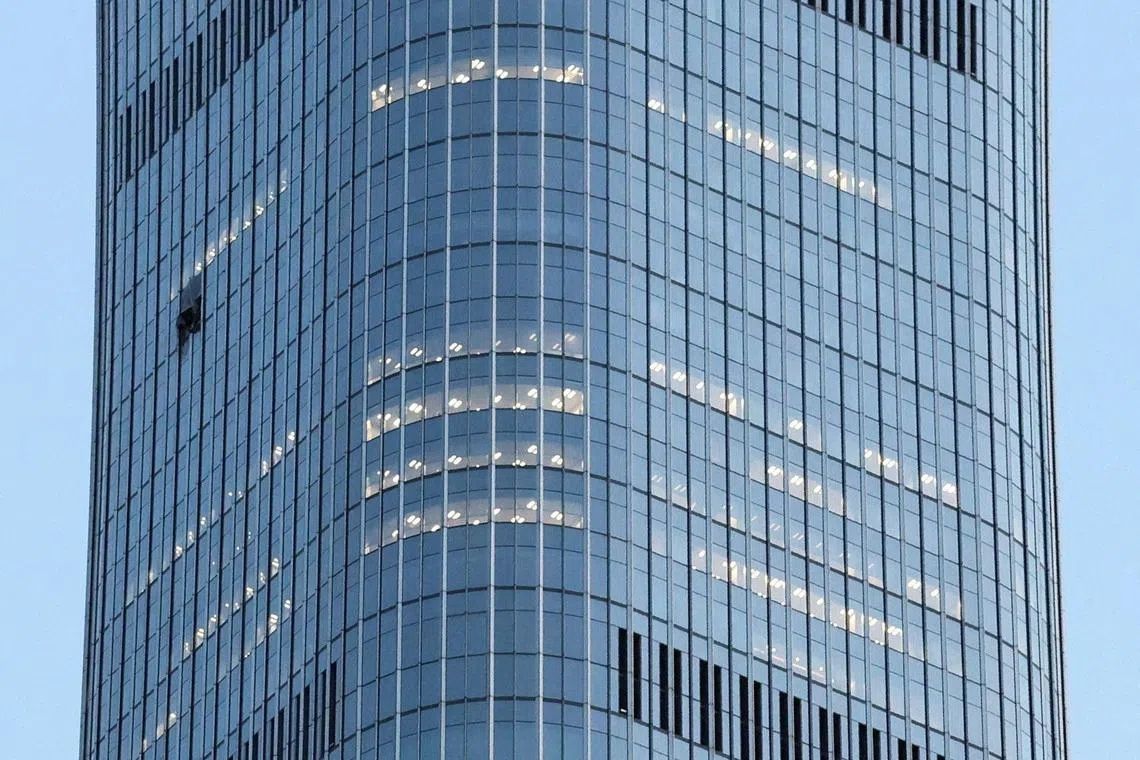
A 66-year-old pilot who flew a small plane directly into one of Beijing's most prominent buildings left behind written references to ending his life, according to a statement released by Chinese authorities on Thursday. The incident, which occurred on Friday, June 26, at 5.55pm, saw the two-seat propeller aircraft strike the 528-metre CITIC Tower in the capital's Central Business District, leaving 13 people injured and raising serious questions about how such an event could unfold in one of the world's most tightly controlled airspaces.
The pilot, identified only by the surname Liu, had been divorced and lived alone in Beijing. Officials from the Chaoyang district government characterized him as someone who had "long suffered from insomnia and anxiety," with his personal diary containing "multiple references to ending his life." This revelation positions the crash as fundamentally a mental health crisis rather than a purely technical or security failure, though the circumstances surrounding how the aircraft penetrated heavily restricted airspace near China's top leadership compounds remain troubling.
The proximity of the incident to sensitive government locations has drawn particular scrutiny. The CITIC Tower stands approximately seven kilometres from Zhongnanhai, the fortified compound that houses President Xi Jinping and other senior Communist Party officials. That a civilian aircraft could reach such a location before crashing into a major commercial building underscores potential vulnerabilities in a security apparatus that prides itself on maintaining some of the world's strictest airspace controls. The crash occurred just days before the Communist Party's 105th anniversary celebrations at the Great Hall of the People near Tiananmen Square, adding to concerns about the incident's timing and implications.
Liu held a sport pilot license obtained in 2021 and a private pilot license acquired in 2024. On the day of the crash, he departed from a general aviation airport in the suburban Pinggu district and conducted both supervised and solo flights. It was during the solo portion of this flight that he "deviated from the designated area and lost contact with the airport," according to the official account. The aircraft he was flying, registered as B-12PP, was a basic general aviation machine with minimal military or advanced civilian capability.
Chinese regulations are among the world's most stringent, requiring all flights—including general aviation operations—to receive advance approval. Operators must submit detailed flight plans to flight-control authorities by 3pm on the day prior to takeoff. Flying over urban areas is generally prohibited under civil aviation laws. These restrictions exist precisely to prevent incidents of this nature, particularly in a major metropolitan centre with critical government installations. The fact that Liu's aircraft entered the designated zone and crossed highly restricted airspace used by commercial jets serving Beijing Capital Airport raises significant questions about enforcement and monitoring protocols.
The Chinese government moved quickly to contain discussion of the crash, with security personnel preventing journalists and onlookers from photographing the building or documenting the scene. Within hours of the incident, social media platforms scrubbed photos and videos, and subsequent online discussion of the event was censored. This information management reflects Beijing's sensitivity around aviation incidents near leadership compounds and its preference for framing such events as isolated personal tragedies rather than systemic security concerns.
Extracting deeper meaning from the official narrative proves difficult given these information controls. Internet users, before their posts were deleted, had raised questions about how the security gaps emerged despite the sophisticated surveillance and control systems the government maintains. A qualified pilot interviewed for reporting on the incident, speaking anonymously due to sensitivity, noted that obtaining a private pilot license in China requires a physical medical examination and appropriate certifications. This raises the question of how Liu obtained his 2024 license given his documented mental health struggles and the prescriptive nature of China's pilot licensing process.
The incident carries implications beyond Beijing's immediate political environment. For regional aviation authorities and civil aviation regulators throughout Southeast Asia and the broader Asia-Pacific, the crash demonstrates how even highly controlled airspace can remain vulnerable to determined individuals with legitimate access. The case study suggests that mental health screening, though implemented, may not always identify individuals in crisis—or that the screening processes themselves have gaps. Airlines, airports, and aviation authorities across Malaysia, Singapore, Indonesia, Thailand, and other regional neighbours will be monitoring how China addresses these vulnerabilities, as the region itself faces the constant challenge of balancing aviation expansion with security imperatives.
The timing of the crash also presented an unusual geopolitical moment. Coming as it did days before major Communist Party celebrations, the incident forced the Chinese government into rapid crisis management mode, determining how to acknowledge the event while minimizing broader implications for its security apparatus. Officials settled on a narrative emphasizing personal tragedy and mental health rather than systemic failure, characterizing the crash as "an incident endangering public safety caused by personal reasons."
Looking forward, unresolved questions linger about how Liu's aircraft navigated what should have been an impenetrable security perimeter, how his mental health status was not flagged during routine operations, and whether any procedural reforms will emerge from the investigation. For observers of Chinese governance and aviation safety, the incident underscores that even under rigorous state control, unexpected events can occur—and that managing public knowledge of such events has become as important to authorities as preventing them.

