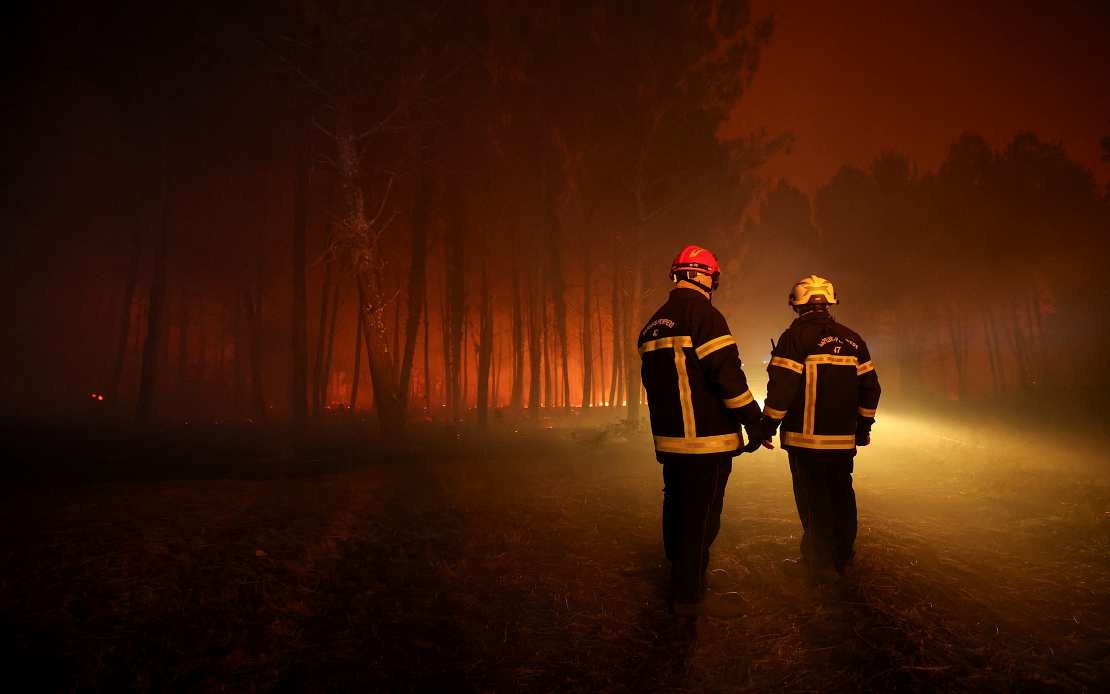
Belgium faces an unprecedented environmental crisis as a massive wildfire sweeping through eastern portions of the country has become the nation's most destructive on record. By Saturday evening, the blaze had consumed approximately 2,700 hectares of the High Fens nature reserve, nearly double the area burned by mid-afternoon, demonstrating the rapid pace at which the disaster has unfolded. Local authorities in Liege have formally confirmed this catastrophe exceeds any wildfire previously documented in Belgian history, surpassing the previous benchmark established in 2011 when roughly 1,400 hectares burned according to the European Forest Fire Information System.
The fire ignited on Friday afternoon near the German border at approximately 2 pm local time, with emergency response efforts continuing intensively throughout Saturday. Approximately 600 residents living in communities adjacent to the affected region have been compelled to leave their homes as the flames advanced unpredictably. Visitors holidaying in the area received urgent advisories to depart, whilst organisers of a children's summer camp in the vicinity hastily relocated the young participants to safety. The combination of shifting wind patterns and thick smoke plumes created an increasingly hazardous situation for those remaining nearby.
The geographical characteristics of the High Fens reserve have significantly complicated suppression efforts. The landscape's rugged and uneven terrain restricts the ability of firefighting crews to approach the flames directly using standard ground-based techniques. Simultaneously, prevailing wind conditions have frustrated attempts to contain the inferno, instead acting as a natural accelerant that fans flames across the landscape with alarming speed. These environmental factors have essentially overwhelmed conventional firefighting capacity, necessitating a recalibration of response strategies.
Recognising the severity and scale of the emergency, Belgian authorities have invoked the European Union Civil Protection Mechanism to mobilise cross-border assistance. The mechanism proved effective in coordinating an immediate international response. Specialised firefighting aircraft arrived from the Czech Republic, Sweden, and the Netherlands on Saturday, delivering critical aerial-support capabilities that ground teams alone could not provide. The European Commissioner for Preparedness and Crisis Management publicly confirmed this coordinated deployment via social media, highlighting the gravity with which EU officials regarded the situation.
The emergency response has evolved into a genuinely multinational operation. Firefighting personnel from across Belgium's regions converged on the affected zone, whilst teams from neighbouring Germany and Luxembourg crossed borders to assist in what had become a shared regional emergency. Adding to these professional responders, the Belgian military mobilised personnel and resources, and local farmers contributed their knowledge and equipment to the broader campaign. This layered approach reflected the understanding that no single entity possessed sufficient capacity to address the scale of the disaster independently.
Underlying the wildfire's intensity and rapid spread has been an extended period of exceptionally hot and arid weather gripping the region. Belgium experienced a severe heat wave during the week, with thermometers in certain localities climbing to 37 degrees Celsius on the very day the fire commenced. Such extreme temperatures, combined with prolonged dry conditions, create precisely the meteorological circumstances in which vegetation becomes highly flammable and fires propagate with remarkable velocity. The connection between climate conditions and wildfire risk represents a concerning pattern that extends far beyond Belgium's borders.
From a Southeast Asian perspective, this European crisis offers pertinent reminders about vulnerability to wildfire emergencies. Malaysia and other regional nations experience their own cycles of heat stress and dry seasons that elevate fire risk, particularly in peatlands and forested areas. The 2015 Southeast Asian haze crisis, which saw transboundary smoke from Indonesian wildfires affecting Malaysia, Singapore, and beyond, demonstrated that such disasters transcend national boundaries and require coordinated international frameworks. Belgium's activation of EU mechanisms provides a case study in crisis coordination that regional institutions might contemplate when designing or refining their own emergency protocols.
The economic and environmental ramifications of the High Fens wildfire will likely extend far beyond the immediate evacuation period. The nature reserve itself represents a valuable ecosystem, and the loss of 2,700 hectares of protected habitat carries profound ecological consequences. Biodiversity loss, soil degradation, and altered hydrological patterns could persist for years. The reconstruction and rehabilitation of burned communities, psychological impacts on displaced residents, and the resource costs of the suppression operation itself will burden regional budgets and national accounts.
Looking forward, this disaster underscores the escalating role of climate variability in shaping public safety challenges across Europe. Environmental scientists have long warned that warming trends would intensify heat waves and alter precipitation patterns, both conditions that favour wildfire development. Belgium's experience in August represents not an isolated anomaly but rather a manifestation of broader climatic shifts. For policymakers, the incident demands reconsideration of land-use planning, forest management practices, and investment in fire prevention infrastructure. For citizens and communities, it reinforces the imperative to maintain preparedness and understanding of evacuation procedures.

