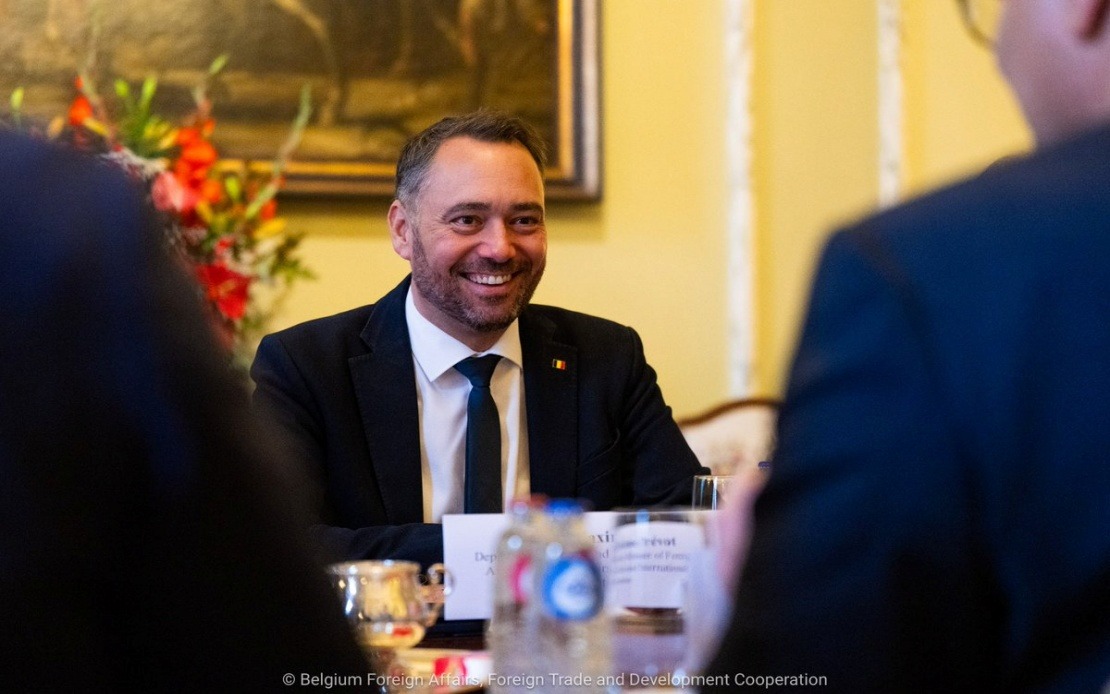
Belgium's Deputy Prime Minister Maxime Prévot will arrive in Malaysia on Thursday for a two-day working visit that signals deepening bilateral ties between the two nations. The trip, scheduled to begin on July 2, represents Prévot's inaugural journey to Malaysia since taking office in February 2025 as Foreign, European Affairs and Development Cooperation Minister. Malaysian and Belgian officials are poised to examine cooperation across three strategic sectors that reflect both nations' economic priorities and regional interests in Southeast Asia's energy transition.
The centrepiece of Prévot's itinerary will be a bilateral meeting with Malaysian Deputy Prime Minister Datuk Seri Fadillah Yusof, who concurrently holds the Energy Transition and Water Transformation portfolio. This alignment of ministerial responsibilities underscores Malaysia's commitment to positioning renewable energy as a cornerstone of economic development. The scheduled discussion on July 2 will provide Belgium—a nation with substantial experience in wind power and renewable infrastructure—an opportunity to share expertise while exploring concrete partnership opportunities with one of Southeast Asia's largest economies.
Renewable energy represents the most visible pillar of prospective cooperation. Malaysia has embarked on an ambitious energy transition pathway, targeting significant renewable capacity additions over the coming years. Belgium's technological prowess in offshore and onshore wind generation, coupled with its integration within European clean energy frameworks, positions it as a credible partner for knowledge transfer and potential joint ventures. For Malaysian policymakers, engaging European expertise helps bridge the technical and regulatory gap in scaling renewable infrastructure while navigating the complexities of transitioning away from hydrocarbon dependence.
Rare earth elements constitute a second focus area with particular relevance to global supply chain resilience. Malaysia has historically played a meaningful role in rare earth processing, though the sector has contracted in recent years due to environmental and commercial pressures. Belgium's position within the European Union—which has designated rare earth supply security as critical infrastructure—creates natural complementarities. European interest in diversifying rare earth sourcing away from concentrated suppliers in Asia makes Malaysia an attractive partner for developing sustainable extraction and refining capabilities that meet stringent environmental standards.
The halal industry dimension reflects Malaysia's distinctive positioning as a global halal hub and certified exporter to Muslim-majority markets worldwide. Belgium, with its growing Muslim population and European halal certification mechanisms, represents both a market opportunity and a regulatory bridge to the broader European Union. Deepening halal cooperation could involve certification standards harmonisation, product development partnerships, and enhanced trade flows of Malaysian halal-certified goods into European channels.
Beyond bilateral matters, Prévot's agenda encompasses Malaysia-European Union relations and regional strategic issues of mutual concern. As a senior Belgian minister, his visit carries diplomatic weight for EU-ASEAN engagement at a moment when Europe is recalibrating its Indo-Pacific strategy. Malaysia, as chair of ASEAN in 2025, occupies particular significance in European outreach efforts. The discussions will likely touch upon geopolitical developments, regional stability, and the rules-based international order—themes of increasing salience as European capitals navigate great-power competition affecting Southeast Asian interests.
A distinctive element of the visit is Prévot's scheduled address to the 39th Asia-Pacific Roundtable, organised by the Institute of Strategic and International Studies (ISIS) Malaysia. This platform provides Prévot with an opportunity to articulate Belgium and the European Union's vision for regional engagement beyond traditional trade and investment channels. The roundtable forum, which attracts senior policymakers, academics, and business leaders from across the Indo-Pacific region, will amplify the Belgian minister's message to influential Malaysian and broader Southeast Asian audiences.
The visit programme also includes an audience with Sultan of Perak Sultan Nazrin Muizzuddin Shah, acknowledging Malaysia's constitutional monarchy and the protocol significance accorded to high-level international visitors. Such courtesies underscore the respect both nations accord each other and reinforce the formal, institutionalised nature of bilateral engagement.
Statistically, Malaysia-Belgium relations demonstrate substantive economic dimensions. In 2025, bilateral trade reached RM9.74 billion, with Malaysian exports constituting RM6.85 billion against imports of RM2.89 billion. This trade surplus reflects Malaysia's competitive advantage in manufacturing, primary products, and processed goods. The investment pipeline is equally robust: 67 projects with Belgian participation had been approved cumulatively, representing RM5.1 billion in committed capital and anticipated job creation numbering 4,605 positions. These figures suggest a mature, reciprocal economic relationship rather than a nascent engagement.
Prospectively, Prévot's visit may catalyse expanded cooperation frameworks. Both nations benefit from enhanced renewable energy collaboration given global decarbonisation imperatives and Malaysia's strategic position in regional energy markets. Rare earth cooperation could position Malaysia as a responsible, certified supplier within European supply chains, commanding premium valuations for sustainably sourced materials. Halal industry partnerships create mutual market access opportunities in a sector valued at hundreds of billions of dollars globally.
The timing of this visit also reflects Brussels' strategic recalibration toward Southeast Asia. As geopolitical competition intensifies, the European Union seeks substantive partnerships with major regional economies beyond traditional diplomatic niceties. Malaysia's energy transition ambitions, technological capabilities, and ASEAN leadership role make it a logical focal point for Belgian and broader European engagement seeking to advance shared interests in sustainable development, supply chain resilience, and regional stability.

