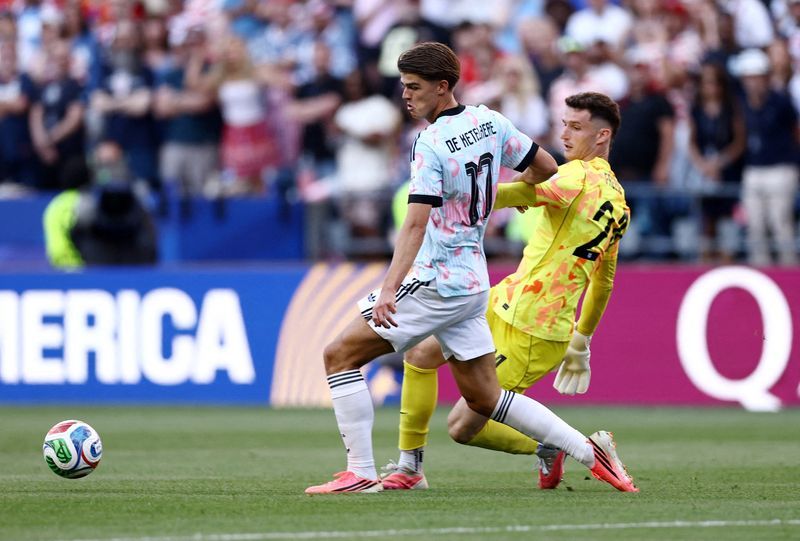
Belgium's shock tactical gambit at the World Cup has yielded unexpected dividends, with the European side delivering a commanding 4-1 demolition of co-hosts the United States in Atlanta on Monday. The victory capped a remarkable turnaround for a squad that appeared destined for early elimination just days earlier, and hints that coach Rudi Garcia has unlocked a more potent and cohesive version of his team precisely when it matters most.
The Belgian journey to this moment has been turbulent. In the group stage, Garcia's side managed only draws against Morocco and Croatia before scraping through with a 5-1 rout of New Zealand. Far from inspiring confidence, those opening performances prompted widespread criticism across Belgium and raised serious questions about the team's ability to challenge for the tournament. The situation grew dire in the round-of-16 encounter against Senegal, where Belgium found themselves two goals adrift with just five minutes of regular time remaining. Redemption came through a late penalty in extra time, sparing them embarrassment and allowing them to advance to face the Americans.
Rather than persist with the struggling formula that had carried his team narrowly through those earlier tests, Garcia elected to implement sweeping changes for the Atlanta encounter. The decision to bench his most celebrated talents shocked observers. Kevin De Bruyne, whose midfield artistry and leadership have long been the backbone of Belgium's ambitions, was not merely dropped to the bench but excluded from the squad entirely. Romelu Lukaku, the striker whose goal-scoring prowess has defined Belgian attacking play for years, and Jeremy Doku, a young star of considerable promise, similarly found themselves sidelined. In their places, Garcia deployed Nicolas Raskin, Amadou Onana, and Dodi Lukebakio, refreshing both the personnel and the team's underlying structure.
The alterations extended beyond simple personnel switches. Garcia repositioned Charles De Ketelaere into a central forward role, a tactical adjustment that immediately justified itself. De Ketelaere collected two goals in the first half, leading Belgium toward the dominant performance that had eluded them throughout the tournament. The reconstituted midfield, anchored by captain Youri Tielemans, operated with noticeably greater intensity and aggression. This revamped unit repeatedly seized possession in contested areas, winning the physical battles for loose balls and transitioning rapidly from defence to attack. The Belgian side also exploited the flanks with purpose, exposing the vulnerability and lethargy of an American defensive line that appeared static and overwhelmed by the visitors' dynamism.
Garcia maintained after the match that his selections flowed logically from both the players' recent fitness and his tactical vision for the contest. He explained that the revised approach prioritised controlling the match from its opening moments. The coach outlined his contingency planning, noting that De Bruyne remained available should circumstances demand his introduction, yet the Belgian dominance proved so complete that such a substitution never became necessary. The tactical framework succeeded so thoroughly that Garcia could preserve his most potent attacking weapon for potentially decisive moments in the tournament's later stages.
The resilience of Belgium's adapted system was tested midway through the first half when Amadou Onana suffered a knee injury that forced his withdrawal from the field. Rather than destabilising the balance Garcia had constructed, the setback triggered a seamless adjustment. Hans Vanaken, the midfielder whom Onana had initially displaced, stepped into the vacancy and maintained the structural integrity of the Belgian formation in front of the three defenders. Vanaken also contributed significantly to the scoreline, an achievement that stirred particular satisfaction in Garcia given the player's age and his inconsistent relationship with the national team setup. For a 33-year-old to register a goal at a World Cup, especially after periods of exclusion from squad consideration, represented something of a redemptive moment.
The context of Garcia's struggling early tenure cannot be overlooked. The Belgian coach had arrived at the tournament facing considerable scepticism at home, with the collective difficulties during group play amplifying doubts about his tactical acumen and leadership. The narrow escapes against Senegal, while ultimately successful, did little to silence critics who questioned whether Belgium possessed sufficient quality or cohesion to trouble the tournament's genuine elite competitors. Against this backdrop of mounting pressure and institutional doubt, Garcia's bold decisions took on considerable significance. The willingness to set aside established hierarchies and trusted players in favour of a different conception of how Belgian football should be organised demonstrated conviction in his vision, even when circumstances appeared darkest.
The implications for Belgium's quarter-final encounter with Spain in Los Angeles on Friday are substantial. The victory over the United States has injected tangible momentum into the Belgian campaign while simultaneously raising the prospect that Garcia has identified a formula capable of sustaining success against stronger opposition. Spain, despite recent struggles in tournament football, remains a formidable opponent possessing technical sophistication and tactical discipline. Belgium's newly discovered intensity and willingness to impose themselves through midfield aggression may yet prove decisive, or the match may represent a level of challenge that transcends the tactical adjustments that proved so effective against an American side that appeared brittle under sustained pressure.
The broader significance of Belgium's transformation extends beyond immediate tournament outcomes. The squad remains populated by ageing luminaries whose legacies were built during a different era, yet the fresh tactical approach suggests that there may yet be untapped reserves of collective capability. For Malaysian and Southeast Asian football observers, Belgium's example carries a lesson about the volatility of tournament football and the capacity for intelligent tactical adaptation to revitalise even seemingly exhausted teams. Whether Garcia's reinvention represents a genuine turning point or merely a fortuitous performance against a vulnerable opponent will become clearer in Los Angeles.

