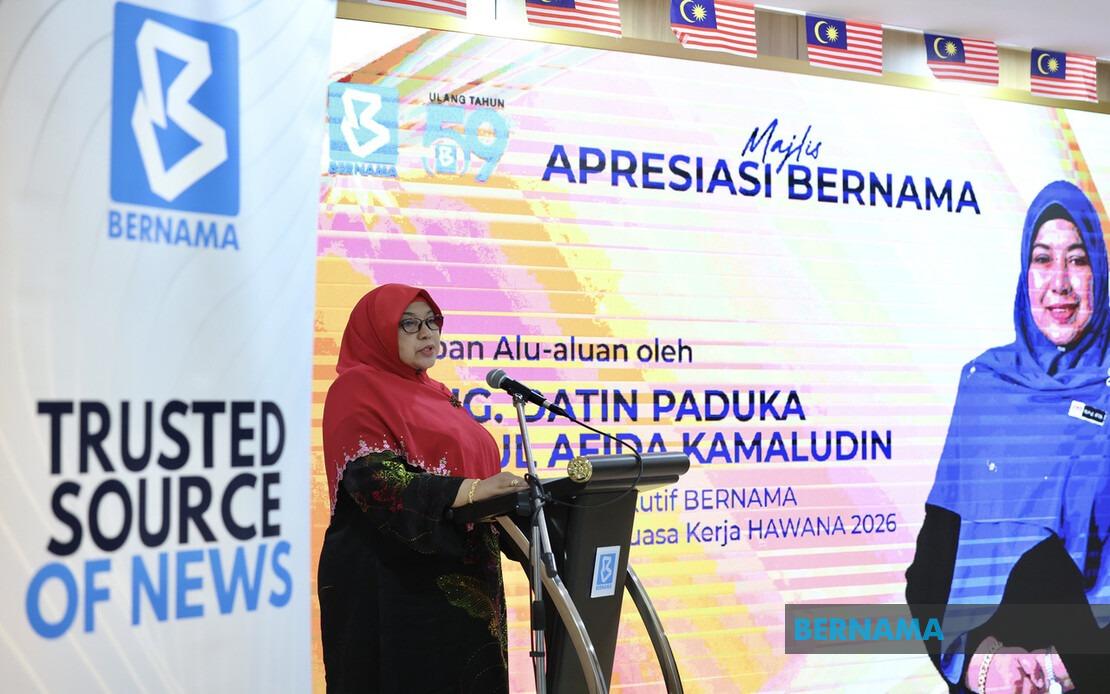
Bernama, the Malaysian National News Agency operating under the Communications Ministry, has committed to expanding its mission in cultivating a sense of national pride and patriotic fervour as celebrations surrounding National Day intensify across the country. The pledge comes as the nation enters its crucial National Month period, a time when civic engagement and expressions of Malaysian identity typically peak. Datin Paduka Nur-ul Afida Kamaludin, the agency's chief executive, outlined the expanded scope of Bernama's responsibilities during a gathering at its Wisma Bernama headquarters, signalling the organisation's intent to serve as a conduit for government messaging and patriotic mobilisation.
As a state-controlled information body, Bernama operates at the intersection of journalism and government communications, tasked with disseminating policy initiatives alongside news reporting. Nur-ul Afida articulated this dual mandate, emphasising that the agency views itself as instrumental in advancing Communications Ministry programmes while simultaneously maintaining its news dissemination function. This positioning reflects a broader regional trend wherein national news agencies balance editorial operations with public messaging objectives, a model commonplace across Southeast Asia where government-linked institutions often play central roles in nation-building narratives.
The agency's strategy for the National Month period centres on what officials describe as the "Satu Rumah, Satu Jalur Gemilang" campaign, translating roughly to "One Home, One Jalur Gemilang," referring to Malaysia's national flag. Bernama has decorated its corporate premises extensively with the flag and is actively encouraging its workforce to display the Jalur Gemilang at their residences. This approach represents a shift towards mobilising private spaces for patriotic expression, extending beyond traditional government facilities to create visible manifestations of national pride throughout residential areas. The campaign echoes similar flag-flying initiatives undertaken by governments seeking to reinvigorate national consciousness during commemorative periods.
The timing of Bernama's intensified efforts aligns with the Prime Minister's recent National Month launch in Ipoh, indicating coordination between the communications apparatus and the country's political leadership. Such synchronisation underscores how major anniversaries and national commemorations in Malaysia typically involve coordinated messaging across multiple state institutions, creating a unified national narrative. For Bernama specifically, this coordination demonstrates its role not merely as a news gatherer but as an active participant in state-sponsored patriotic campaigns, a distinction that becomes particularly pronounced during heightened periods of national observance.
A ceremonial component of the initiative involved Nur-ul Afida presenting the Jalur Gemilang to representatives from Bernama's principal departments, framed as a symbolic gesture intended to energise the National Month campaign. Accompanying this symbolic transfer was the introduction of the official National Day theme song, composed by contemporary Malaysian artist Faizal Tahir. By incorporating musical and artistic elements alongside flag-distribution ceremonies, Bernama appears to be adopting a multisensory approach to patriotic messaging, recognising that national sentiment operates through cultural and emotional channels as much as through informational ones.
Bernama's decision to consolidate various departmental programmes into a single appreciation ceremony reflects practical constraints inherent to managing a dispersed workforce while simultaneously attempting to cultivate collective participation in national observances. The logistics of gathering all headquarters staff proved challenging, prompting organisers to integrate multiple initiatives into a concentrated event. This consolidation strategy, while administratively efficient, also served to emphasise staff participation in the patriotic mission, positioning individual employees as ambassadors who would carry the message of national pride into their homes and communities.
The agency's emphasis on internal employee engagement carries broader implications for understanding how Malaysian institutions approach patriotic education and national consciousness. Rather than limiting flag campaigns and symbolic gestures to external communications, Bernama has prioritised creating an internal culture of patriotic practice. This suggests an institutional philosophy that views employee participation as foundational to authentic external messaging—the reasoning being that staff who actively demonstrate patriotic commitment become more credible communicators of these values to the broader public.
For Malaysian observers of media and communications policy, Bernama's expanded National Month activities illustrate the continuing salience of patriotic messaging in the country's information ecosystem. Unlike media environments where patriotic expression might be considered tangential or optional, Malaysia's approach treats such messaging as integral to state institutions' core functions. This positioning reflects particular historical and demographic contexts wherein nation-building remains an ongoing institutional priority, particularly given Malaysia's multicultural composition and periodic communal sensitivities.
The agency's initiatives also merit examination within the context of contemporary Southeast Asian media landscapes, where several nations maintain state-controlled or state-aligned news agencies playing similar roles. Thailand's Public Relations Department, Indonesia's Antara News Agency, and Vietnam's Vietnam News Agency perform comparable functions, combining news dissemination with government messaging and patriotic advocacy. Bernama's emphasis on active patriotic campaigning thus reflects regional patterns in how governments utilise information infrastructure for nation-building purposes, distinguishing this approach from Western models wherein news agencies typically maintain stricter separation from government advocacy functions.
The composition of Bernama's messaging—combining flag displays, artistic contributions, and employee mobilisation—suggests a recognition that patriotism operates across multiple registers simultaneously. By engaging staff emotionally through ceremonies and symbolically through flag presentations, then extending these gestures into domestic spaces, Bernama constructs patriotic expression as woven throughout daily life rather than confined to official venues or commemorative moments. This approach reflects sophisticated understanding of how national sentiment develops and persists.
Moving forward, the effectiveness of such initiatives will likely depend on whether Bernama can sustain the energy and enthusiasm generated during the National Month period into subsequent months. State institutions frequently face the challenge of maintaining momentum for patriotic campaigns once ceremonial occasions conclude. Bernama's ability to translate the symbolic gestures and employee participation witnessed during August gatherings into sustained engagement patterns will test whether current initiatives represent genuine cultural shifts or temporary expressions of seasonal enthusiasm.
The broader significance of Bernama's expanded patriotic mandate extends beyond the agency itself to questions about the role of state institutions in shaping national consciousness. As Malaysia continues navigating complex social dynamics and competing narratives about national identity, institutions like Bernama occupy pivotal positions in either reinforcing or moderating particular visions of patriotism. The coming months will reveal whether the agency's current emphasis proves sufficient to achieve its stated objectives of igniting national spirit among both staff and the broader Malaysian public.

