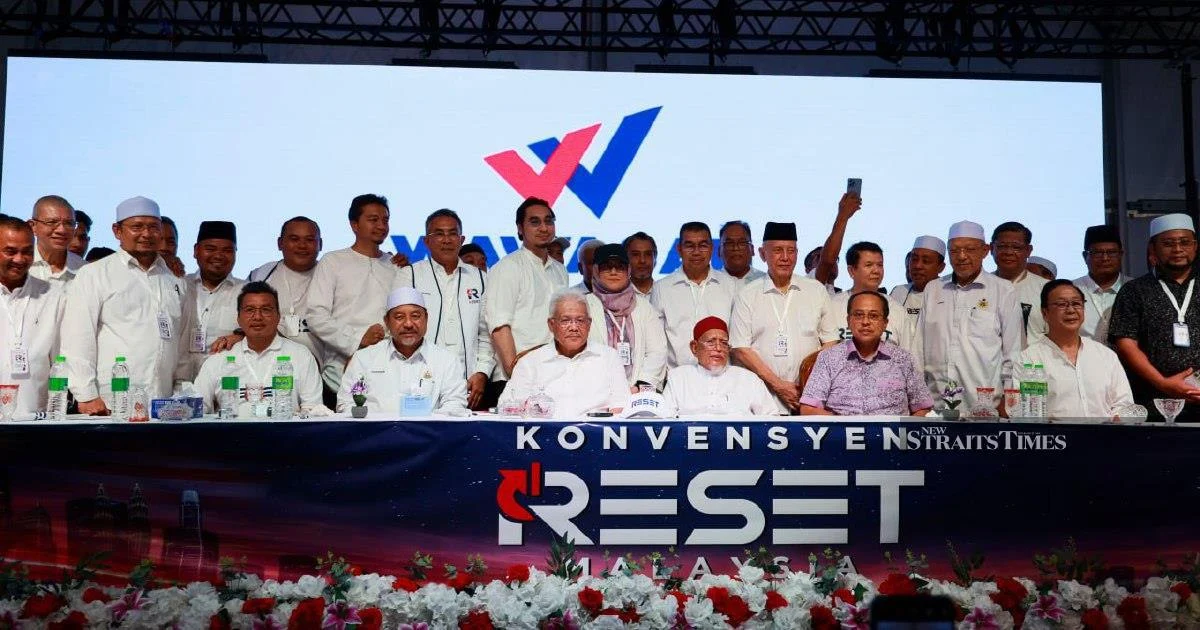
Malaysia's Perikatan Nasional coalition descended into fresh turmoil yesterday when Bersatu, one of its founding members, openly challenged the legitimacy of an emergency Supreme Council gathering held Monday evening. The contentious meeting, chaired by PN chairman Zahidi Zainul Abidin, resulted in the admission of Wawasan into the coalition. Bersatu's public questioning of the decision's legality marks a significant escalation in internal divisions within the opposition bloc, threatening the fragile unity that has underpinned the coalition since its formation ahead of the 2022 general election.
The core dispute centres on whether proper procedures were followed before convening the emergency session and subsequently voting to bring Wawasan into the PN fold. Bersatu representatives contend that the decision was rushed through without adequate notice or consultation among member parties, circumventing established protocols designed to ensure democratic decision-making within the coalition structure. This procedural challenge strikes at the heart of coalition governance, questioning whether the chairman possessed the authority to unilaterally expedite such a consequential decision.
For Malaysian readers unfamiliar with PN's internal workings, the Supreme Council operates as the coalition's highest decision-making body, comprising representatives from each member party. Decisions of this magnitude—particularly those involving the admission of new parties—typically require measured deliberation and consensus-building among stakeholders. The emergency nature of Monday's meeting, combined with accusations of insufficient notification, suggests that standard consultation mechanisms may have been bypassed in favour of speed.
Bersatu's willingness to air these grievances publicly reflects deeper anxieties about power dynamics within PN. As a major component of the coalition, Bersatu has long maintained influence over strategic decisions. The apparent sidelining of proper procedure signals to the party that its voice may be subordinate to the chairman's prerogatives, a perception likely to breed resentment and suspicion among the membership. Should Bersatu feel systematically marginalised, the entire coalition could fracture along party lines.
The admission of Wawasan into PN carries significant political implications for the opposition landscape. Wawasan, led by Zahid Hamidi, brings additional parliamentary seats and organisational capacity to the coalition. However, its integration must occur through legitimate channels to maintain coalition cohesion. Attempts to circumvent proper procedure, whether intentional or not, undermine confidence in PN's institutional arrangements and invite further scrutiny of decision-making processes.
Regionally, the controversy reflects broader challenges facing opposition coalitions across Southeast Asia. Multi-party alliances often struggle to balance efficiency with inclusivity, and Malaysia's PN is no exception. Zahidi's apparent eagerness to rapidly expand PN's membership—presumably to strengthen the coalition's electoral prospects—must be weighed against the institutional damage caused by procedural shortcuts. In the long term, institutions matter more than any single recruitment decision.
Bersatu's challenge also highlights the absence of transparent, codified procedures governing PN's operations. Unlike established parties with published constitutions, PN operates through informal understandings and gentleman's agreements that prove inadequate when tensions arise. The ambiguity surrounding what constitutes proper procedure for emergency meetings and membership decisions has now become a liability, allowing competing interpretations of legitimacy.
The timing of this dispute cannot be overlooked. With Malaysia's political landscape remaining volatile and general elections potentially within the next two years, PN must present unity to voters. Internal squabbles over procedural legitimacy risk projecting an image of disorganisation and weakness precisely when the opposition needs to appear capable of forming a credible alternative government. For swing voters considering opposition options, coalition infighting suggests instability.
Looking forward, Bersatu faces a strategic choice. It can either pursue formal resolution through established PN mechanisms, demanding accountability and procedural reform, or it can allow festering resentment to accumulate until the next major disagreement triggers a more serious rupture. Similarly, PN leadership must address Bersatu's concerns substantively rather than dismissively, acknowledging that even opposition coalitions depend on mutual respect and institutional legitimacy.
The Wawasan episode reveals PN's fundamental vulnerability: it remains a marriage of convenience between parties with distinct interests and bases. Without robust institutional frameworks governing internal decisions, such coalitions prove fragile when tested. Whether PN can resolve this dispute constructively or whether it signals the beginning of a longer dissolution remains unclear. What is certain is that Malaysian opposition politics cannot afford further destabilisation if it hopes to present voters with a credible governing alternative.