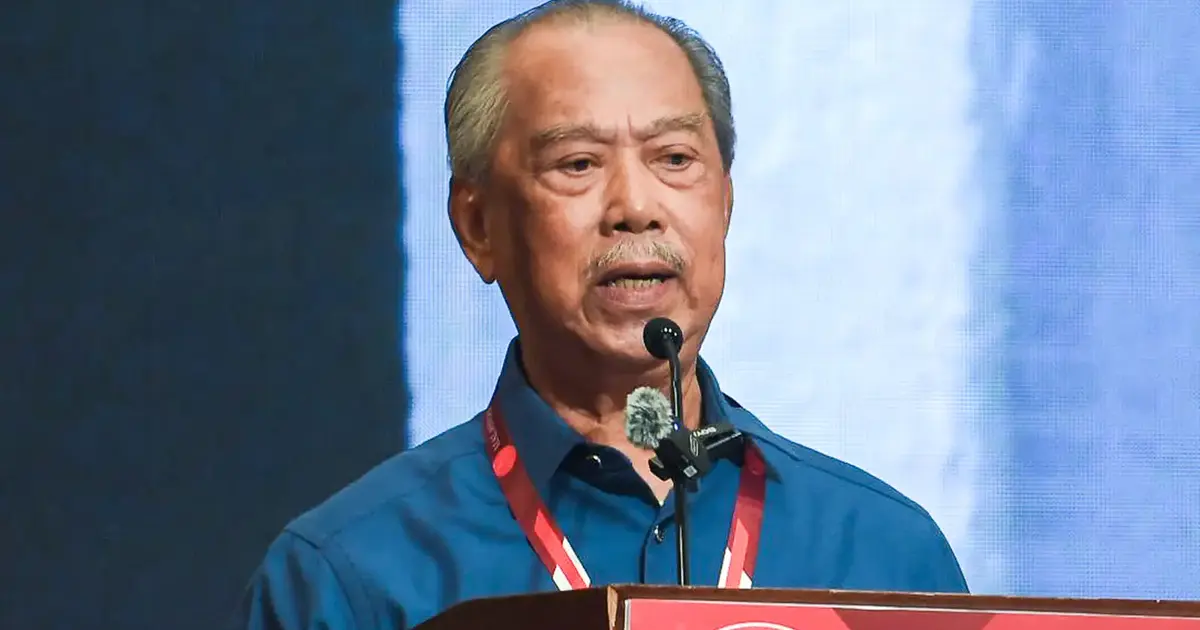
The political future of Pagoh's parliamentary representation faces renewed scrutiny as analysts assess whether former Prime Minister Muhyiddin Yassin can maintain his grip on the constituency without reshaping Bersatu's coalition arrangements. Political analyst Mazlan Ali has raised the possibility that Bersatu, the party helmed by Muhyiddin, may need to pursue additional partnership agreements beyond its current alignment in order to secure victory in future electoral contests, particularly as Malaysia's coalition dynamics continue to shift.
Muhyiddin's electoral history in Pagoh reveals a pattern of dependency on broader coalition frameworks to consolidate support. In previous contests, the former prime minister relied substantially on backing from both Pakatan Harapan (PH) and the Islamist Pan-Malaysian Islamic Party (PAS) to retain his seat. This reliance underscores a critical vulnerability: Bersatu's standalone capacity to mobilise sufficient voters in Pagoh appears insufficient without external coalition support, a reality that has profound implications for both party leadership and broader political stability in the district.
The analyst's assessment reflects deeper structural challenges within Bersatu's organisational reach. Since its formation in 2016 as a splinter group from the United Malays National Organisation (UMNO), Bersatu has struggled to build a truly independent electoral machine. The party's fortunes have been intrinsically tied to the ebbs and flows of larger political alliances, a constraint that becomes particularly evident in constituencies where competition remains fierce. Pagoh, a Johor seat with a substantial Malay-Muslim demographic, represents the kind of politically contested terrain where coalition synergies matter considerably.
The implications of this analysis extend beyond Muhyiddin's personal political survival. They speak to the fragility of Bersatu's position within Malaysia's contemporary political architecture. The party joined the Perikatan Nasional (PN) coalition in alliance with PAS and smaller partners, yet this arrangement itself faces periodic strain and reassessment. Should Muhyiddin require yet another coalition realignment to secure Pagoh, it would suggest that PN alone lacks the electoral gravity to function as a reliable standalone force in the region. This would further complicate efforts by PN leadership to present themselves as a coherent, independent political force capable of challenging the federally dominant government.
The question of coalition partnerships also raises questions about intra-party dynamics within Bersatu. Muhyiddin's continued pre-eminence within the party depends substantially on his perceived ability to deliver electoral victories and maintain parliamentary representation. Any scenario requiring him to scramble for new coalition arrangements could invite internal challenges from other party figures seeking to assert alternative leadership directions or strategies. Such instability might weaken party cohesion at a moment when Bersatu is attempting to consolidate its position as a consequential player in Malaysian politics.
Regional implications merit consideration as well. Johor has historically served as an important political battleground, and the Pagoh constituency holds symbolic weight within the state's political geography. Should the seat change hands or require extraordinary coalition engineering to remain with Muhyiddin, it could signal broader shifts in voter sentiment across southern Peninsular Malaysia. This might encourage opposition parties to increase their organising efforts in adjacent constituencies, potentially triggering a chain reaction of electoral reassessment across multiple constituencies.
Muzlan's perspective also invites reflection on the sustainability of coalition politics as currently practised in Malaysia. The recurring need for constituencies to assemble ad hoc electoral support through coalition arrangements rather than through strong party-level organisation suggests that Malaysian voters increasingly operate within fluid political environments where allegiances shift based on immediate circumstances rather than stable ideological or party identification. This volatility complicates long-term strategic planning for all parties involved.
For Bersatu specifically, the analyst's assessment represents a cautionary note about the limits of relying on figures whose personal electoral brands may not transfer into party organisational strength. While Muhyiddin maintains individual recognition and voter support in Pagoh, his tenure as prime minister and his current prominence may not automatically translate into mobilising party cadre and volunteer networks that function effectively during elections. This distinction between personal political capital and organisational capacity remains crucial in Malaysian electoral contexts.
Looking ahead, Bersatu leadership faces strategic decisions about whether to invest heavily in building autonomous organisational capacity or to accept a role as a coalition dependent party accepting partnership arrangements on terms set by larger partners. The Pagoh situation crystallises this tension. If securing Muhyiddin's seat requires assembling new coalitions beyond current arrangements, it would effectively acknowledge that Bersatu's growth trajectory has stalled and that the party remains structurally subordinate within any political alliance it joins. Conversely, if Bersatu can successfully hold Pagoh through PN arrangements alone, it would signal genuine progress toward becoming an independent electoral force. The stakes of the next election cycle in Pagoh extend far beyond one constituency's representation.

