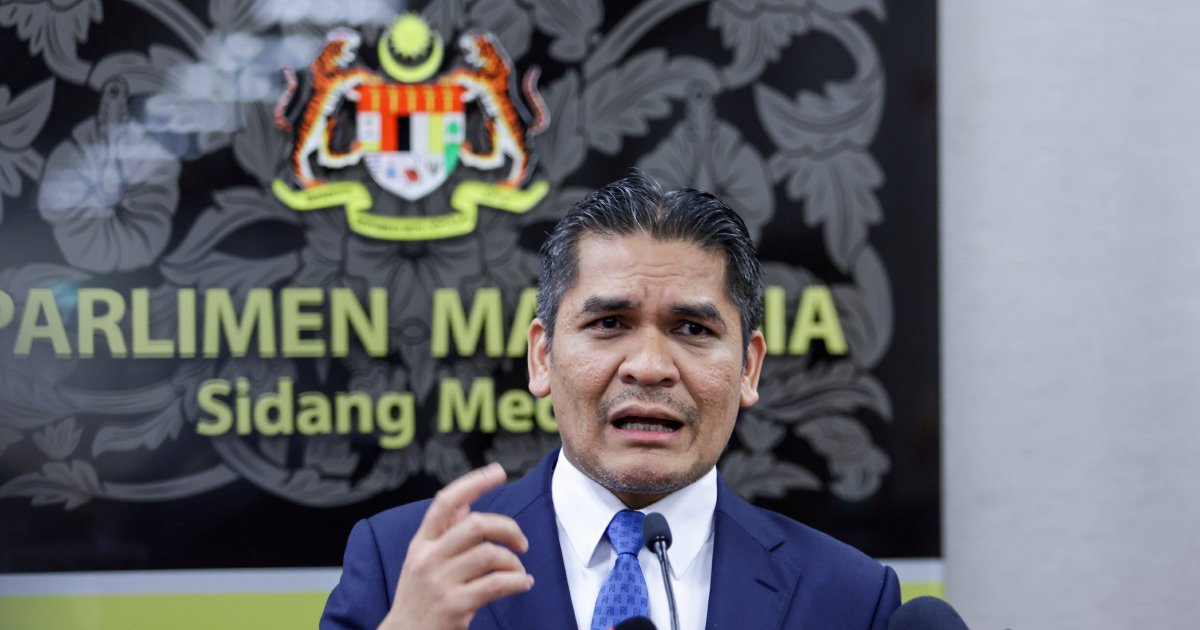
Bersatu party members in Parliament have committed to remaining in the Dewan Rakyat throughout today's special sitting dedicated to discussing the Royal Commission of Inquiry report into Lembaga Tabung Haji, according to Datuk Dr Radzi Jidin. The announcement addresses earlier speculation about potential boycotts or walkouts by opposition parties during what promises to be a contentious parliamentary session on the pilgrim fund's governance failings.
The Tabung Haji controversy has dominated Malaysian political discourse for months, with the pilgrimage fund facing serious questions regarding its management and financial stewardship. The establishment of the RCI represents a significant development, signalling the government's willingness to subject the institution to independent scrutiny. For ordinary Malaysians, particularly the millions who have entrusted their hajj savings to Tabung Haji over decades, the RCI's conclusions carry substantial implications for how their funds are managed and protected going forward.
Bersatu's public commitment to participate fully in the parliamentary proceedings underscores the issue's cross-party significance. Despite the complex political dynamics between government and opposition blocs, the Tabung Haji matter transcends typical partisan divides because it affects pilgrims from across the political spectrum. This collaborative spirit in parliament, where parties agree to engage substantively with accountability mechanisms, reflects growing public demand for transparency in managing pilgrim welfare.
The special sitting represents an important moment for parliamentary democracy in Malaysia. Rather than engage in obstructive tactics, Bersatu's decision to remain present signals that lawmakers from all sides recognise the legitimacy of the RCI's work and the necessity of comprehensive legislative response to its findings. This approach contrasts sharply with previous instances where parliamentary sessions on sensitive matters have descended into boycotts or disruptive behaviours, demonstrating maturation in how political parties handle serious governance issues.
Tabung Haji's challenges extend beyond simple mismanagement concerns. The institution serves a sacred trust, managing funds earmarked for one of Islam's five pillars. Pilgrims often contribute portions of their income for years before undertaking the hajj, making the fund deeply personal to millions of Malaysian Muslims. The RCI's investigations have likely uncovered systemic issues requiring legislative reform, regulatory enhancement, and possibly structural changes to the organisation itself.
Southeast Asia's Muslim-majority nations closely observe how Malaysia addresses religious institutional governance. Singapore, Brunei, and Indonesia all maintain similar hajj funding mechanisms, and their policymakers will study how Malaysia responds to Tabung Haji's difficulties. A robust, transparent approach to accountability enhances Malaysia's standing as a steward of Muslim financial interests in the region and demonstrates that Islamic institutions can operate with the same rigorous oversight standards as secular ones.
The RCI's work likely examined decades of financial decisions, investment strategies, and administrative practices. Such comprehensive reviews often reveal how institutional drift occurs gradually, through accumulated minor deviations rather than single dramatic failures. Understanding these mechanisms helps policymakers implement preventive measures across other government-linked entities managing public resources, from pension funds to healthcare schemes.
Radzi Jidin's statement carries practical significance beyond party politics. By publicly confirming Bersatu's attendance, he sets expectations that the session will proceed with full parliamentary participation, enabling substantive debate and scrutiny of the RCI's recommendations. This transparency in advance reduces the possibility of surprise boycotts or procedural disruptions that could undermine public confidence in Parliament's ability to address institutional failures.
The coming sitting will likely feature detailed presentations of the RCI's findings, followed by parliamentary questions and debates on implementing recommendations. These discussions will determine whether reforms are merely cosmetic or represent genuine structural transformation. Parliamentary records of these debates will provide a public record of who advocated for genuine accountability and who resisted meaningful change, important information for voters assessing their representatives' commitment to good governance.
For Malaysian Muslims planning future hajj pilgrimages, the parliamentary proceedings on Tabung Haji offer tangible hope that their concerns are being heard at the highest levels. The RCI process, combined with serious parliamentary engagement, suggests that the institution's future will be shaped by evidence-based recommendations rather than political convenience. This matters enormously for maintaining public trust in religious institutions that depend on voluntary contributions and voluntary participation.
Bersatu's commitment to full parliamentary participation also acknowledges that while the party may oppose the government on other matters, certain issues genuinely transcend partisan considerations. Tabung Haji serves Malaysians of all political persuasions, all economic backgrounds, and all regions. Finding common ground on protecting the institution serves the broader national interest and demonstrates that Malaysian Parliament can function as a genuine forum for accountability when parties prioritise public welfare over factional advantage.
As the special sitting commences, attention will focus on the specificity and feasibility of the RCI's recommendations. Parliament's job extends beyond accepting the report; lawmakers must translate its findings into concrete legislative and administrative measures. The sustained engagement of all parties, including Bersatu, creates more favourable conditions for comprehensive reform that might withstand future political changes.

