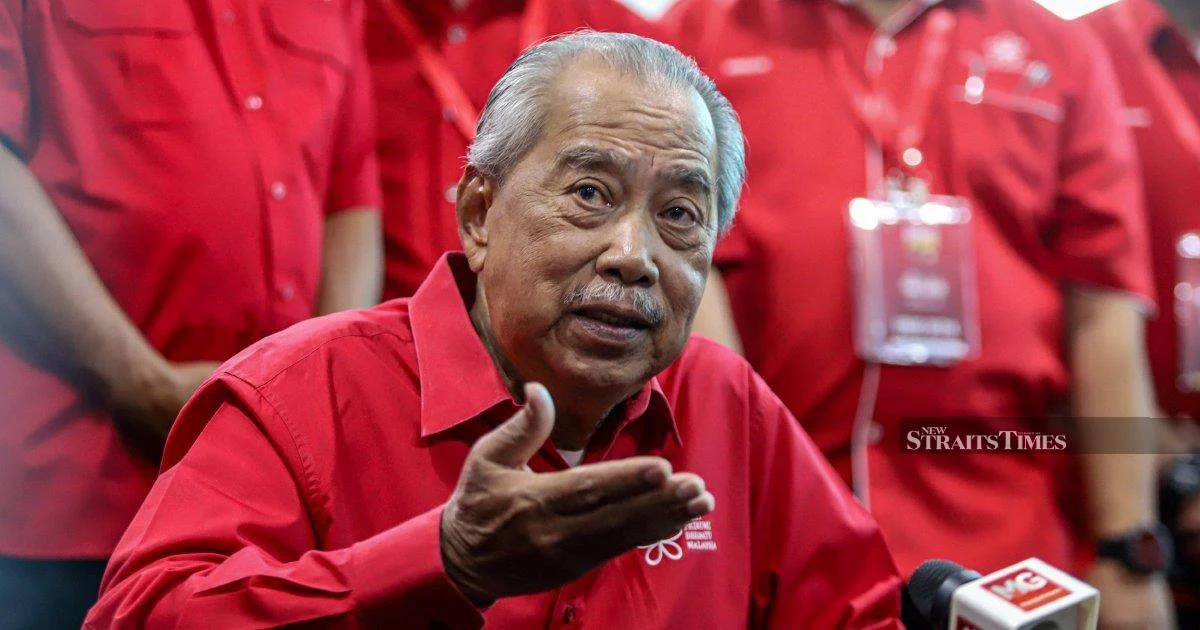
Tan Sri Muhyiddin Yassin has moved decisively to quell mounting conjecture about the Perikatan Nasional coalition's future by reaffirming that Bersatu will maintain its place within the opposition alliance indefinitely. The party president's declaration arrives amid a backdrop of shifting political dynamics in Malaysia, where whispers about coalition stability have grown increasingly audible among political observers and party insiders alike.
The statement carries particular weight given Bersatu's influential position within the PN framework. As one of the coalition's principal components, the party's trajectory carries implications for how opposition forces might reconfigure themselves in Malaysia's fluid political landscape. Muhyiddin's language—employing the word "forever"—appears designed to project an image of unshakeable commitment, intended to reassure both party members and potential coalition partners of Bersatu's stability and reliability as a political partner.
Bersatu's position within PN represents a significant chapter in recent Malaysian politics. The party, founded in 2016, emerged from the fractious aftermath of the 2020 political upheaval that saw Muhyiddin himself serve as Prime Minister. Since then, Bersatu has navigated complex alliances, initially aligning with UMNO and PAS to form the Perikatan Nasional coalition. This configuration represented a substantial shift in Malaysian opposition politics, bringing together parties with distinct ideological profiles and voter bases.
Speculation about PN's durability has periodically surfaced due to the inherent tensions within multi-party coalitions. The need to balance the interests of component parties—each with their own constituencies, ambitions, and strategic calculations—creates constant pressure points. Bersatu members, in particular, have occasionally discussed alternative political arrangements, fuelling questions about whether the current alliance represents a permanent structure or a temporary pragmatic arrangement.
The timing of Muhyiddin's statement suggests an effort to preempt further erosion of coalition confidence. Political coalitions in Malaysia have historically demonstrated fragility, with member parties shifting allegiances when they perceive strategic advantage in doing so. By making such an emphatic declaration, Muhyiddin appears to be signalling that Bersatu will resist centrifugal forces that might otherwise pull the PN apart, particularly as attention turns toward potential electoral contests and governmental reconfiguration.
For Malaysian observers, the statement also reflects broader calculations about the opposition's long-term viability. A united PN presents a more formidable challenge to the current governing arrangements than fragmented opposition forces. Conversely, any indication of coalition instability could accelerate the defection of fence-sitters or opportunistic politicians seeking alignment with seemingly stronger political formations. Muhyiddin's rhetoric thus serves multiple audiences simultaneously: reassuring PN partners, stabilising internal party expectations, and projecting an image of coherence to the broader electorate.
The Perikatan Nasional itself represents a distinctive coalition model in contemporary Malaysian politics. Unlike previous opposition alliances that primarily emphasised opposition to incumbents, PN has attempted to present itself as a constructive alternative capable of governing. This positioning requires coalition partners to demonstrate sustained cooperation and unified messaging. Bersatu's pledge to remain "forever" contributes to this narrative of permanence and serious intent.
Bersatu's membership within PN also affects complex calculations across Malaysian politics more broadly. The coalition's configuration influences how UMNO, PAS, and other parties assess their own political opportunities. Should Bersatu depart, PN's configuration would fundamentally alter, potentially weakening component parties' negotiating positions. Conversely, a stable PN encourages these parties to invest in coalition development rather than pursuing alternative arrangements that might seem more advantageous in the short term.
The statement arrives against a background of persistent questions about opposition unity strategies in Malaysia. With federal elections likely within the next few years, the opposition's ability to present coherent alternatives to governing coalitions becomes increasingly consequential. Fragmented or unstable opposition forces typically perform poorly against established governments able to deploy state machinery and resources. Muhyiddin's reaffirmation thus represents not merely an internal party position but a strategic calculation about how opposition forces might collectively challenge incumbent arrangements.
Nevertheless, political commitments in Malaysia often prove malleable when circumstances shift dramatically. Muhyiddin himself has navigated multiple dramatic realignments throughout his political career, shifting between UMNO, Bersatu founding, and various coalition configurations. While his current statement projects permanence, observers will likely monitor whether subsequent developments—electoral results, economic conditions, or leadership changes—alter these calculus.
For regional stakeholders, Malaysian coalition stability matters insofar as it affects governance quality and policy continuity. Unstable coalitions frequently struggle to implement coherent economic or social policies, instead becoming mired in internal negotiations over portfolio allocation and political advantage. A committed Bersatu, maintaining PN membership, contributes to the possibility of more substantive opposition engagement with policy matters rather than perpetual jockeying for position.
The immediate significance of Muhyiddin's declaration thus extends beyond factional positioning within PN. It reflects attempts to stabilise opposition politics in Malaysia during a period of considerable flux. Whether such declarations ultimately prevent the realignment pressures that have historically reshaped Malaysian coalitions will only become apparent as political circumstances evolve and new contingencies emerge.
%22%2F%3E%3C%2Fpattern%3E%3C%2Fdefs%3E%3Crect%20width%3D%22100%25%22%20height%3D%22100%25%22%20fill%3D%22url(%23ph3ozefg)%22%2F%3E%3Crect%20width%3D%22100%25%22%20height%3D%22100%25%22%20fill%3D%22url(%23ph3ozefp)%22%2F%3E%3Ctext%20x%3D%2250%25%22%20y%3D%2250%25%22%20text-anchor%3D%22middle%22%20dominant-baseline%3D%22central%22%20fill%3D%22rgba(255%2C255%2C255%2C0.95)%22%20font-family%3D%22Georgia%2C%20'Times%20New%20Roman'%2C%20serif%22%20font-weight%3D%22700%22%20font-size%3D%22320%22%20letter-spacing%3D%22-0.02em%22%3EIran%3C%2Ftext%3E%3C%2Fsvg%3E)
%22%2F%3E%3C%2Fpattern%3E%3C%2Fdefs%3E%3Crect%20width%3D%22100%25%22%20height%3D%22100%25%22%20fill%3D%22url(%23ph4hqahg)%22%2F%3E%3Crect%20width%3D%22100%25%22%20height%3D%22100%25%22%20fill%3D%22url(%23ph4hqahp)%22%2F%3E%3Ctext%20x%3D%2250%25%22%20y%3D%2250%25%22%20text-anchor%3D%22middle%22%20dominant-baseline%3D%22central%22%20fill%3D%22rgba(255%2C255%2C255%2C0.95)%22%20font-family%3D%22Georgia%2C%20'Times%20New%20Roman'%2C%20serif%22%20font-weight%3D%22700%22%20font-size%3D%22272%22%20letter-spacing%3D%22-0.02em%22%3ETrump%3C%2Ftext%3E%3C%2Fsvg%3E)
%22%2F%3E%3C%2Fpattern%3E%3C%2Fdefs%3E%3Crect%20width%3D%22100%25%22%20height%3D%22100%25%22%20fill%3D%22url(%23ph2adawg)%22%2F%3E%3Crect%20width%3D%22100%25%22%20height%3D%22100%25%22%20fill%3D%22url(%23ph2adawp)%22%2F%3E%3Ctext%20x%3D%2250%25%22%20y%3D%2250%25%22%20text-anchor%3D%22middle%22%20dominant-baseline%3D%22central%22%20fill%3D%22rgba(255%2C255%2C255%2C0.95)%22%20font-family%3D%22Georgia%2C%20'Times%20New%20Roman'%2C%20serif%22%20font-weight%3D%22700%22%20font-size%3D%22320%22%20letter-spacing%3D%22-0.02em%22%3EIran%3C%2Ftext%3E%3C%2Fsvg%3E)