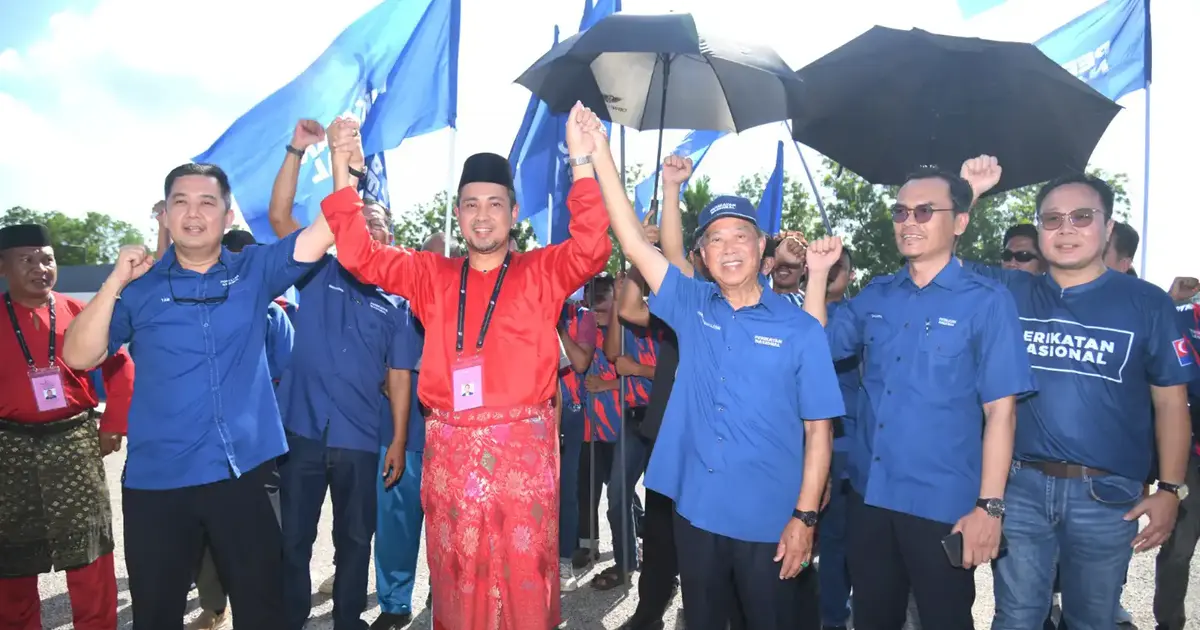
Bersatu's leadership has signalled a measured response to PAS's decision to withdraw logistical support, with party president Muhyiddin Yassin adopting a pragmatic stance that underscores the coalition's reliance on goodwill rather than obligation. The statement reflects ongoing tensions within Perikatan Nasional over resource allocation and campaign assistance, yet suggests Bersatu remains committed to maintaining the three-party alliance despite friction between its constituent members.
Muhyiddin's position reframes the machinery dispute as a natural consequence of the coalition's foundational principles, which he characterises as rooted in mutual cooperation and voluntary assistance. This framing allows Bersatu to accept PAS's withdrawal without appearing weakened or diminished in the eyes of party members and supporters. By emphasising that no member should feel compelled to contribute beyond its comfort level, the Bersatu leader has attempted to neutralise potential criticism that his party lacks sufficient organisational capacity to operate independently.
The broader context involves perennial jockeying within PN for influence and resources, particularly as Malaysia approaches electoral cycles that could reshape the political landscape. PAS, as the largest component within the coalition by parliamentary representation, has historically maintained significant leverage in negotiations over campaign logistics and strategic direction. The decision to restrict machinery assistance represents a notable assertion of PAS's autonomy within the partnership, signalling that the party believes it can pursue its own agenda without being bound by collective decisions.
For Bersatu, the implications are substantial yet manageable. The party has spent recent years rebuilding organisational structures following defections and internal reorganisation that weakened its grassroots presence. Relying on PAS machinery had offered a shortcut to compensate for these organisational gaps, particularly in rural constituencies where the Islamist party maintains deep community networks. Without this support, Bersatu faces pressure to accelerate its own machinery development or accept reduced competitiveness in certain electoral contests.
Muhyiddin's rhetoric of voluntary cooperation carries particular resonance in Malaysian politics, where coalition arrangements are frequently fragile and subject to rupture over perceived slights or unequal burden-sharing. By framing the machinery withdrawal as an acceptable exercise of PAS's autonomy rather than a rejection of PN's collective project, he attempts to prevent the issue from escalating into a coalition-threatening crisis. This diplomatic language serves multiple audiences: within PN, it signals flexibility and maturity; to Bersatu's own grassroots, it projects confidence and independence.
The question of machinery support within PN reflects deeper structural imbalances that have periodically destabilised the coalition since its formal establishment. PAS commands organisational advantages derived from decades of grassroots mobilisation through mosque networks, religious schools, and welfare programmes. Muhyiddin's PKR successor, UMNO-aligned Bersatu operates without equivalent institutional infrastructure, having emerged from UMNO's fractured remains. This asymmetry inevitably produces tension over how campaign resources should be allocated and whether larger parties should subsidise smaller ones.
Regional observers note that PN's stability depends substantially on whether its member parties perceive equitable treatment and reasonable prospects for electoral advancement. PAS's willingness to withdraw machinery support suggests confidence in its own electoral prospects, particularly in constituencies where Islamist messaging resonates strongly. Conversely, Bersatu's acceptance of this withdrawal indicates either genuine faith in its own capacity or pragmatic recognition that demanding machinery assistance would risk precipitating larger coalition tensions.
The Malaysian political system's fluid coalition dynamics mean that today's partnership arrangements frequently shift with changing electoral calculations and leadership transitions. Bersatu's relatively recent formation from UMNO defections, combined with its persistent difficulty in establishing independent grassroots presence, leaves it vulnerable to marginalisation within any coalition partnership. Muhyiddin's measured response to the PAS machinery decision reflects awareness that aggressive posturing could invite further pressure or even strategic realignment by other coalition members.
Looking forward, this episode illustrates how PN's ostensible unity masks significant operational challenges in executing coordinated political strategies. While the three parties maintain formal alliance status, their capacity for seamless cooperation remains constrained by competing organisational interests and divergent electoral priorities. Bersatu's willingness to proceed without guaranteed PAS machinery assistance will ultimately depend on whether the party can rapidly expand its own campaign capacity or establish alternative mobilisation networks through cooperation with other political actors or civil society organisations.
The implications extend beyond PN's internal dynamics to Malaysia's broader political trajectory. Coalition stability directly affects electoral predictability and governmental continuity. If PN's member parties cannot reliably coordinate campaign efforts and share resources, the alliance's electoral performance may deteriorate, potentially opening pathways for competing coalitions to reshape parliamentary mathematics. Muhyiddin's calm acceptance of the machinery withdrawal thus represents not just tactical diplomacy but also recognition that PN's survival depends on maintaining flexibility even when individual member parties pursue narrower self-interest.

