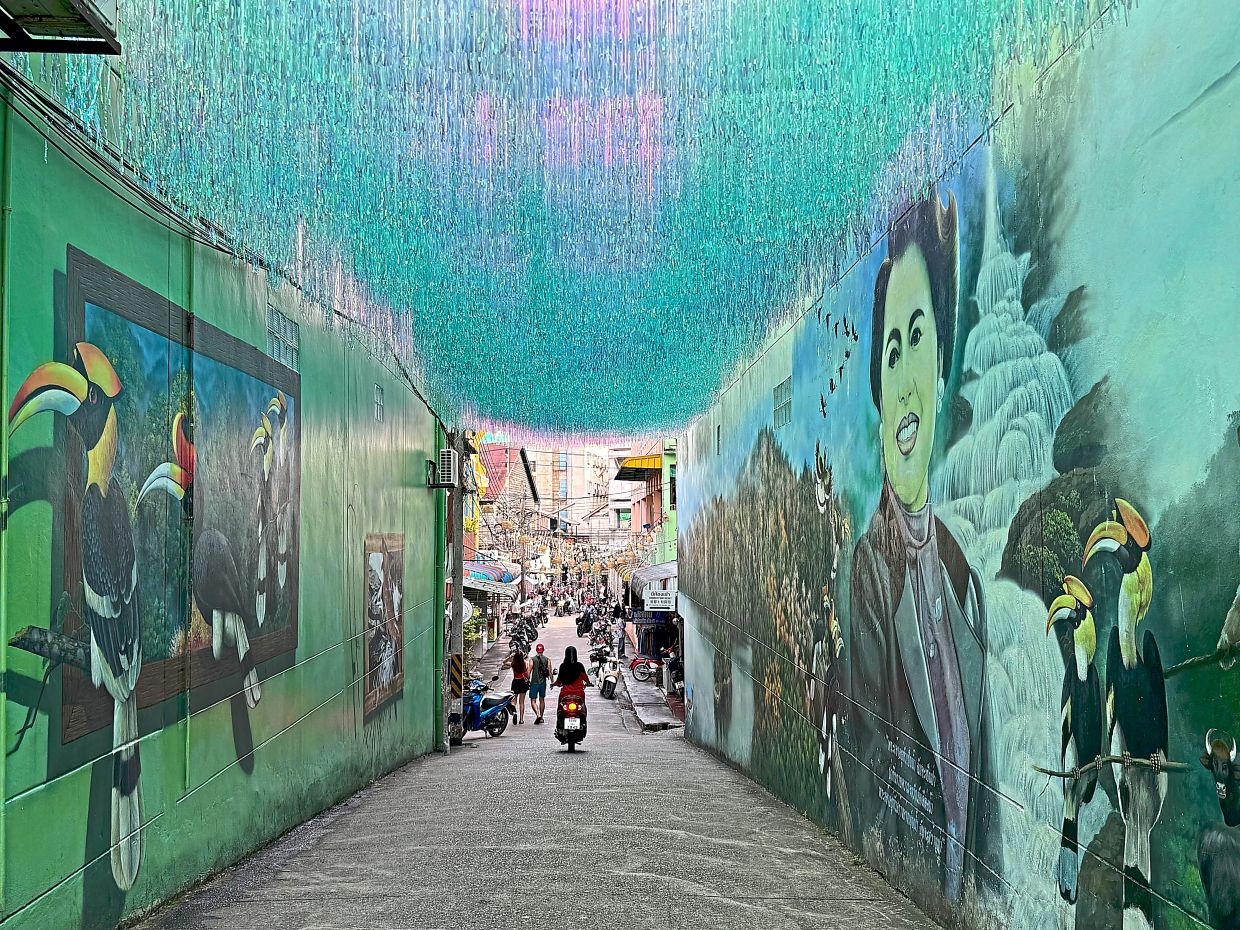
Betong, a modest town straddling Thailand's southern border with Malaysia, has quietly emerged as an intriguing destination for regional travellers seeking authentic experiences beyond mainstream tourist circuits. Located approximately five hours' drive from Kuala Lumpur—roughly 380 kilometres south—this hillside community offers an eclectic mix of cultural heritage, natural wonders, and peculiar attractions that defy expectations for a settlement of its size. What distinguishes Betong from more established Thai tourist hubs is its refusal to conform to predictable travel narratives, instead presenting visitors with unexpected encounters that linger long after departure.
The town's most distinctive symbol is the Betong chicken, a local breed that has become so emblematic of community identity that giant statues commemorate it throughout the streetscape. Perched atop lamp posts and standing prominently at key locations, these chicken sculptures initially appear as mere novelty decorations to the untrained eye. However, their ubiquity reflects genuine historical and cultural significance: the Betong chicken represents generations of local agricultural tradition and remains central to the town's culinary identity. This commitment to honouring a single livestock breed illustrates how smaller communities construct place-based pride through unexpected cultural markers. Consequently, the town's restaurant scene revolves almost entirely around chicken preparations—from crispy pork rice served alongside poached fowl to elaborate chicken porridge variations—making poultry consumption not merely dietary habit but a form of cultural participation.
Two tunnels define Betong's modern tourism infrastructure, each offering radically different experiences and historical contexts. The Mongkollit Tunnel, constructed in 2001 as Thailand's inaugural mountain tunnel according to the Tourism Authority of Thailand, initially appears functionally unremarkable during daylight hours. Yet evening visits transform the structure entirely through sophisticated blue lighting installations that render the previously utilitarian passage into something approaching theatrical spectacle. Pedestrian walkways flanking the thoroughfare fill with visitors photographing the ethereal illumination, demonstrating how strategic infrastructure can be repurposed for aesthetic and recreational value.
By contrast, the Piyamit Tunnel carries weight of genuine historical consequence. Stretching one kilometre through dense jungle approximately 15 kilometres from Betong's town centre, this tunnel was excavated during the late 1970s to serve as an underground military complex for the Communist Party of Malaya during the country's ideological insurgency. The structure functioned simultaneously as air raid shelter, ammunition and supply depot, and strategic escape route when forces attacked guerrilla encampments. The original design featured multiple carefully positioned entrances and exits enabling combatants to disperse in different directions during emergencies; safety concerns have since sealed several passages. Visitors entering today through a visitor centre entrance negotiate a 15-minute covered pathway before reaching the tunnel proper, a deliberately managed experience that creates separation between modern tourists and historical space.
The Piyamit site demonstrates sophisticated understanding of wartime logistics through its surviving infrastructure. An ingeniously designed outdoor cooking area featured a concealment stove that channelled charcoal smoke underground, rendering aerial detection virtually impossible to enemy reconnaissance. Inside the tunnel, visitors encounter sleeping quarters, meeting chambers, and radio communication rooms—physical spaces that humanise the abstract historical narrative. The accompanying Piyamit Histories Museum curates photographs and artefacts documenting daily life among fighters living in surrounding forest zones, contextualising the tunnel within broader human experience. Those seeking deeper engagement with this historical period can venture to Chulabhorn Phatthana Village 9 in Mae Wat, approximately 120 kilometres distant, where former communist party members now facilitate cultural education about life trajectory after the insurgency concluded.
Betong rewards exploration on foot, a characteristic increasingly rare in Thai destination towns designed around vehicular access. The old town centre concentrates most attractions within comfortable walking distance, while parking scarcity actually discourages automobile-dependent tourism patterns. This layout inadvertently fosters pedestrian engagement with streetscape details and spontaneous local interactions. A practical navigational insight involves understanding kerb colour coding: black-and-white painted kerbs indicate legal parking zones, whilst red-and-white combinations prohibit vehicle stopping—a system reflecting broader Thai attention to visual communication systems.
Those arriving via Route 410, alternatively designated the Pattani-Betong Highway, experience scenery dramatically different from flat coastal regions characterising much of central Thailand. This 160-kilometre mountain corridor features steep elevation changes, hairpin curves, and extended downhill stretches that have generated devoted following among motorcycle enthusiasts. The route's reputation for technical riding challenges attracts biking communities that gather at specialised shops selling apparel, customised Thai-style registration stickers, and cycling merchandise. This motorcycle culture introduces an unexpected recreational dimension to Betong's tourism profile, positioning the town as more than static heritage site but as hub within broader adventure sports networks.
Wat Phutiwhat temple, situated adjacent to this motorcycle-centric commercial zone, represents spiritual counterpoint to recreational pursuits. A commanding bronze Buddha statue dominates the temple entrance, its elevated positioning offering sweeping vistas across the town's scattered buildings and surrounding forested valleys. The temple houses sacred Buddha relics, attracting devotional visitors alongside secular tourists. Morning visits prove preferable to afternoon hours when crowds accumulate, a timing consideration reflecting the site's genuine religious function rather than exclusively tourism-oriented operation.
Betong's most unexpected feature exists in stationary form: two extraordinarily oversized mailboxes that have transcended functional purpose to become recognized local landmarks. The original structure, reaching 3.2 metres in height and positioned near the Betong Clock Tower, dates to 1924 and originally incorporated a built-in loudspeaker system for broadcasting government announcements to townspeople. Despite its antiquity and unconventional design, this mailbox remains operationally functional for postal purposes—a remarkable testament to infrastructure longevity. The structure's survival through decades of technological change and shifting communication methods suggests deep community attachment to historical objects. A nine-metre replica subsequently erected outside the City Convention Hall along Sukyang Road serves explicitly as tourism attraction, creating photographic opportunity that has surprisingly become sufficiently distinctive to warrant guidebook mention and social media documentation.
These accumulating elements—the chicken statuary, illuminated tunnel, communist-era underground complex, motorcycle haven, and oversized mailbox landmarks—compose a tourism narrative fundamentally distinct from Thailand's mainstream beach resort or temple-centric offerings. Betong demonstrates how regional towns can cultivate distinctive identity through embracing local peculiarities rather than conforming to national tourism templates. The town makes minimal effort toward aggressive marketing or infrastructure development beyond these organic attractions, creating authentic quality often missing from more commercially oriented destinations. For Malaysian travellers seeking proximity without routine tourist infrastructure, Betong represents accessible alternative requiring only modest vehicle investment to discover genuine surprises.

