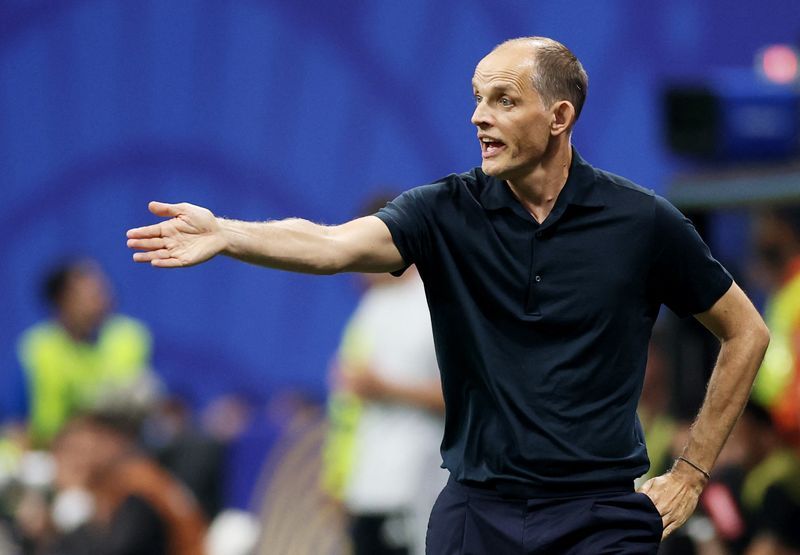
Thomas Tuchel arrived at the England job as the blueprint for redemption, the decorated German tactician tasked with delivering what two decades of near-misses could not. Yet after England's World Cup semi-final collapse against Argentina, the narrative swiftly transformed from promise to recrimination. Tuchel's decision to shift to a more defensive shape following Anthony Gordon's opening goal has drawn particular ire from former managers and television pundits, who argue the shift invited precisely the outcome it sought to prevent. However, examining the mechanics of that defeat reveals a more complex reality: Argentina's pedigree as defending champions, combined with Lionel Messi's otherworldly capacity to impose his will on crucial moments, presented obstacles that tactical adjustments alone could neither solve nor suppress.
When the Football Association unveiled Tuchel in October 2024, the appointment came laden with expectation and a specific mandate. FA Chief Executive Mark Bullingham framed the hiring not merely as a replacement for Gareth Southgate but as an inflection point for English football, positioning Tuchel as the conduit through which England could finally translate its considerable talent pool into tournament triumph. The German's pedigree appeared to justify such optimism. As a serial winner at Chelsea, Paris Saint-Germain, and Bayern Munich, Tuchel had demonstrated an ability to extract maximum performance from elite squads across Europe's most demanding leagues. Upon taking the role in January, he articulated his objective in straightforward terms: securing that elusive second World Cup star on the English crest, nearly six decades after the 1966 triumph.
The manner of England's exit—courtesy of late goals from Enzo Fernández and Lautaro Martínez after Tuchel's defensive recalibration—provided ammunition for those who questioned his in-game management. Alan Pardew, speaking on talkSPORT, offered perhaps the most measured critique: that the manager's tactics had cultivated a defensive, fearful mentality that undermined the team's capacity to retain control and composure. Yet Tuchel's own assessment, delivered in the immediate aftermath, pointed toward something more fundamental. He identified a structural deficit in England's collective approach to possession football, suggesting that the DNA of English football culture—its emphasis on transition, intensity, and directness—sits fundamentally at odds with the patient, ball-retention philosophy that has defined successful tournament performances. This observation carries particular weight given England's repeated struggles against teams schooled in possession dominance.
Context matters considerably when evaluating Tuchel's inaugural tournament campaign. His path to the semi-finals matched the achievement of his predecessor Southgate in 2018, a respectable if unremarkable outcome. Yet the international stage operates according to rhythms and pressures distinct from club football, where Tuchel has accumulated his greatest successes. Didier Deschamps, now revered for his decade-plus tenure with France, required six years before delivering a World Cup title in 2018, subsequently adding a runners-up finish. Aimé Jacquet, the architect of France's 1998 triumph, invested five years in building that championship team. Tuchel's two-year contract extension, signed in February, provides the temporal runway for such development, yet the emotional investment in immediate success—particularly following decades of English disappointment—creates an environment where gradual progress struggles to gain acceptance.
Argentina's path to the final bore its own markers of fragility. Lionel Scaloni's defending champions cruised through group play but encountered genuine difficulty in the knockout stages. Cape Verde pushed them to uncomfortable margins, while Egypt required three late goals to break Argentina's resistance in the Round of 16. Switzerland forced extra time despite playing the latter stages with ten men. These performances suggested vulnerability, a team that had survived rather than dominated. Yet this scrappiness itself revealed something crucial about Argentina's character: an unshakeable refusal to accept defeat, a collective stubbornness that transformed near-disasters into motivation. When teams consistently discover ways to win despite playing poorly, they accumulate psychological capital that becomes nearly impossible for opponents to crack.
The pivotal factor that transcends tactical consideration involves Messi himself. At thirty-nine years old, the Argentine forward entered the tournament as arguably football's greatest player in history, driven by the singular imperative of claiming a second consecutive World Cup and cementing a legacy that would stand untouched. Against England's retreating formation, Messi relocated to the right flank, finding space precisely where England's defensive compaction had created it. From this vantage point, he orchestrated the decisive moments, delivering assists for both late goals with the precision of someone for whom clutch performance represents muscle memory accumulated across two decades at the game's highest level. The contrast in possession metrics tells the story: from the seventy-second to the ninety-second minute, England attempted only two passes in Argentina's half while Argentina completed 111—a damning illustration of how completely England had conceded initiative.
Thierry Henry, who spent three seasons as Messi's teammate at Barcelona and observed his psychological makeup at close quarters, provided insight into the phenomenon England confronted. Henry described how Messi operates in a different register when his team requires salvation, how perceived slights or refusals to reward his complaints can trigger a transformation into something approaching unstoppable. A player who had exerted himself for 120 minutes remained capable of dribbling past entire defensive lines, extracting maximum output from his remaining reserves of energy and focus. This capacity to raise his game precisely when stakes maximize represents something that cannot be coached against or entirely neutralized through tactical arrangement. England, like Cape Verde and Egypt before them, poked a metaphorical sleeping beast and discovered the consequences.
The broader narrative surrounding England's exit risks obscuring what the semi-final defeat actually revealed. Tuchel faces legitimate questions about in-game management, about whether the defensive shift represented an abdication of tactical courage at a critical juncture. These represent fair subjects for analysis and debate. Yet isolating the manager's decision-making from the exceptional circumstances—facing the defending champions, the world's preeminent player at the apex of his powers, a team forged through adversity into something resembling inevitability—produces an incomplete diagnosis. The criticism also underestimates Argentina's determination and Messi's enduring brilliance, qualities that have little to do with English tactical approaches and everything to do with Argentine resolve and individual genius.
For Tuchel and England, the path forward involves recognition that tournament football operates according to different laws than club competition. Success requires not only superior tactical insight but also the accumulated experience of navigating the unique pressures that major tournaments create. Deschamps and Jacquet's trajectories suggest that such learning occurs gradually, through exposure and reflection rather than immediate mastery. Tuchel's willingness to acknowledge fundamental differences between English football culture and possession-based philosophies indicates self-awareness about the scale of the adjustment required. Whether England can develop the requisite cultural shift toward possession dominance, and whether Tuchel possesses the capacity to engineer such a transformation, will determine whether his appointment ultimately validates the FA's confidence or confirms English football's chronic inability to translate potential into results.

