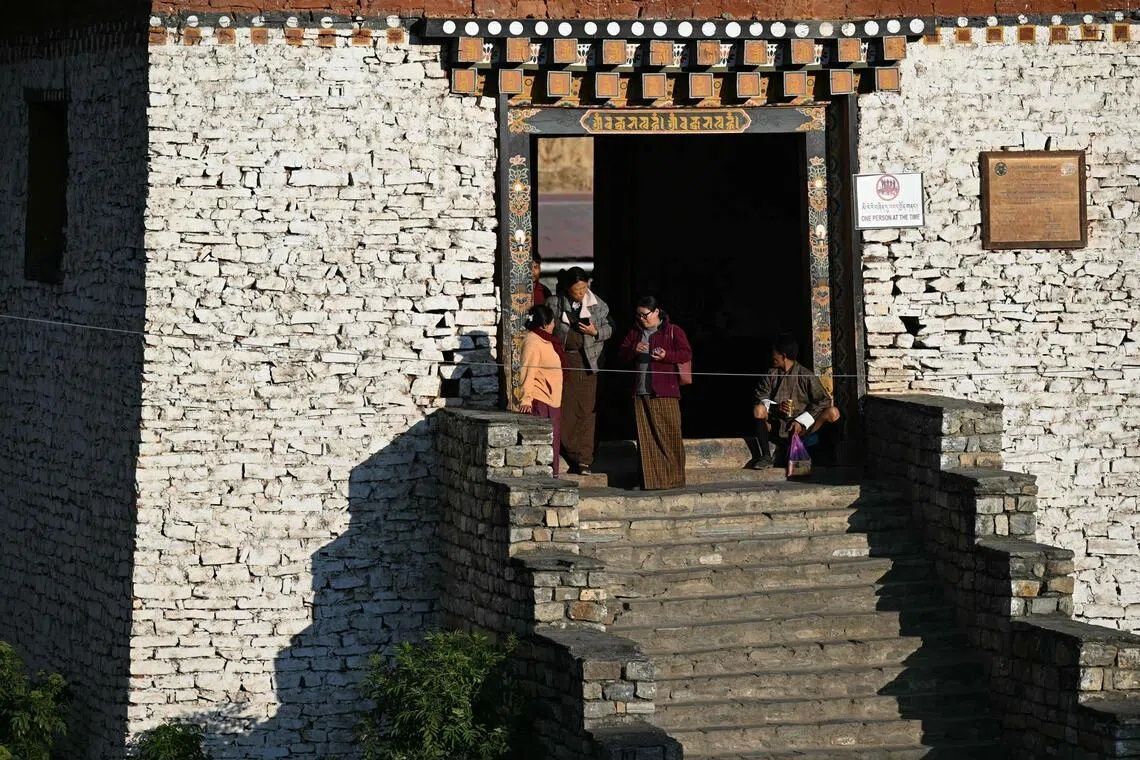
The Himalayan kingdom of Bhutan is confronting what its government describes as an "existential" demographic emergency, introducing direct financial inducements for families willing to have larger broods. The strategy reflects growing alarm in Thimpu over a fertility collapse that has reshaped the nation's population trajectory within a single generation. Prime Minister Tshering Tobgay has made the issue a centrepiece of governance, warning that without intervention, Bhutan faces severe economic and social consequences in the decades ahead.
Bhutan's "Third Child Plus" scheme, unveiled in June, offers monthly payments of $105 per child for every third and subsequent infant until age three. The programme targets what officials identify as the most critical vulnerability: a 27 per cent decline in births of third or higher-order children since 2020. This narrowing of family size reflects broader societal shifts towards smaller households, mirroring demographic transitions across much of Asia, though Bhutan's transition has been extraordinarily rapid compared to regional peers. The financial incentive represents an unusual policy reversal for a nation that spent decades actively promoting family planning through its "Small Family, Happy Family" campaign initiated in 1974.
The numbers underpinning government concern are substantial. Bhutan's fertility rate has fallen to approximately 1.8 children per woman, placing it below the replacement threshold of 2.1 needed to sustain a stable population without immigration. United Nations projections indicate that the share of citizens aged 65 and older will nearly triple from around six per cent today to 17 per cent by 2050. These shifts compound one another: fewer births combined with ageing create an inverted demographic pyramid that strains healthcare, pensions, and labour-intensive sectors. Tobgay's rhetoric around these trends avoids numerical abstraction, instead framing demographic change as tangible pressure on workforce sustainability and community cohesion across the landlocked kingdom of fewer than 800,000 people.
Yet fertility decline represents only half of Bhutan's population puzzle. The nation has experienced sustained emigration that drains human capital precisely from the reproductive and working-age cohorts most essential for economic dynamism. As of May 2026, more than 71,000 Bhutanese resided abroad, with approximately 39,000—representing 55 per cent of the overseas population—concentrated in Australia. This concentration among prime working and reproductive ages compounds the challenge: each departing young adult simultaneously reduces domestic birth potential and shrinks the labour force supporting those who remain. Government analysis suggests that migration patterns, while generating valuable remittance income for families, ultimately constrain long-term population momentum and domestic economic participation.
The underlying drivers of smaller families extend beyond mere cultural preference or cost calculation. Khandu Wangmo, a 35-year-old civil servant, articulated the gap between policy incentive and lived reality when discussing the $105 monthly payment. While acknowledging the initiative's merit in encouraging three-child families, she questioned whether cash transfers could overcome the structural obstacles that families genuinely face. Housing affordability, childcare expenses, and the opportunity costs of parental withdrawal from the workforce remain formidable barriers to larger families across developing economies. Preeti Nirola, aged 34 with one child, expressed similar hesitation: she indicated desire for a second offspring but cited financial constraints as decisive. The gap between stated preference and actual fertility behaviour suggests that monetary incentives alone may prove insufficient to meaningfully reverse demographic trends without accompanying investments in social infrastructure.
Bhutan's encounter with demographic transition has been uniquely compressed compared to other Asian nations. Anthropologist Shawn Rowlands, based in Thimphu, observed that Bhutan's fertility rate has fallen from approximately 6.6 in the 1990s to 1.8 today—a remarkable transformation occurring over just three decades. This velocity of change reflects not simply rising female education and workforce participation, though both are significant factors, but also the selective emigration of youth seeking international opportunities unavailable domestically. The 1990s witnessed a particularly traumatic demographic event when more than 100,000 ethnic Nepali-speaking residents departed following tightened immigration policies, representing approximately one-sixth of Bhutan's population at that moment. Contemporary outflows, while slower in absolute numbers, represent a voluntary exodus driven by economic calculation rather than policy enforcement.
Government officials have identified economic development and job creation as fundamental to slowing emigration. Tobgay described overseas migration as Bhutan's "most pressing challenge" when addressing parliament in June, arguing that strengthening the economy, generating quality employment, and improving living standards formed the essential foundation for keeping youth domestically anchored. This diagnosis suggests that policymakers recognise the limits of birth incentives divorced from broader economic reform. Without compelling reasons to remain and build futures in Bhutan, financial payments for having children may prove marginally persuasive at best.
The United Nations Population Fund, which supported the Third Child Plus programme, advocates a somewhat broader perspective emphasising "expanding choices for everyone" rather than narrowly targeting fertility numbers. This framework prioritises affordable childcare, supportive social policies, and genuine economic opportunity—interventions that address root causes of family size decisions rather than simply attempting to override them through financial enticement. Such an approach acknowledges that fertility decline often represents rational adaptation to modern economic conditions rather than social pathology requiring reversal.
Rowlands also raised a more philosophical question about whether demographic decline necessarily constitutes crisis in Bhutan's particular context. The kingdom has gained international recognition for prioritising Gross National Happiness over purely economic growth metrics and for maintaining carbon-negative environmental status. A smaller, more stable population potentially aligns with environmental sustainability objectives and quality-of-life aspirations that have defined Bhutanese governance philosophy. This tension between demographic expansion imperatives and ecological sustainability constraints deserves serious consideration as policymakers chart long-term strategic direction. The relationship between population size, environmental capacity, and national wellbeing cannot be reduced to simple economic productivity calculations.

