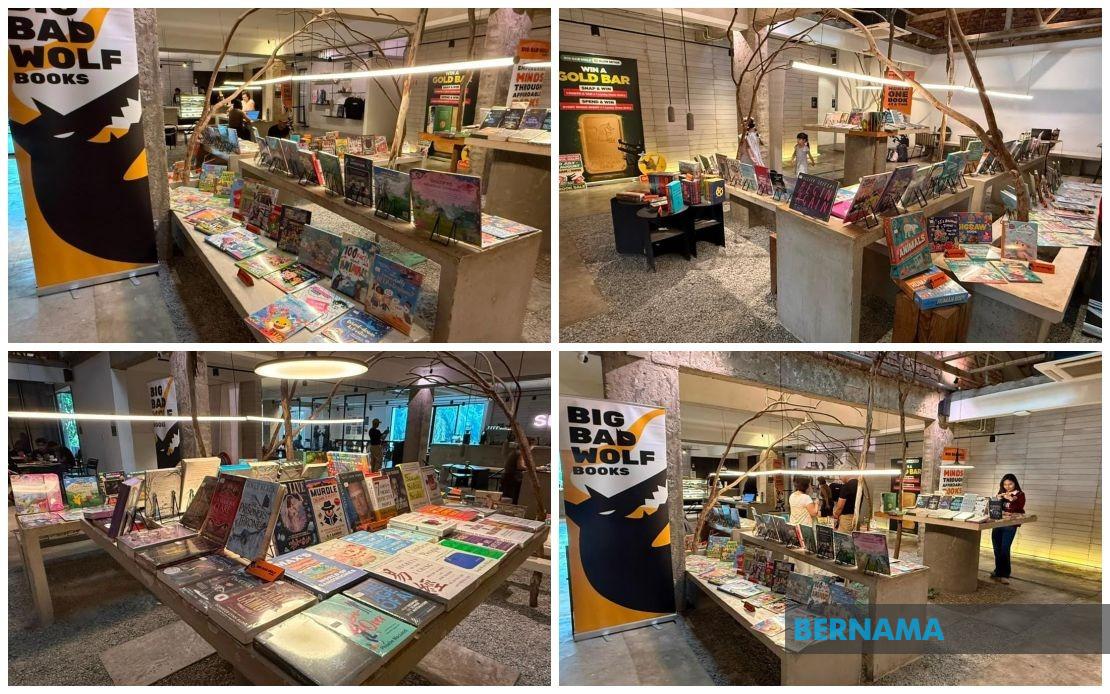
Malaysia's largest book fair, Big Bad Wolf Books (BBW), is preparing to make its mark in Kedah's capital with an expanded catalogue designed to appeal to a broader cross-section of readers. The event will take place from July 30 to August 9 at Sultan Abdul Halim Stadium in Alor Setar, operating daily from 10 am to 10 pm with free admission throughout the 11-day run. This visit represents a strategic push by the book fair to deepen its footprint in northern Malaysia whilst simultaneously addressing what organisers view as a pressing need to strengthen reading habits across the state.
Chloe Lim Sooi Yee, representing BBW, emphasised that the fair's return to Alor Setar goes beyond commercial considerations, framing the initiative as part of a wider endeavour to cultivate a robust reading culture throughout Kedah. The organisers have deliberately curated their offering to resonate with local audiences, recognising that different communities have distinct preferences and cultural values that should be reflected in the books available to them. This approach acknowledges the role that such events can play in supporting educational and cultural development at the grassroots level.
One of the standout features of this year's fair is the introduction of the 'Little Ummah' collection of Islamic children's books, making its debut in Kedah through BBW. This selection has been specifically sourced to engage young Muslim readers and their families, reflecting the religious demographics and cultural fabric of the state. The decision to premiere this collection in Alor Setar signals confidence that there exists significant demand for religiously-oriented educational materials tailored for younger audiences, a segment that has grown increasingly important to the regional publishing industry.
The scale of the inventory underscores BBW's ambitions for the Alor Setar event. Organisers expect to stock approximately one million books across all categories and price points, with entry-level pricing starting as low as RM3 to ensure accessibility for budget-conscious readers. Significantly, discounts reaching as high as 95 per cent will be applied to selected titles, a strategy designed to remove financial barriers to book acquisition and reinforce BBW's philosophy that quality reading materials should be within reach of all socioeconomic segments of the population.
The 40 per cent infusion of new titles in this year's inventory is noteworthy, as it demonstrates the fair's commitment to preventing visitor fatigue through repetitive stock. For regular attendees of previous BBW events, this refresh offers genuinely fresh choices, whilst newcomers encounter a contemporary selection that reflects current publishing trends and emerging reader interests. This approach requires substantial investment in acquisition and curation, yet organisers believe the expanded catalogue will justify the effort through increased foot traffic and sustained public engagement.
BBW has implemented several promotional mechanisms to drive attendance beyond traditional marketing channels. School visits have been scheduled to create awareness among younger populations and their educators, a move that recognises schools as both influential institutions and potential gateways to establishing lifelong reading habits. Further incentivising educational participation, students and teachers who purchase at least three books will receive an additional five per cent discount, a concession that acknowledges tight education sector budgets whilst encouraging bulk purchases that could stock classroom libraries or personal collections.
The fair's reward mechanisms extend beyond academic discounts. A 'spend and win' campaign coupled with a 'snap and win' promotion offers visitors the opportunity to claim a 10-gramme gold bar, transforming the shopping experience into a form of entertainment with tangible prizes. Such gamification elements have proven effective in regional retail environments, particularly in Malaysia where the concept of chance and reward resonates strongly with consumer behaviour. These campaigns serve dual purposes: they generate excitement and word-of-mouth publicity whilst encouraging higher transaction values.
Alor Setar's selection as a venue reflects the fair's strategic focus on regional distribution beyond the Klang Valley, where most major publishing and retail activities concentrate. Kedah's population, though smaller than Selangor or Kuala Lumpur, represents a substantial market of over 1.8 million people, many of whom have limited access to large-scale book retail events. By establishing BBW in the state capital, organisers democratise access to affordable books for Kedahans who might otherwise travel significant distances to participate in similar events, thereby contributing to a more equitable distribution of cultural resources across Malaysia.
The targeting of 35,000 visitors over the 11-day period sets an ambitious but reasonable goal, averaging roughly 3,200 attendees daily. Achievement of this target would validate the investment in bringing such a major event to the state and likely encourage future iterations or expanded operations in Kedah. For the broader Malaysian book industry, success in Alor Setar would demonstrate that appetite for affordable reading materials extends well beyond the major metropolitan centres, potentially opening discussions among publishers and retailers about establishing permanent or semi-permanent outlets in secondary cities.
BBW's positioning as a champion of accessible and affordable literature aligns with broader regional trends emphasising democratised access to knowledge and culture. In Southeast Asia, where literacy rates vary considerably and English-language reading materials often carry premium pricing, the fair's commitment to steep discounts and low entry prices addresses genuine market gaps. The Alor Setar event thus functions not merely as a commercial exercise but as an intervention in regional patterns of information and cultural distribution.
For Kedah specifically, the literacy movement that BBW is helping to support carries implications for educational outcomes and economic development. Communities with stronger reading cultures tend to demonstrate higher academic achievement, greater workforce adaptability, and more engaged citizenry. By establishing the infrastructure and incentive structure for book access, the fair contributes incrementally to these broader developmental outcomes, though the true impact will only become apparent through longitudinal observation of reading habits and educational metrics in the years following this and subsequent events.

