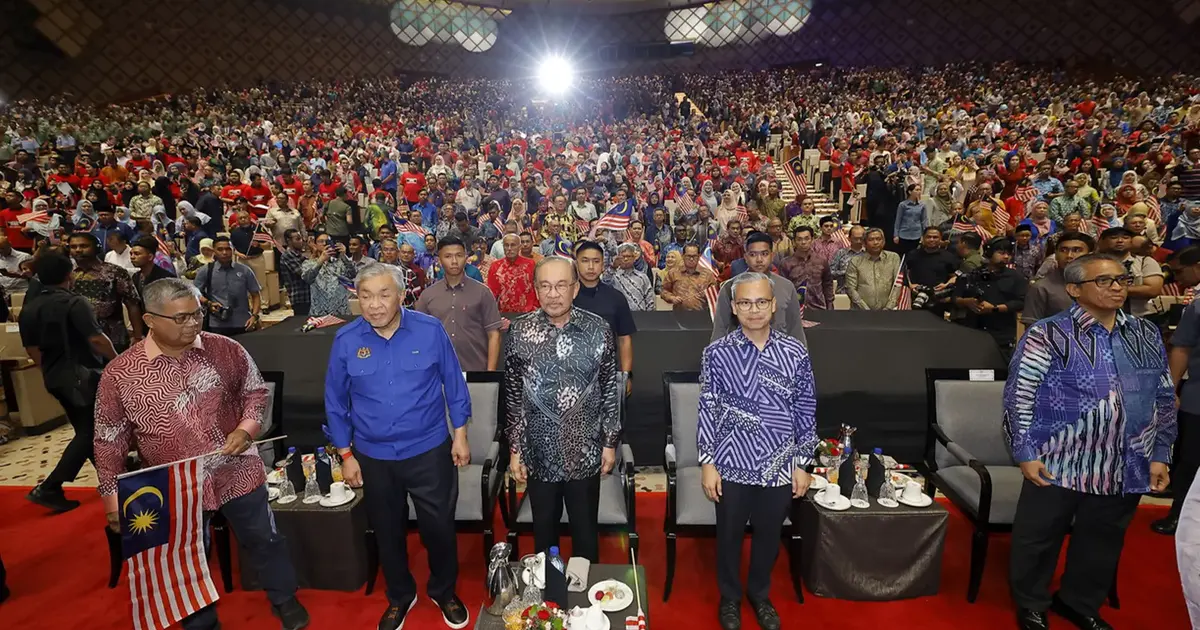
Prime Minister Anwar Ibrahim has announced plans to return billions of ringgit in seized funds to the Malaysian people, framing the initiative as a cornerstone of his government's commitment to equitable wealth distribution. The move represents a significant policy direction aimed at ensuring that assets recovered through law enforcement and regulatory action directly benefit ordinary citizens rather than being absorbed into general government revenue.
Anwar's announcement reflects broader principles underpinning the current administration's economic philosophy, which emphasizes inclusive growth and democratic accountability. The government has positioned the asset recovery programme as part of its anti-corruption and financial transparency agenda, signalling that illegally obtained wealth seized during enforcement actions should ultimately serve the public interest. This approach contrasts with traditional bureaucratic practices where recovered funds typically remain within government accounts without direct attribution to citizen benefit.
The Prime Minister's commitment addresses long-standing public concerns about how Malaysia's enforcement agencies manage confiscated assets. Historically, seized funds and properties have been absorbed into state budgets or institutional holdings, creating opacity around the ultimate use of recovered wealth. By pledging direct returns to the rakyat, Anwar's government is attempting to enhance public trust in law enforcement institutions and demonstrate tangible consequences for financial crimes and corruption.
The scale of funds involved is substantial, suggesting that enforcement actions over recent years have successfully recovered significant quantities of illicitly obtained assets. The accumulation of billions points to systematic issues with financial crime, money laundering, and corruption across various sectors. Making these recoveries visible through citizen-directed distribution could serve as a powerful symbol of the government's determination to address these systemic challenges.
Implementing such a programme raises complex practical and administrative questions. The government must establish clear mechanisms for determining which seized assets qualify for public distribution, how disbursement will occur, and which citizens benefit. Whether distributions take the form of cash payments, community investments, infrastructure projects, or other mechanisms remains to be detailed. Transparency in these processes will be crucial for maintaining public confidence in the initiative.
The announcement also carries political implications for Anwar's administration. By prioritizing citizen benefit over government revenue, the Prime Minister is making a visible commitment to people-centred governance. This messaging is particularly relevant given Malaysia's history of major corruption scandals and public frustration with wealth concentration among elites. Demonstrating that recovered ill-gotten gains will benefit ordinary Malaysians rather than bolstering state budgets strengthens the government's anti-corruption narrative.
Regionally, Malaysia's approach may influence how other Southeast Asian governments handle asset recovery. Many nations in the region grapple with similar challenges regarding corruption, money laundering, and the management of seized assets. If Malaysia successfully implements transparent, citizen-benefiting distribution mechanisms, the model could offer valuable lessons for neighbouring countries seeking to strengthen public trust in law enforcement and demonstrate commitment to inclusive economic governance.
The initiative also intersects with Malaysia's international obligations regarding asset recovery and anti-money laundering frameworks. Many recovered funds involve international financial crimes, cross-border transfers, and cooperation with foreign law enforcement agencies. The commitment to return seized assets to citizens must balance these international dimensions with domestic priorities, requiring coordination between Malaysian authorities and international partners.
Funding mechanisms for public distribution programmes require careful planning. Whether returns will come from a dedicated fund, be distributed incrementally as assets are seized, or be allocated through budget mechanisms needs clarification. The government may need to establish legislative frameworks to formalize the process, ensuring legal certainty and preventing future administrations from reverting to traditional practices of retaining seized funds within government accounts.
The timing of this announcement reflects evolving expectations around government accountability. Malaysian civil society, media, and citizens increasingly demand transparency regarding how state institutions manage public assets and recovered wealth. Anwar's pledge acknowledges these expectations and positions his administration as responsive to demands for governance reform and citizen-centric policy approaches.
For Malaysian households, the potential return of seized billions could translate into various benefits depending on implementation. Direct payments, enhanced public services, improved infrastructure in underserved communities, or targeted assistance programmes could all emerge from the recovered funds. The actual impact will depend heavily on how the government designs and executes the distribution framework.
Anwar's statement underscores a fundamental principle that should govern democratic governance: state assets and recovered wealth belong to the public. By committing to return seized billions to the rakyat, the Prime Minister is reinforcing the idea that fighting corruption should yield tangible, visible benefits for ordinary citizens. Successfully executing this commitment would mark a significant step toward restoring public faith in Malaysia's institutions and demonstrating that law enforcement efforts against financial crime serve the broader population rather than merely expanding state bureaucratic resources.

