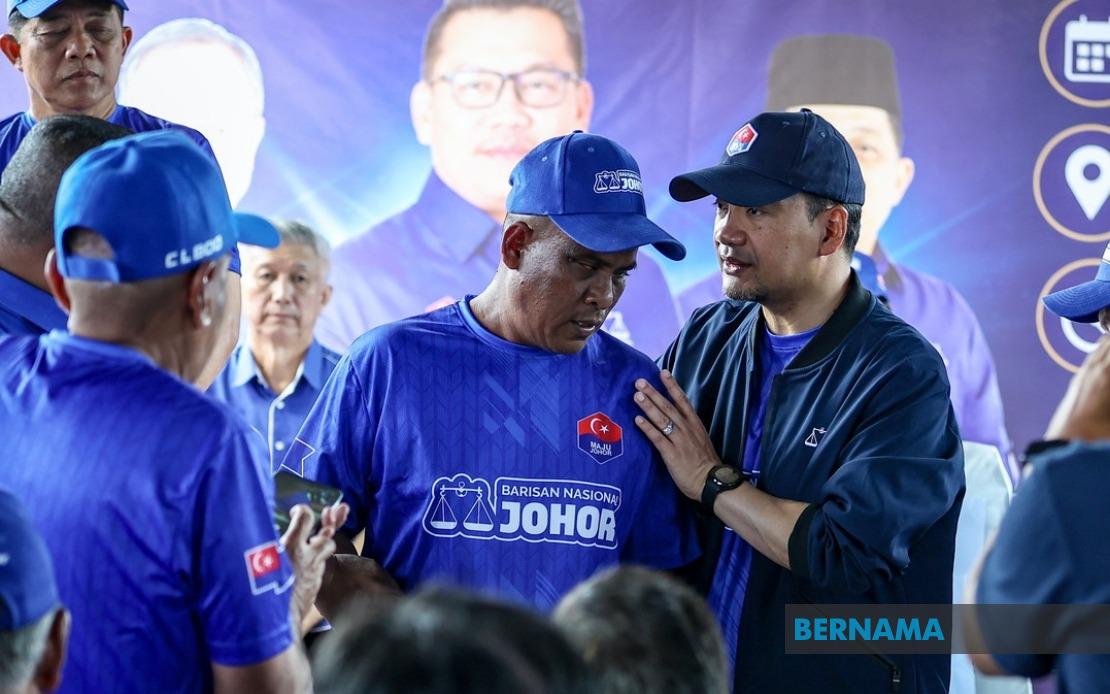
Mohd Hairol Leman, a 46-year-old resident of Kampung Sri Pantai in Senggarang, has been blind since birth, yet this has not deterred him from participating in Malaysia's democratic process. On the eve of the 16th Johor State Election, scheduled for July 11, Hairol remains steadfast in his commitment to cast his vote, viewing electoral participation as a civic responsibility too important to abandon regardless of personal circumstances.
Speaking during a Barisan Nasional machinery briefing in Rengit, Hairol explained that he has never missed a chance to vote since the 12th General Election in 2008—a span of 16 years encompassing multiple parliamentary and state contests. For him, voting represents more than a right; it constitutes a fundamental duty that every citizen should exercise to shape their state's governance and future direction. This upcoming Johor election will be his sixth voting experience, a milestone he approaches with the same dedication that has characterised his previous political participation.
The Election Commission's accessibility provisions have been instrumental in enabling Hairol's continued engagement with the electoral system. Officials from the EC assist visually impaired voters throughout the casting process, ensuring that disability does not become a practical barrier to democratic participation. This institutional support has allowed Hairol to exercise his franchise without compromise, demonstrating that Malaysia's electoral infrastructure, at least in this dimension, recognises the importance of inclusive voting access.
Beyond the mechanics of voting, Hairol's motivation stems from a deep appreciation for the leaders and welfare systems that have supported him throughout his life. As a beneficiary of assistance from the Department of Social Welfare (JKM) and the Johor State Islamic Religious Council's Baitulmal fund, he recognises the tangible difference that capable governance makes for vulnerable populations. His consistent voting reflects gratitude for past leadership initiatives that have provided cost-of-living support and empowerment programmes for people living with disabilities and economic hardship.
Hairol's narrative carries particular significance for Malaysia's disability community, which comprises millions of citizens whose voices in electoral processes remain underrepresented. His personal example challenges assumptions about what people with disabilities can or should participate in, suggesting that accessibility barriers are often institutional rather than inherent. By continuing to vote despite living without sight, he implicitly argues that election officials and policymakers must maintain and strengthen mechanisms that facilitate participation among those with physical impairments.
The upcoming Johor election features an expanded contest, with 172 candidates vying for 56 State Legislative Assembly seats across the peninsular state. Early voting commenced on July 7, with the main polling day set for July 11. In this context, Hairol's determination to participate underscores a broader principle: electoral legitimacy depends on enabling the widest possible cross-section of the eligible population to cast ballots. When citizens with disabilities face unnecessary obstacles to voting, the democratic mandate loses credibility and representativeness.
Hairol's perspective also highlights the mutual obligation between elected leaders and constituents with disabilities. He explicitly expressed hope that whichever leadership team emerges from this election would continue prioritising welfare empowerment for people like himself. This expectation reflects a sophisticated understanding of electoral politics—that voting is not merely an act of choice but an investment in accountability, with voters expecting elected representatives to deliver concrete improvements in their material circumstances and social protection.
The personal resilience displayed by individuals like Hairol often receives less attention than it merits in Malaysian political discourse. Rather than viewing disability as an excuse for withdrawal from civic life, he has integrated voting into his regular responsibilities across 16 years and six elections. This consistency suggests that motivation and institutional support matter more than physical circumstance in determining political participation rates among disabled citizens. Yet Malaysia's disability population still faces structural barriers to information access, transportation to polling stations, and workplace accommodations that allow time off to vote.
As Malaysia continues to position itself as a developed and inclusive nation, the experiences of voters like Hairol offer crucial lessons about what remains incomplete. While the Election Commission's assistance protocols enable Hairol's participation, broader systemic improvements could reduce the burden on individual election officials and expand access further. These might include enhanced public information in accessible formats, dedicated assistance hotlines, and transportation support for voters with mobility limitations. The presence of voters like Hairol should prompt ongoing assessment of whether Malaysia's electoral infrastructure truly serves all citizens equally.
Looking toward July 11, Hairol's eagerness to fulfill what he describes as a solemn responsibility once again demonstrates the power of inclusive institutions to broaden democratic participation. His sixth ballot will join thousands of others determining Johor's direction for the next five years. Yet his presence in the polling booth also sends a message about citizenship and dignity—that people with disabilities belong fully in electoral processes, not as exceptions requiring special sympathy but as ordinary citizens exercising ordinary democratic rights. This normality, supported by functional accessibility mechanisms, represents progress worth building upon.

